Foreign Body Type
Russian Blue
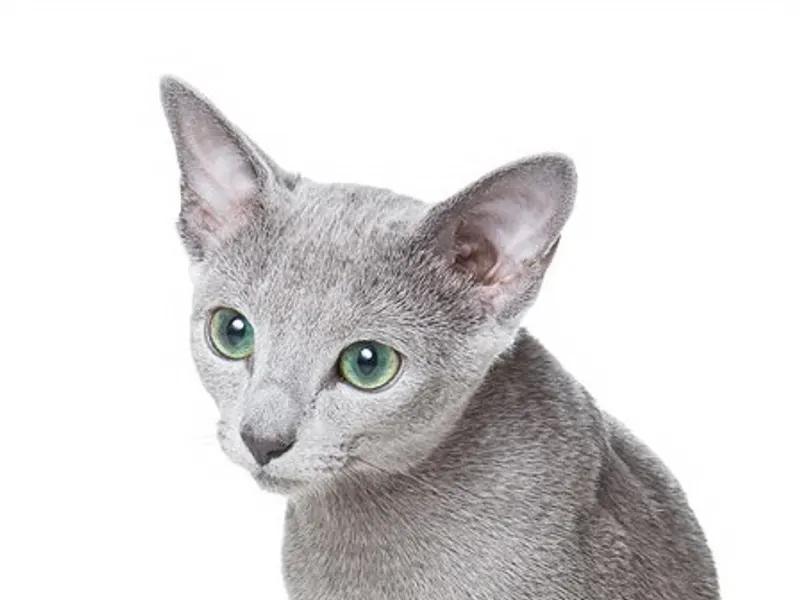
The Russian Blue is believed to originate from the port city of Arkhangelsk (Archangel) in northern Russia, and English sailors are credited with bringing the breed to Britain in the 1860s, where it was originally shown as the "Archangel Cat." The breed nearly disappeared during and after World War II, and post-war breeders rebuilt the population partly through careful outcrossing to Siamese, a decision that shifted the breed's body type before later breeders worked to restore the original, more substantial Russian Blue silhouette. The breed's dense double coat, described by fanciers as having a distinctive "seal-like" texture that springs back into place when stroked against the grain, and its vivid green eyes against a uniform blue-gray coat are both defining, tightly-selected standard features. The breed was historically also known as the "Foreign Blue" in some early British cat-show catalogs before settling on the Russian Blue name, partly to distinguish it clearly from the solid blue-gray color variety of the separately-bred British Shorthair. Fanciers often describe the breed's natural mouth shape as the "Russian Smile" — an upward curve at the corners of the mouth that gives the cat a perpetually pleasant expression, a subtle structural trait the written breed standard specifically calls out alongside the coat and eye color.
Common health predispositions
- Obesity
- Bladder stones
Temperament
Russian Blues are reserved with strangers but deeply affectionate with their established household, a combination that gives the breed a reputation for being a "one-family" cat rather than universally social — new people or major changes to routine can visibly unsettle a Russian Blue more than they would a naturally gregarious breed. They're quiet, rarely vocal, and tend toward a somewhat cautious, routine-oriented personality, which makes a stable, low-chaos household a genuinely better fit than one with frequent visitors or upheaval. Once bonded, however, the breed is known for following a favored person closely and settling into a predictable daily rhythm alongside them.
Living with a Russian Blue
The dense, plush double coat stands out from the body distinctively and needs only occasional brushing — this is a relatively low-shedding breed, and it's one of the breeds sometimes marketed toward allergy sufferers, though it's more accurately described as lower-shedding rather than truly hypoallergenic, since no cat is allergen-free. Russian Blues are prone to obesity if overfed, a real risk given the breed's food motivation paired with only moderate natural activity level, and bladder stones are also documented in the breed, making diet and water intake genuinely relevant considerations. Because of the breed's reserved nature, a slow, patient introduction process matters more here than for many breeds when bringing the cat into a new home or introducing it to new pets.
FAQ
Are Russian Blue cats hypoallergenic?
Not truly, though the breed is often marketed that way — Russian Blues do shed less than many breeds and some allergy sufferers report fewer symptoms around them, but the underlying allergen is a protein present in all cats' saliva and skin, so no breed is allergen-free.
Do Russian Blues do well with strangers?
Not typically at first — the breed is naturally reserved with unfamiliar people and often retreats or watches from a distance until it's comfortable, a genuine breed trait rather than a training gap, though most warm up given time and a calm approach.
How vocal are Russian Blue cats?
Quite quiet compared with most breeds — Russian Blues rarely vocalize demandingly and tend toward a soft, infrequent voice, which suits owners who prefer a low-noise household.
Why does a Russian Blue's coat look silvery?
Each hair is tipped with a lighter silver color over the blue-gray base, an effect breeders specifically select for that gives the coat a shimmering appearance in light and is considered a hallmark of a well-bred example of the breed.
Was the Russian Blue always called by that name?
No — early British cat-show records also referred to the breed as the "Foreign Blue" or "Archangel Cat" before the Russian Blue name became standardized, partly to distinguish it clearly from the solid blue-gray color variety within the separately-bred British Shorthair.
What makes the Russian Blue's coat texture different from other shorthairs?
The breed carries a genuinely double-layered coat, with a dense, soft undercoat roughly equal in length to the guard hairs above it, which makes the fur stand out from the body slightly rather than lying flat the way most shorthaired coats do. Groomers and owners often describe running a hand through a Russian Blue's coat as feeling closer to plush velvet than typical short fur, a texture tied directly to that even double-layer structure.
Related on FetchBreed
Comparisons
- Russian Blue vs Abyssinian
- Russian Blue vs American Shorthair
- Russian Blue vs Bengal
- Russian Blue vs British Shorthair
- Russian Blue vs Burmese
- Russian Blue vs Domestic Longhair
- Russian Blue vs Domestic Shorthair
- Russian Blue vs Exotic Shorthair
- Russian Blue vs Himalayan
- Russian Blue vs Persian
- Russian Blue vs Savannah
- Russian Blue vs Scottish Fold
Whichever breed fits your life, consider adoption or breed-specific rescue first — many purebred and mixed-breed dogs and cats are already waiting for homes.
General breed information, not veterinary advice — consult a vet for your pet's specific health, diet, and behavior needs.