Cobby Body Type
American Wirehair
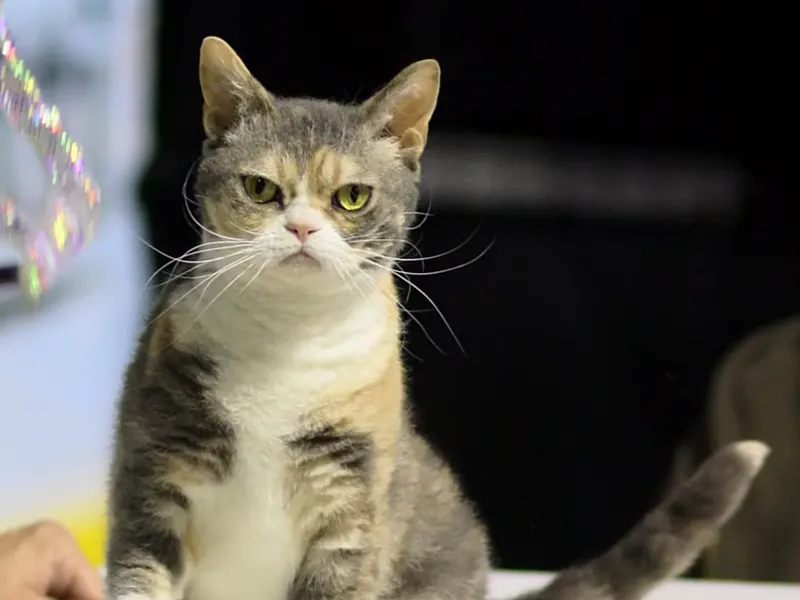
The American Wirehair began with a single spontaneously-mutated kitten born on a farm near Vernon, New York, in 1966, whose wiry, crimped coat was different enough from its shorthaired littermates that the farmer contacted a cat breeder rather than assume it was simply an unusual runt. The wirehair gene is dominant, and it affects every hair on the body — including the whiskers, which often curl or crimp along with the coat — producing a coarse, springy texture unlike any other recognized breed's coat structure. CFA granted championship recognition in 1978, and the breed has remained relatively rare, bred by a comparatively small number of dedicated fanciers largely concentrated in North America. Because the breed remains so numerically small, American Wirehair breeders periodically outcross to American Shorthairs under CFA-approved guidelines to maintain genetic diversity, a standard practice for keeping a rare, single-mutation breed from becoming overly inbred over successive generations.
Common health predispositions
- Generally healthy; hypertrophic cardiomyopathy documented at low rate
Temperament
American Wirehairs are generally described as easygoing, adaptable, and moderately independent — closer in temperament to their American Shorthair ancestors than to a high-strung Oriental-type breed. They tend to be affectionate on their own schedule rather than constantly seeking attention, and they're usually tolerant of children and other household pets without being especially demonstrative about it. This is not typically a breed prone to destructive boredom-driven behavior, reflecting the working-cat, low-drama temperament carried down from its American Shorthair lineage. Breed fanciers often note the American Wirehair settles into a household routine with minimal fuss, adapting comfortably to changes like new pets or visitors that might unsettle a more high-strung breed.
Living with a American Wirehair
The wiry coat is famously low-maintenance in one sense — it doesn't mat the way a long or dense coat would — but it also should never be brushed vigorously against the grain, since doing so can damage or break the crimped hair shaft; light, gentle grooming is the standard recommendation. Because the breed remains genuinely rare, kittens are not always easy to find, and prospective owners may need to expect a wait list or travel to a specialized breeder rather than a quick local purchase. Health-wise, the American Wirehair is considered one of the more robust pedigreed breeds, with hypertrophic cardiomyopathy documented only at a comparatively low rate relative to many other breeds, though as with any cat, individual screening still matters. Kittens are not always born with a fully developed wiry coat — some start out closer to a normal texture and develop the crimped structure more visibly over the first several months, so an adult coat's final texture isn't always fully evident at a very young age.
FAQ
Can you brush an American Wirehair's coat normally?
Gently, and with the grain — brushing too vigorously or against the direction of hair growth can damage or break the coat's distinctive crimped structure, so light, infrequent grooming is generally recommended over the more frequent brushing routines longer-coated breeds need.
Is the American Wirehair a rare breed?
Yes, genuinely — it remains one of the rarer pedigreed breeds, bred by a relatively small number of specialized breeders, so prospective owners often face a wait list or need to travel farther than they would for a more common breed.
Do American Wirehairs have curly whiskers too?
Often, yes — because the wirehair gene affects hair structure throughout the body, whiskers frequently show the same crimped or curled texture as the coat, a distinctive detail breed judges look for at shows.
How healthy is the American Wirehair as a breed?
Generally considered a robust breed — it descends closely from the sturdy American Shorthair and has comparatively few well-documented breed-specific health concerns, though hypertrophic cardiomyopathy has been noted at a low rate and individual cardiac screening is still worthwhile.
Why do American Wirehair breeders sometimes outcross to American Shorthairs?
Because the breed's total population is small, controlled outcrossing to American Shorthairs under CFA-approved breeding guidelines helps maintain genetic diversity and avoid the health problems that can accumulate in an overly narrow gene pool, a standard, sanctioned practice rather than a deviation from the breed standard.
Do American Wirehair kittens have curly coats from birth?
Not always fully — some kittens are born with a coat that's closer to typical in texture and the distinctive wiry crimp becomes more pronounced over the following months, so a young kitten's exact adult coat texture isn't always fully predictable at birth.
How did the American Wirehair breed originate?
From a single spontaneous coat mutation discovered in a barn litter on a farm in upstate New York in 1966, where one kitten was born with a distinctly springy, wiry coat unlike anything in its parents. Breeders recognized the mutation's potential immediately and began a dedicated program from that one kitten, making the American Wirehair one of the relatively few breeds traceable back to a single documented founding individual.
Related on FetchBreed
Whichever breed fits your life, consider adoption or breed-specific rescue first — many purebred and mixed-breed dogs and cats are already waiting for homes.
General breed information, not veterinary advice — consult a vet for your pet's specific health, diet, and behavior needs.