Semi-cobby Body Type
Napoleon (Minuet)
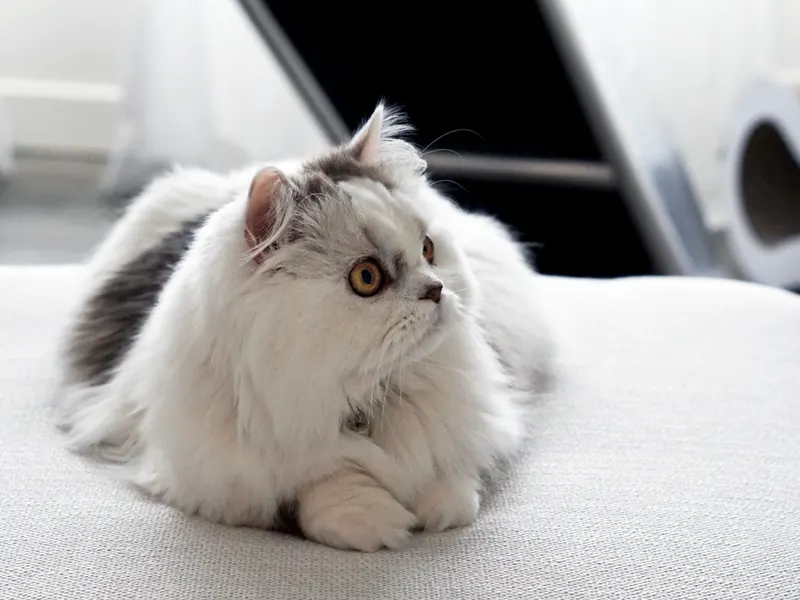
The Napoleon — renamed the Minuet by TICA in 2015 to avoid confusion with the historical figure and to sidestep some breed-name controversy — was developed starting in the 1990s by breeder Joseph Smith, who crossed Munchkin cats with Persians and Exotic Shorthairs, pairing the short-legged Munchkin build with the round-faced, plush-coated look of the Persian lineage. The breed remains relatively new and comparatively rare, and as with other short-leg breeds, its recognition has been shaped by the same ongoing ethical debate over deliberately breeding for a skeletal mutation that surrounds the Munchkin itself. Smith reportedly aimed specifically for a breed that would appeal to Persian fanciers wanting a smaller, more compact cat, rather than owners primarily drawn to the Munchkin's short-leg novelty, which shaped the breed's early marketing and standard toward emphasizing the round, plush Persian-type head and coat as much as the shortened legs.
Common health predispositions
- Lordosis (via Munchkin ancestry)
- Brachycephalic/PKD considerations (via Persian ancestry, varies by individual face type)
Temperament
Napoleons/Minuets generally combine the calm, easygoing temperament associated with their Persian and Exotic Shorthair ancestry with a bit more playful energy inherited from the Munchkin side — owners commonly describe the breed as affectionate, adaptable, and unbothered by the everyday chaos of kids or resident pets, without the more intense high-energy drive seen in some other short-legged breeds like the Munchkin proper. Many Napoleon/Minuet owners describe the breed as an appealing middle ground for people who want a Persian-like companion without quite as extreme a flat face or as intensive a grooming commitment, depending on which specific ancestral traits a given cat leans toward.
Living with a Napoleon (Minuet)
Coat care depends heavily on which variety a given cat inherited from its Persian-type ancestry — the longhaired kind needs the same regular, dedicated brushing a Persian requires to prevent matting, while the shorthaired kind is considerably lower-maintenance. Because the breed combines Munchkin and Persian-lineage ancestry, it carries health considerations from both sides: lordosis and related spinal concerns tied to the short-leg mutation, and depending on how pronounced the flat-faced conformation is in a given cat, the same tear-duct and breathing considerations documented in Persians and Exotic Shorthairs. Because the breed blends two genuinely different ancestral lines, individual Napoleon/Minuet cats can vary noticeably in how pronounced the flat-faced Persian influence versus the short-leg Munchkin influence appears, and reputable breeders can generally describe a specific kitten's expected adult proportions based on its parents.
FAQ
Is the Napoleon cat the same as the Minuet?
Yes — TICA renamed the breed from Napoleon to Minuet in 2015, largely to avoid confusion with the historical figure and sidestep some breed-name controversy, though the underlying breed, genetics, and standard remain the same regardless of which name a given registry or breeder uses.
What breeds make up the Napoleon/Minuet?
The Munchkin, contributing the short-leg trait, crossed with Persians and Exotic Shorthairs, contributing the round-faced, plush-coated look — breeder Joseph Smith developed the combination starting in the 1990s.
Does the Napoleon/Minuet have the same skeletal concerns as the Munchkin?
Yes — the same short-leg mutation inherited from the Munchkin brings the same lordosis and related spinal considerations along with it, and prospective owners should be aware of the ongoing ethical debate around deliberately breeding for this skeletal trait that surrounds the Munchkin.
Does the Napoleon/Minuet have Persian-related health issues too?
It depends on how much of the flattened Persian-type face a given cat inherited, but yes — tear-duct blockage and breathing considerations documented in Persians and Exotic Shorthairs can apply here as well, given the breed's partial ancestry from those lines.
Why did TICA rename the Napoleon to Minuet?
TICA cited two reasons for the 2015 change: avoiding any implied connection to the historical French emperor, and sidestepping some of the ethical controversy attaching to the Napoleon name specifically, given the ongoing broader debate within the cat fancy over breeding for the short-leg Munchkin mutation at all. Some breed clubs and long-time fanciers outside TICA still use the original Napoleon name informally, so both terms remain in circulation depending on the registry and community.
Are Napoleon/Minuet cats prone to the same short-leg complications as the Munchkin?
The breed standard actually allows both a standard-leg and a short-leg variety within the same litter, since the short-leg trait follows a dominant-but-not-always-expressed inheritance pattern similar to the Munchkin's, and responsible breeders never pair two short-legged cats together specifically to avoid the lethal homozygous outcome documented in that mutation. Cats that do inherit the short-leg trait carry the same general orthopedic considerations as a Munchkin, including a higher rate of lordosis and spinal concerns that a reputable breeder should be actively screening for.
Are all Napoleon/Minuet cats short-legged?
No — TICA's standard actually splits the breed into 'standard' and 'non-standard' leg-length classes, since not every kitten in a litter inherits the Munchkin's short-leg gene even when both parents carry it. Non-standard (normal-legged) Minuets still carry the same round-faced, plush-coated look and can be shown and bred, giving breeders a way to avoid pairing two short-legged parents, a combination generally considered unwise.
Related on FetchBreed
Whichever breed fits your life, consider adoption or breed-specific rescue first — many purebred and mixed-breed dogs and cats are already waiting for homes.
General breed information, not veterinary advice — consult a vet for your pet's specific health, diet, and behavior needs.