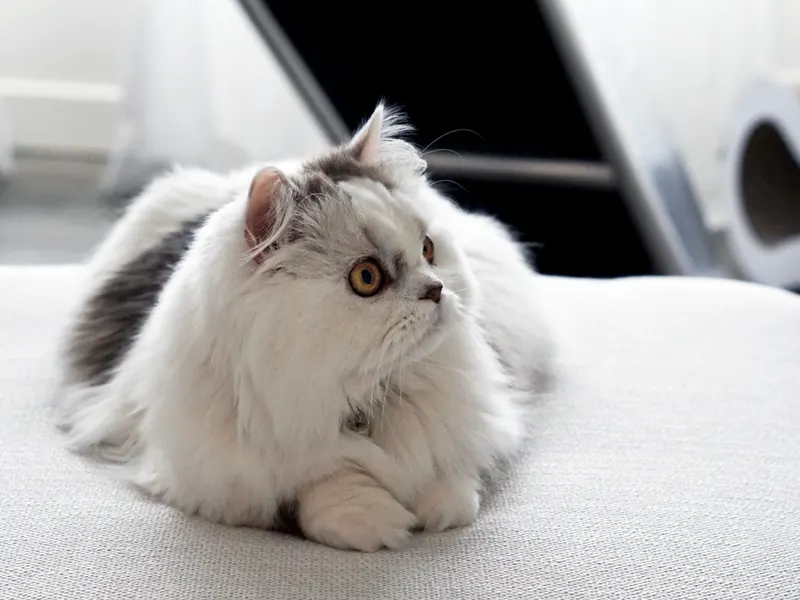
Best Cats For Apartments
Apartment suitability for cats hinges on a different set of traits than it does for dogs, since cats are already largely indoor-adapted and don't require the same outdoor exercise or bathroom-access logistics — what actually matters here is a breed's activity level and destructive potential when under-stimulated in a confined space, its vocalization tendency in a building with shared walls, and its tolerance for a smaller territory without the roaming range a house-with-yard cat might otherwise claim. Breeds on the calmer, more low-key end of the activity spectrum — several long-haired and stockier breeds bred more for companionship than the high-drive hunting instinct still visible in some more athletic breeds — tend to adapt to apartment confinement with less restlessness, since their baseline energy and territorial-patrol instinct is naturally lower and doesn't run up against the physical limits of a smaller space the way a highly active, jump-and-climb-driven breed's would. That said, even a calm breed benefits enormously from vertical space (cat trees, shelving) in an apartment specifically, since vertical territory substitutes meaningfully for horizontal square footage that a smaller unit simply doesn't have. Vocalization deserves real weight in apartment-suitability specifically, more so than for cats in houses with more buffer from neighbors: Siamese and several other vocal, talkative breeds are wonderful, engaging companions for owners who enjoy a chatty cat, but their tendency toward frequent, sometimes loud vocalizing — especially when seeking attention or expressing displeasure — can become a genuine neighbor issue in a building with thin walls, which is worth weighing honestly against a quieter breed if noise complaints are a realistic concern in a specific building. A common misconception worth correcting directly: high energy in cats doesn't automatically rule a breed out of apartment living the way it more often does for dogs, since a cat's exercise needs can be substantially met indoors through vertical climbing structures, interactive play sessions, and window perches in a way a high-energy dog's outdoor exercise needs generally can't be — meaning several genuinely active, playful breeds still make excellent apartment cats provided the owner commits to regular interactive play and enough vertical and enrichment space, rather than energy level alone disqualifying a breed the way it more directly would for a dog. This list draws on documented moderate-to-adaptable activity levels, a lower baseline vocalization tendency where relevant, and a general temperament suited to a confined indoor territory without excessive stress or destructive behavior. Any apartment cat, regardless of breed, benefits from environmental enrichment — scratching posts, vertical space, rotating toys, and regular play — to prevent the boredom-driven issues (furniture scratching, overeating, excessive sleeping) that can develop in an understimulated indoor cat of any breed confined to a smaller footprint without that enrichment. Rounding out the apartment-suited picture on the cat side: the Scottish Fold's calm, adaptable temperament and moderate activity level suit smaller indoor spaces well, though prospective owners should research the breed's well-documented cartilage condition (linked to the same gene responsible for the folded-ear trait) before committing, since it affects joint health in a meaningful share of the breed; the Exotic Shorthair offers a Persian-like calm temperament in a lower-maintenance short coat; and the Burmese combines an adaptable, people-focused temperament with modest space needs. One apartment-relevant litter box detail goes beyond simple placement: a covered or enclosed litter box can help contain both odor and litter scatter in a smaller living space, though some cats show a genuine behavioral preference for open boxes and may avoid a covered one if it feels too confined or traps odor uncomfortably close — testing both styles with a specific cat, rather than assuming either option universally works better, is worth the modest cost difference given how directly litter box comfort affects a cat's willingness to use it consistently rather than seeking out an inappropriate spot instead. Scratching post placement deserves specific mention for apartment living, since a poorly placed post often goes unused regardless of a cat's actual need to scratch: positioning at least one sturdy, tall enough post near a cat's favorite resting or high-traffic area — rather than tucked away in an unused corner — meaningfully increases actual use, protecting apartment furniture and security-deposit-relevant surfaces far more effectively than a post that's technically present but practically ignored. A predictable daily schedule — consistent feeding and play times even within a compact space — tends to matter more for an apartment cat's overall contentment than square footage alone, since routine stability substitutes meaningfully for the larger territory a house cat might otherwise patrol.