Cobby Body Type
American Shorthair
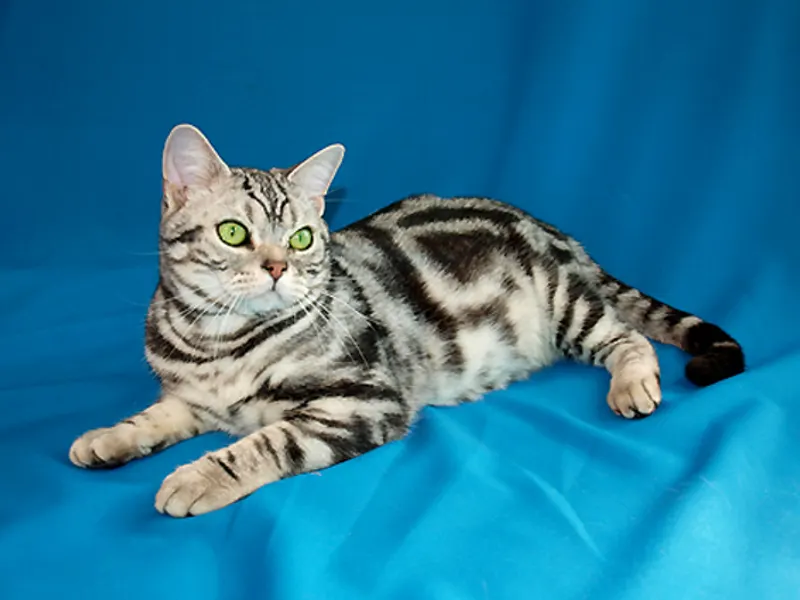
American Shorthair traces its working ancestry to the short-coated cats early European colonists brought aboard ships to control rodents in grain stores — a practical, unglamorous origin shared with several other "shorthair" breeds worldwide, and one popularly (if unverifiably) linked to cats said to have traveled on the Mayflower. What distinguishes it as a formal breed is deliberate American refinement in the early 20th century: fanciers selected robust, naturally-built cats (originally shown under the name "Domestic Shorthair" before a 1966 name change to American Shorthair to distinguish pedigreed stock from unpedigreed cats) for a sturdy, medium build suited to a genuinely working farm and barn cat rather than any extreme physical trait. The breed was among CFA's five founding breeds when the association formed in 1906. The breed actually lost ground in popularity through the early 1900s as flashier imported longhaired breeds like the Persian became fashionable in American show halls, and the 1966 name change to American Shorthair was itself part of a deliberate effort by fanciers to re-establish the breed's distinct identity and refocus breeding on its original sturdy, working-cat type rather than let it be overshadowed indefinitely.
Common health predispositions
- Hypertrophic cardiomyopathy
- Obesity
Temperament
The American Shorthair's personality reflects that working-cat foundation: even-keeled, adaptable, and rarely destructive or demanding, which is part of why the breed consistently rates near the top for tolerance of children and other pets. This is not a high-strung or especially vocal breed — American Shorthairs tend toward quiet, low-drama companionship, content to observe household activity rather than insert themselves into it, though individual cats still form genuine attachments to their people. The breed's steadiness under handling also makes it a common choice for households introducing children to responsible pet care for the first time.
Living with a American Shorthair
Coat care is minimal — a short, dense single coat needs only occasional brushing, and the breed's moderate shedding is manageable with weekly attention. Exercise needs are similarly modest, though the breed's history as an active working cat means it appreciates climbing and play more than a purely sedentary lap-cat type would. The two health concerns most documented in the breed are hypertrophic cardiomyopathy, a thickening of the heart muscle that responsible breeders screen for via cardiac ultrasound, and obesity, which the breed's easygoing, food-motivated temperament makes a real practical risk if meals aren't portioned carefully. The silver classic tabby pattern is one of the breed's most show-celebrated colorings, though American Shorthairs are recognized in dozens of colors and patterns overall. One especially prized show variety, the silver classic tabby, is sometimes informally called the 'Silver Ghost' by fanciers for its striking black-on-silver marbled pattern, though the breed standard also fully recognizes solid, shaded, and other tabby colorings as equally valid. The breed standard recognizes an unusually wide range of colors and patterns — more than 80 combinations by some breed-club counts — giving American Shorthair breeders considerable latitude compared with breeds locked into a narrower approved palette.
FAQ
How is an American Shorthair different from a Domestic Shorthair?
An American Shorthair is a pedigreed breed with a documented lineage and a defined standard maintained by breed clubs, while Domestic Shorthair is the general unpedigreed population — a cat can look similar to an American Shorthair without being a registered example of the breed.
Do American Shorthairs get along with dogs?
Typically well — the breed's even temperament and high tolerance for other animals make it one of the more reliably dog-compatible cat breeds, though as with any introduction, a gradual, supervised process matters more than the breed alone.
How long do American Shorthairs typically live?
15 to 20 years is typical for the breed, among the longer lifespans in the cat-fancy world, reflecting its historically robust, non-extreme physical build.
Was the American Shorthair really on the Mayflower?
It's a popular piece of breed folklore rather than a documented fact — ship cats of some kind almost certainly traveled with early colonists for rodent control, but no specific record ties today's American Shorthair breed directly to the Mayflower's crossing.
How can I tell an American Shorthair apart from a British Shorthair?
The two breeds can look superficially similar in a stocky build and round face, but American Shorthairs have a somewhat less extreme, less rounded head and a leaner overall build than the notably chunkier, more compact British Shorthair, along with separate, independently documented breeding histories on opposite sides of the Atlantic.
Related on FetchBreed
Comparisons
- American Shorthair vs Abyssinian
- American Shorthair vs Bengal
- American Shorthair vs Birman
- American Shorthair vs British Shorthair
- American Shorthair vs Burmese
- American Shorthair vs Domestic Longhair
- American Shorthair vs Domestic Shorthair
- American Shorthair vs Exotic Shorthair
- American Shorthair vs Himalayan
- American Shorthair vs Persian
- American Shorthair vs Russian Blue
- American Shorthair vs Scottish Fold
Whichever breed fits your life, consider adoption or breed-specific rescue first — many purebred and mixed-breed dogs and cats are already waiting for homes.
General breed information, not veterinary advice — consult a vet for your pet's specific health, diet, and behavior needs.