Working Group
Newfoundland
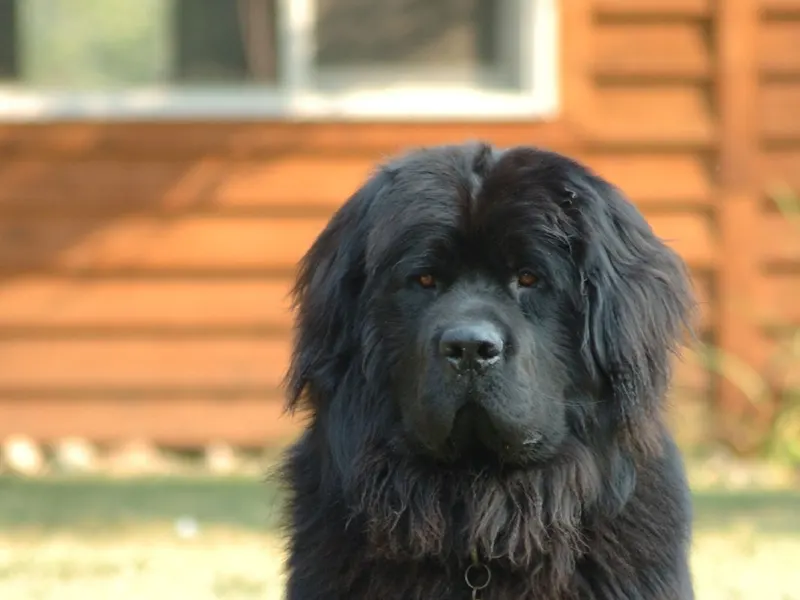
The Newfoundland developed on the Canadian island of the same name, likely from a mix of local dogs and those brought by European fishermen, bred specifically for water rescue and heavy hauling work — pulling fishing nets, carrying lines to shore, and famously rescuing people from drowning, aided by a water-resistant double coat and partially webbed feet unusual among large working breeds. The breed's documented rescue instinct is strong enough that Newfoundlands have historically been trained and used in formal water-rescue and lifeguard support programs in several countries. The AKC recognized the breed in 1886, and it comes in several standard colors including solid black, brown, gray, and the distinctive black-and-white 'Landseer' pattern, named after the 19th-century painter Sir Edwin Landseer, who famously depicted the breed in his artwork. The breed's giant paws and thick, muscular tail also function as effective rudders and paddles in the water, structural adaptations distinct from the more general large-breed build seen in non-water-working giants like the Mastiff. The breed's tolerance for cold water is genuinely exceptional, and Newfoundland water-rescue demonstrations, in which the dogs tow small boats or pull swimmers to shore, remain a popular event at breed specialty shows. The breed's massive size and gentle nature have made it a recurring choice in literature and film for family-guardian roles, most famously as the inspiration for Nana in J.M. Barrie's Peter Pan.
Common health predispositions
- Subvalvular aortic stenosis
- Hip dysplasia
- Bloat
Temperament
Breed clubs and owners alike reach for the nickname 'nanny dog' when describing this breed's demeanor around children, and the trait scores back that up — kids and other pets both land at the top of its compatibility ratings, the product of centuries spent selected for calm cooperation with fishing families rather than any guarding or hunting instinct. Trainability is good, and the breed's natural affinity for water means many Newfoundlands take to swimming and water-rescue training with genuine enthusiasm.
Living with a Newfoundland
Roughly 45 minutes of daily activity does the job, and swimming stands out as a favorite, low-impact way to burn it off for a dog this size. Expect a real grooming routine, too — the thick, water-resistant double coat sheds heavily and mats quickly without several brushing sessions a week to keep on top of it. Subvalvular aortic stenosis, a congenital heart defect, is a documented concern specific enough to the breed that cardiac screening of breeding stock is standard practice among reputable breeders, alongside hip dysplasia and bloat risk typical of large, deep-chested breeds. The breed's substantial size — up to 150 pounds — means real ongoing costs for food, medication, and equipment, and heavy drooling is a normal, expected trait rather than a health concern. Because of its rapid growth rate, a large-breed puppy food formula is standard veterinary advice for the breed, aimed at reducing developmental joint stress during the fast growth period common to all giant breeds.
FAQ
Are Newfoundlands really good swimmers?
Yes, exceptionally — the breed's partially webbed feet and thick, water-resistant double coat are genuine physical adaptations for swimming and water rescue work, and many Newfoundlands have been formally trained and used in water-rescue and lifeguard support programs historically and today.
Why are Newfoundlands called 'nanny dogs'?
The nickname reflects the breed's historically documented patience and gentleness around children, a temperament shaped by centuries of working closely and cooperatively with entire fishing families rather than guarding territory — though as with any large breed, adult supervision around young kids still matters given the dog's sheer size.
What is subvalvular aortic stenosis in Newfoundlands?
A congenital heart defect involving narrowing below one of the heart's valves, documented at elevated rates in the breed; reputable breeders screen breeding stock for it via cardiac evaluation, and it's serious enough that a vet-recommended heart check is standard advice for a Newfoundland puppy.
How much grooming does a Newfoundland need?
A significant, ongoing commitment — the thick, water-resistant double coat sheds heavily and mats without regular brushing several times a week, and the breed's size means grooming sessions take genuinely more time than with a smaller double-coated breed.
What is a Landseer Newfoundland?
A black-and-white color variety of the breed, named after 19th-century painter Sir Edwin Landseer, who frequently depicted Newfoundlands in that pattern in his artwork; some kennel clubs outside North America treat it as a distinct breed variety, though the AKC classifies it simply as a color variation within the standard Newfoundland breed.
Is it true a Newfoundland accompanied Lewis and Clark's expedition?
Yes — a Newfoundland named Seaman traveled the entire Lewis and Clark expedition route across the American West from 1804 to 1806, and journals from the trip describe him hunting game, warning of danger, and even surviving a beaver bite, making him one of the earliest documented examples of the breed's natural strength and water-oriented instincts in an American historical record.
Related on FetchBreed
Comparisons
- Newfoundland vs Akita
- Newfoundland vs Alaskan Malamute
- Newfoundland vs Bernese Mountain Dog
- Newfoundland vs Boxer
- Newfoundland vs Cane Corso
- Newfoundland vs Doberman Pinscher
- Newfoundland vs Great Dane
- Newfoundland vs Great Pyrenees
- Newfoundland vs Mastiff
- Newfoundland vs Rottweiler
- Newfoundland vs Saint Bernard
- Newfoundland vs Samoyed
Care equipment for a Newfoundland
As an Amazon Associate we earn from qualifying purchases made through these links, at no extra cost to you.
- Undercoat rake
The thick, water-resistant coat sheds heavily and mats quickly without several brushing sessions a week, per this page.
- Dog life jacket
Swimming is singled out here as the favourite low-impact way to exercise a dog this heavy.
Whichever breed fits your life, consider adoption or breed-specific rescue first — many purebred and mixed-breed dogs and cats are already waiting for homes.
General breed information, not veterinary advice — consult a vet for your pet's specific health, diet, and behavior needs.