Non-Sporting Group
Boston Terrier
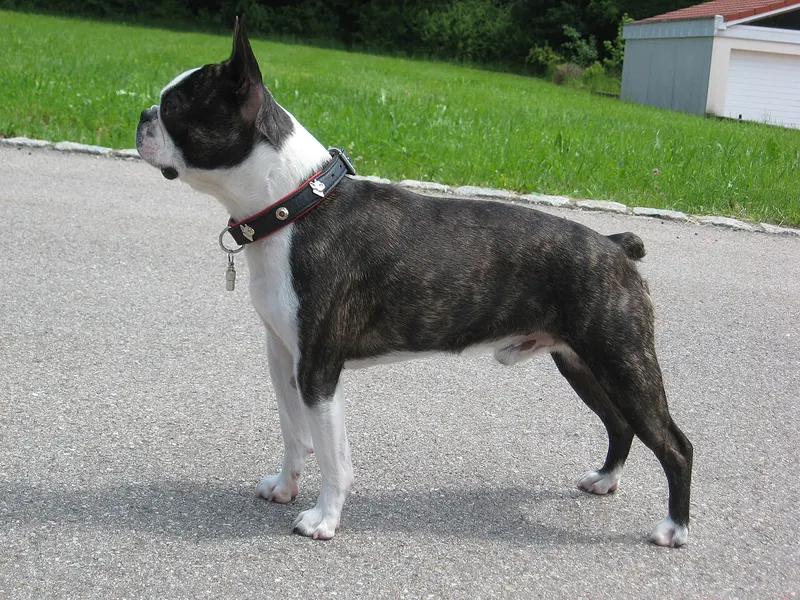
The Boston Terrier was developed in 1870s Boston from a cross between an English Bulldog-type dog named Judge and a white English Terrier, making it one of a small number of breeds developed specifically in the United States rather than imported and adapted from elsewhere. It became the first American-bred, non-sporting breed admitted to the AKC in 1893, and its natty black-and-white 'tuxedo' coat pattern combined with an easygoing temperament earned it the enduring nickname 'the American Gentleman.' Massachusetts adopted it as the state dog in 1979, a fitting honor for a breed that never existed anywhere else before being bred there in the 1870s, and the AKC's 1893 recognition came remarkably fast for a brand-new, American-only breed.
Common health predispositions
- Brachycephalic airway issues
- Cataracts
- Patellar luxation
Temperament
Boston Terriers are friendly and notably adaptable, with moderate energy and good trainability that make them easier to live with day to day than many small breeds. The trait profile shows top marks for compatibility with children and strong compatibility with other pets, and the breed is generally considered one of the calmer, more even-keeled companion breeds without the yappy reputation some small dogs carry — vocalization is only moderate rather than constant. The breed's intelligence and eagerness to please make it one of the more straightforward small breeds to train, and Boston Terriers often do well in structured activities like rally obedience or agility scaled to their size, which also helps meet their moderate exercise needs.
Living with a Boston Terrier
About 40 minutes of exercise suits the breed well, and the short, flat coat sheds lightly and wipes clean with minimal fuss. The Boston Terrier's brachycephalic anatomy is less extreme than the Bulldog's or French Bulldog's, but it still brings real heat sensitivity and noisy breathing that owners need to plan around in hot weather. The breed's prominent eyes are prone to injury and corneal ulcers during play, and patellar luxation and cataracts are both documented health issues — overall a moderate health-risk profile for a flat-faced breed, meaningfully better than the more extreme brachycephalic breeds but not risk-free. The breed's tuxedo-pattern coat comes in a few AKC-recognized color combinations (black, brindle, or seal, each with white markings), which is purely cosmetic and doesn't affect temperament or health. Boston Terriers are generally considered one of the easier brachycephalic breeds to place with first-time flat-faced-breed owners specifically because their airway issues, while real, tend to be milder on average than the Bulldog's or French Bulldog's. Routine eye checks are a sensible habit for this breed specifically, since its prominent eyes are more exposed to everyday scratches and debris than a longer-muzzled dog's. Keeping the breed's facial wrinkles (where present) clean and dry helps prevent the same skin-fold irritation seen in more extreme brachycephalic breeds.
FAQ
Is the Boston Terrier a good apartment dog?
Yes, generally — its modest exercise needs, calm indoor demeanor, and moderate vocalization make it well suited to apartment living, though the breed's heat sensitivity means summer walks still need to be timed for cooler parts of the day.
Why are Boston Terrier eyes prone to injury?
The breed's prominent, slightly protruding eyes sit more exposed than in longer-muzzled breeds, making them more vulnerable to scratches and corneal ulcers during rough play, and regular eye checks are a sensible part of routine care.
Are Boston Terriers considered brachycephalic?
Yes, though less extremely than breeds like the Bulldog or French Bulldog — the Boston Terrier's face is shortened enough to bring real heat sensitivity and audible breathing, but generally with fewer severe airway complications than the most extreme flat-faced breeds.
Is a Boston Terrier a good choice for a first-time flat-faced dog owner?
Often yes, relative to other brachycephalic breeds — the Boston Terrier's airway anatomy is typically less extreme than the Bulldog's or French Bulldog's, meaning milder (though not absent) heat sensitivity and breathing noise, which makes it a comparatively gentler introduction to owning a flat-faced breed.
Is the Boston Terrier considered America's first native breed?
It's often called exactly that — developed in Boston, Massachusetts in the late 1800s from crosses of English Bulldog and English Terrier stock, it became the first American-bred breed accepted for AKC registration in 1893, and it remains the official state dog of Massachusetts, a distinction that reflects its genuinely American origin story.
Related on FetchBreed
Comparisons
- Boston Terrier vs Beagle
- Boston Terrier vs Bichon Frise
- Boston Terrier vs Bulldog
- Boston Terrier vs Cavalier King Charles Spaniel
- Boston Terrier vs Cavapoo
- Boston Terrier vs Cockapoo
- Boston Terrier vs Dachshund
- Boston Terrier vs French Bulldog
- Boston Terrier vs Havanese
- Boston Terrier vs Miniature Schnauzer
- Boston Terrier vs Shiba Inu
- Boston Terrier vs Standard Poodle
Care equipment for a Boston Terrier
As an Amazon Associate we earn from qualifying purchases made through these links, at no extra cost to you.
- Fitted dog harness
The page notes real heat sensitivity and noisy breathing even though the anatomy is less extreme than a Bulldog's.
- Dog eye wash
Routine eye checks are called a sensible habit for this breed specifically, since its prominent eyes are more exposed to everyday scratches and debris.
Whichever breed fits your life, consider adoption or breed-specific rescue first — many purebred and mixed-breed dogs and cats are already waiting for homes.
General breed information, not veterinary advice — consult a vet for your pet's specific health, diet, and behavior needs.