Long & Substantial Body Type
Siberian
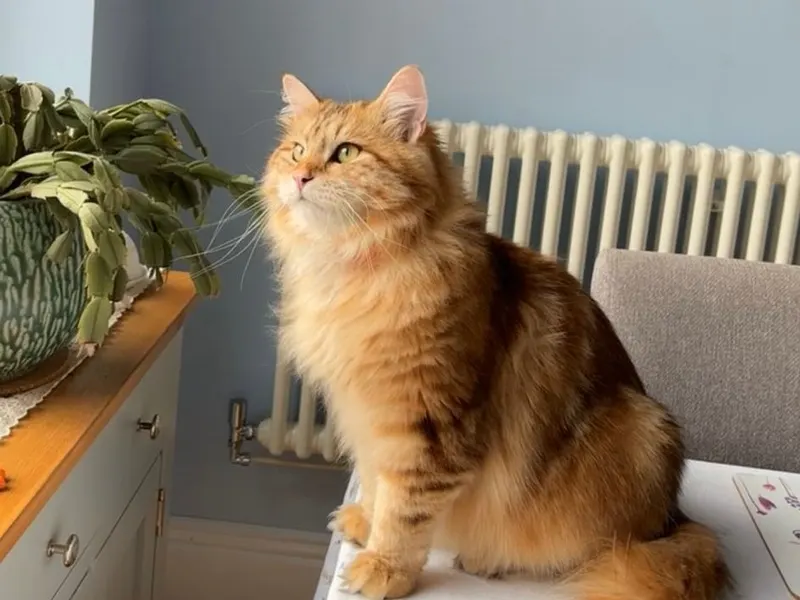
The Siberian is a natural landrace breed that developed over centuries in Russia's forests and farms, adapted through natural selection to the region's harsh winters long before any formal breeding program existed — it appears in Russian folklore and literature going back centuries as a recognizable native cat type, and the cats were commonly kept in Soviet-era warehouses and grain stores for the same working rodent-control purpose their ancestors served for generations. The breed remained essentially unknown outside Russia until the end of the Cold War made export possible; Russia published its first formal breed standard for the Siberian in 1990, and the first Siberians reached the United States that same year, a genuinely recent introduction to Western cat fancy compared with the breed's much older presence in its home country.
Common health predispositions
- Hypertrophic cardiomyopathy
Temperament
Siberians combine notable athleticism — they're strong jumpers and enthusiastic climbers — with a generally affectionate, people-oriented temperament that rates highly for compatibility with both children and other pets. They tend to be confident and curious rather than shy, often investigating new objects or visitors rather than hiding, and many individuals show a distinctive fondness for water uncommon among cats generally, likely a holdover from the breed's semi-wild forest ancestry. Owners frequently describe the breed as dog-like in its eagerness to greet people at the door and its willingness to be involved in whatever activity is happening around the house. Exceptionally large individual males have been informally reported at 20+ lbs, though this is well above the breed's typical range and reflects individual variation rather than a standard target.
Living with a Siberian
The long, water-resistant triple coat — an actual three-layer structure evolved for genuine cold-climate survival — needs regular brushing, particularly through seasonal shedding periods when the undercoat blows out in noticeable clumps. The breed is frequently marketed as hypoallergenic based on some early studies suggesting lower levels of the major cat allergen protein (Fel d 1) in Siberian saliva, though the research remains limited and individual variation is significant, so the trait is best described as potentially lower-allergen rather than a guaranteed hypoallergenic breed. Hypertrophic cardiomyopathy is the primary documented health concern in the breed, and reputable breeders screen for it via cardiac ultrasound. Because the breed matures slowly, both physically and in coat development, a Siberian kitten's adult coat and full body size aren't fully apparent until several years of age. The tail is notably full and well-furred relative to the body, an extension of the same triple-coat structure that covers the rest of the cat, and it's often held low and thickly brushed out rather than the more streamlined tail carriage seen in shorter-coated breeds.
FAQ
Are Siberian cats really hypoallergenic?
The evidence is suggestive but not conclusive — some studies have found lower levels of the Fel d 1 allergen protein in Siberian cats compared with other breeds, which is why the breed is popular with allergy sufferers, but individual cats vary and no breed is guaranteed allergen-free, so a trial visit before committing is genuinely worthwhile.
Do Siberian cats like water?
Many do, more than the average cat breed — it's a commonly reported trait likely connected to the breed's semi-wild forest ancestry and water-resistant coat, though as with most breed-level generalizations, individual cats vary.
How big do Siberian cats get?
Large — males typically reach 12-17 lbs with females somewhat smaller, and the breed takes up to five years to reach full physical maturity, among the slowest-maturing of any cat breed.
When did Siberian cats first come to the West?
1990 — the breed remained essentially unexported from Russia until the end of the Cold War, and Russia published its first official breed standard the same year the first Siberians reached the United States, making it one of the more recently internationalized cat breeds despite its centuries-old presence at home.
Are Siberian cats the national cat of Russia?
There's no single formal designation, but the Siberian is widely regarded within Russia as its most iconic native cat breed, given its centuries-long presence as a natural landrace across the country long before any formal breed standard existed.
Does the Siberian's coat change much with the seasons?
Yes, noticeably — the breed's triple coat thickens substantially for winter, with a heavier neck ruff, britches, and tail plume, then sheds out heavily in spring into a comparatively sleeker summer coat. Owners in warmer climates sometimes find their Siberian never quite grows in the full dramatic winter coat seen in cats raised in genuinely cold regions, since coat density responds partly to ambient temperature and daylight length.
Related on FetchBreed
Comparisons
Care equipment for a Siberian
As an Amazon Associate we earn from qualifying purchases made through these links, at no extra cost to you.
- Undercoat comb
The page says the triple coat needs regular brushing particularly through seasonal shedding, when the undercoat blows out in noticeable clumps.
Whichever breed fits your life, consider adoption or breed-specific rescue first — many purebred and mixed-breed dogs and cats are already waiting for homes.
General breed information, not veterinary advice — consult a vet for your pet's specific health, diet, and behavior needs.