Foreign Body Type
Serengeti
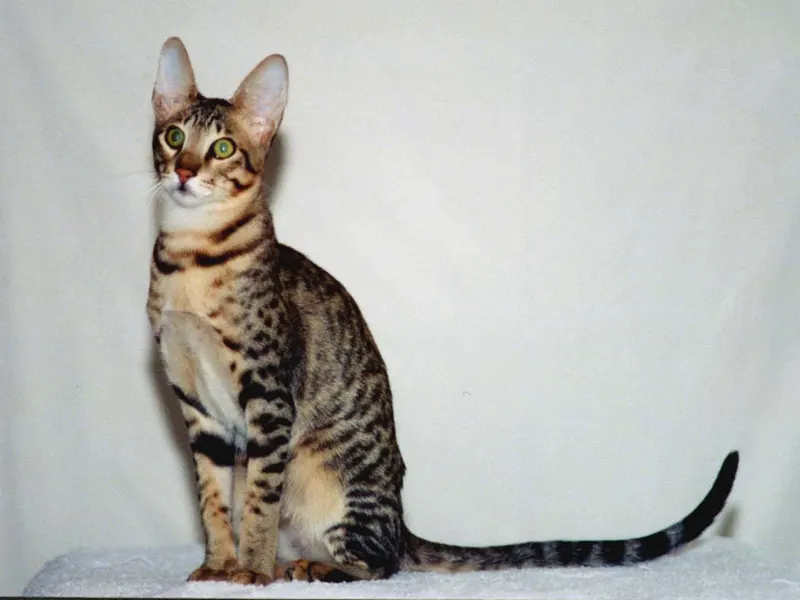
The Serengeti was developed starting in 1994 by California breeder Karen Sausman, who deliberately crossed Bengals with Oriental Shorthairs specifically to create a cat that visually resembled the African serval — tall, long-legged, with large ears and a spotted coat — without using any actual wild serval genetics the way the Savannah does. TICA granted the breed registration status in the early 2000s, and the Serengeti's fully domestic ancestry is a defining, deliberate distinction from the Savannah, which Sausman reportedly designed the Serengeti partly in response to, aiming to give buyers a serval-look cat without the wild-hybrid ownership complications and legal restrictions that come with genuine serval ancestry. Sausman drew on her background running a wildlife-focused nonprofit organization when designing the Serengeti's breeding goals, aiming for a domestic cat that would satisfy interest in exotic-looking companions without contributing to demand for genuine wild-hybrid ownership, a conservation-minded rationale distinct from most other breed development stories.
Common health predispositions
- Hypertrophic cardiomyopathy (watched given Bengal ancestry)
- Fully domestic cross — no wild-hybrid ownership restrictions
Temperament
Serengetis are typically described as highly active, playful, and vocal, sharing some of the Bengal's athleticism and energy alongside the Oriental Shorthair's social, talkative temperament. The breed generally does well in households with kids or resident pets, and many owners describe it as genuinely dog-like in its eagerness to interact, follow household routines, and engage in interactive play well into adulthood. Food is a reliable training tool with this breed, and many owners report teaching Serengetis simple tricks or leash-walking without much difficulty, since new activities tend to hold its interest rather than spook it.
Living with a Serengeti
The short, spotted coat sheds a moderate amount, easily managed with an occasional brushing session. Its Bengal ancestry means periodic cardiac checks for hypertrophic cardiomyopathy are a sensible precaution, though the Serengeti is otherwise generally considered a healthy breed. Since the Serengeti has no wild ancestry at all, none of the exotic-hybrid permits or generation paperwork that come with owning a Bengal or Savannah apply here, making it a straightforward option for anyone drawn to the tall, long-legged, serval-inspired look without the hybrid-specific red tape. Because the breed's tall, long-legged build is a defining show standard feature, breeders pay close attention to leg length and overall proportion when evaluating kittens — points that decide ribbons rather than anything relevant to a pet-quality cat's health or suitability as a companion. Because the breed remains relatively uncommon outside specialized breeding circles, prospective owners should expect a real wait list with most reputable Serengeti breeders rather than a quick, readily available local purchase.
FAQ
Is the Serengeti related to the Savannah?
Not through shared wild ancestry — while both breeds are deliberately bred to resemble the African serval, the Savannah achieves this through genuine serval crossbreeding, while the Serengeti uses only domestic Bengal and Oriental Shorthair genetics, with no actual wildcat ancestry involved at all.
Does the Serengeti require any special ownership permits?
No — the Serengeti's family tree has no leopard cat or serval in it at all, so the exotic-hybrid permits and generation-based rules that apply to true wild-hybrid breeds in some states and cities simply don't come into play here.
Why was the Serengeti developed?
Breeder Karen Sausman created the Serengeti in 1994 specifically to give buyers the tall, long-legged, spotted, serval-inspired look without any actual wild ancestry, reportedly partly as a response to the ownership complications and legal restrictions associated with genuine wild-hybrid breeds like the Savannah.
Are Serengeti cats vocal?
Yes, fairly — its Oriental Shorthair ancestry left the breed genuinely chatty, and Serengetis tend to vocalize more than a typical shorthaired breed to communicate with their owners.
Can a Serengeti be shown alongside Bengals in competition?
No — despite sharing Bengal ancestry, the Serengeti is judged under its own distinct breed standard that emphasizes the tall, long-legged, serval-like silhouette rather than the rosetted-coat pattern standard Bengals are judged against, so the two compete in entirely separate breed classes at TICA shows. A Serengeti with visible Bengal-typical markings or proportions that stray too far from the breed's own standard would actually be penalized in Serengeti classes rather than rewarded for looking more like its Bengal ancestor.
Are Serengeti cats easy to train?
Relatively, yes — a food reward goes a long way with this breed, and many owners successfully teach Serengetis simple tricks or leash-walking given how readily new activities catch its interest.
What colors are recognized for the Serengeti breed?
TICA's standard recognizes brown spotted tabby, black (melanistic), and black silver spotted tabby, with the brown spotted variety being the closest visual match to the wild serval look Karen Sausman originally aimed for. Solid black Serengetis still show a faint 'ghost' spotting pattern in certain light, a trait inherited from the Bengal side of the breed's ancestry rather than anything added deliberately by breeders chasing the serval resemblance.
Related on FetchBreed
Whichever breed fits your life, consider adoption or breed-specific rescue first — many purebred and mixed-breed dogs and cats are already waiting for homes.
General breed information, not veterinary advice — consult a vet for your pet's specific health, diet, and behavior needs.