Cobby Body Type
Selkirk Rex
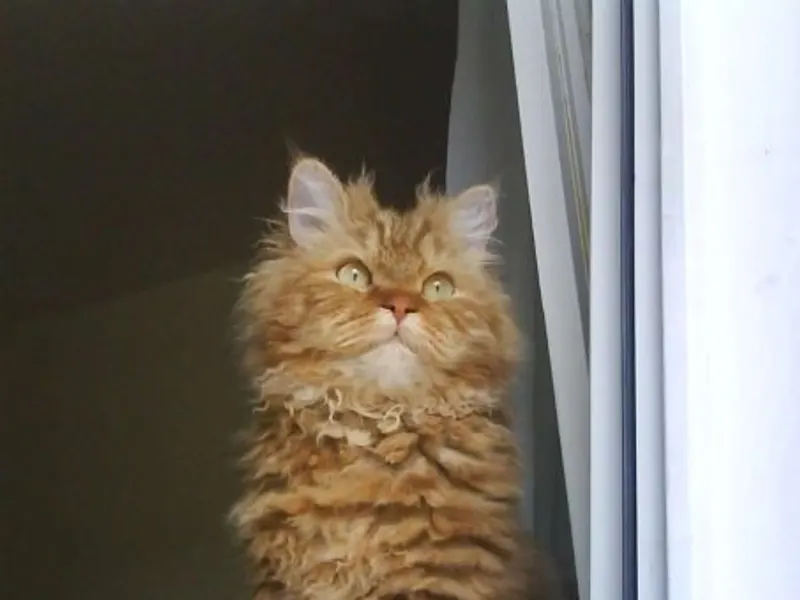
The Selkirk Rex began with a single curly-coated kitten found in a Montana animal shelter litter in 1987, later named Miss DePesto, whose unusual loosely-curled coat prompted breeder Jeri Newman to adopt her and begin a breeding program once genetic testing confirmed the curl was a distinct, dominant mutation unrelated to the previously established Cornish and Devon Rex breeds. Newman crossed Miss DePesto's descendants with Persians, British Shorthairs, and Exotic Shorthairs to build out the breed's body type, giving the Selkirk Rex a notably plusher, denser coat texture than the finer, more delicate curl of the Cornish or Devon Rex. CFA granted the breed championship recognition in 2000. Newman's decision to outcross broadly to Persians, British Shorthairs, and Exotic Shorthairs rather than keep the breeding pool narrow is now widely credited with giving the Selkirk Rex a healthier genetic foundation than some other single-founder mutation breeds managed to establish in their early years.
Common health predispositions
- Polycystic kidney disease (via Persian ancestry in development)
- Hypertrophic cardiomyopathy
Temperament
Selkirk Rex cats are typically described as easygoing, patient, and affectionate, carrying forward some of the calm temperament of the Persian and British Shorthair lines used in the breed's development. They tend to be tolerant of handling and generally good with children, and while playful, they're not typically as intensely high-energy as the Cornish or Devon Rex, reflecting the more moderate-energy parent breeds folded into the Selkirk's development. Because several calm, people-oriented breeds contributed to the Selkirk Rex's foundation, individual cats can show a range of personalities from mellow lap cat to moderately playful, and prospective owners are generally encouraged to spend time with a specific kitten's parents when possible.
Living with a Selkirk Rex
The curly, plush coat — shown in both short and long varieties — needs more grooming than a Cornish or Devon Rex's finer curl, since the denser texture can mat if neglected; a few sessions of gentle brushing a week is typically recommended, and hand-fluffing rather than aggressive brushing helps maintain the coat's characteristic loose curl. Because Persian and Exotic Shorthair ancestry contributed to the breed's development, polycystic kidney disease and hypertrophic cardiomyopathy both turn up in its health records, and reputable breeders screen for each. Kittens are often born with a curly coat that can temporarily straighten during a kitten coat change around six months before the adult curl re-emerges, which can confuse new owners unfamiliar with the breed's coat cycle. Whiskers on a Selkirk Rex are often curled or kinked along with the rest of the coat, similar to the trait seen in the Devon Rex, and it's considered a normal, harmless breed characteristic rather than any indication of poor health.
FAQ
Is the Selkirk Rex related to the Cornish or Devon Rex?
No — despite the shared 'Rex' name and curly coats, genetic testing confirmed the Selkirk Rex's curl mutation is distinct from both the Cornish Rex's and Devon Rex's, and it also produces a notably denser, plusher coat texture rather than the finer curl of the other two rex breeds.
Do Selkirk Rex kittens keep their curly coat their whole life?
Not always in a perfectly consistent way — kittens are often born curly, can temporarily straighten during a coat change around six months of age, and then the adult curl typically re-emerges, a cycle that can surprise new owners unfamiliar with the breed.
Does the Selkirk Rex need more grooming than other rex breeds?
Yes, generally — because the coat is denser and plusher than the finer curl of the Cornish or Devon Rex, it's more prone to matting if neglected, so regular gentle brushing, ideally by hand-fluffing rather than aggressive brushing, is recommended a few times a week.
What breeds contributed to the Selkirk Rex's development?
Persians, British Shorthairs, and Exotic Shorthairs were all used alongside descendants of the original curly-coated foundation cat, Miss DePesto, to build out the breed's plush coat and sturdy, rounded body type.
Why did the founder outcross the Selkirk Rex to so many other breeds?
Breeder Jeri Newman deliberately crossed the original curly-coated foundation cat's descendants with Persians, British Shorthairs, and Exotic Shorthairs to build out the breed's body type and, in doing so, gave the Selkirk Rex a broader genetic foundation than some other single-founder mutation breeds achieved in their early years.
Do Selkirk Rex cats have curly whiskers?
Often, yes — similar to the trait seen in the Devon Rex, Selkirk Rex whiskers frequently show the same curled or kinked texture as the coat, a normal, harmless breed characteristic rather than a sign of poor health.
Related on FetchBreed
Whichever breed fits your life, consider adoption or breed-specific rescue first — many purebred and mixed-breed dogs and cats are already waiting for homes.
General breed information, not veterinary advice — consult a vet for your pet's specific health, diet, and behavior needs.