Semi-cobby Body Type
Ragdoll
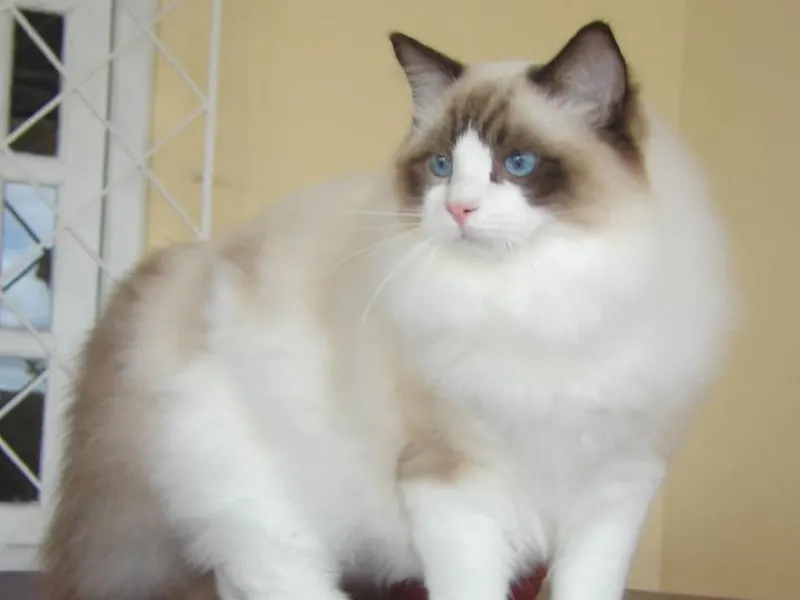
The Ragdoll's documented origin is unusually specific and unusually recent: California breeder Ann Baker developed the breed in the 1960s starting from a white, longhaired free-roaming cat named Josephine, and the breed's name comes from its striking tendency to go limp and relaxed when picked up, a trait Baker heavily promoted (including some now-disputed claims about the trait's origin) as she built and trademarked the breed. Baker's control over the original Ragdoll name and breeding program was contentious enough that several of her own students broke away in the 1970s to found related breeds (including the Ragamuffin) under independent registries after disputes over her licensing terms. TICA granted the Ragdoll full championship recognition in 1993, and the breed has since become one of the most popular pedigreed cat breeds in the US. The Ragdoll Fanciers Club International (RFCI), founded in 1971, became one of the key breed clubs working to standardize and promote the Ragdoll independently of founder Ann Baker's original tightly-controlled program, helping pave the way for the wider multi-registry recognition the breed eventually achieved.
Common health predispositions
- Hypertrophic cardiomyopathy
- Bladder stones
Temperament
Ragdolls are consistently among the most docile, people-oriented cat breeds — the limpness that gave the breed its name reflects a genuinely relaxed, low-reactivity temperament that extends to handling, carrying, and general household chaos, which is a large part of why the breed rates so highly for compatibility with children and other pets. They tend to follow their people around the house and are notably tolerant of being picked up and carried, a trait relatively unusual among cats generally. Because of this trusting, low-defensive temperament, Ragdolls are frequently recommended specifically for households with young children who may not yet have learned gentle handling.
Living with a Ragdoll
The medium-long, silky coat lacks the dense undercoat of a Persian, so it resists matting better and typically needs only a few brushings a week rather than daily attention. Because Ragdolls are large-bodied and famously placid, indoor exercise and play matter for weight management — this is not a naturally high-activity breed, and obesity is a real practical risk if food isn't portioned deliberately. Reputable breeders cardiac-screen their breeding cats for hypertrophic cardiomyopathy, a well-established risk in the breed, and Ragdolls also show an elevated rate of bladder stones compared with cats generally, making diet and hydration genuinely relevant considerations for owners. The breed is always shown in a pointed color pattern (similar to the Siamese's), in solid, mitted, or bicolor variations. The breed is recognized in three distinct pattern categories — colorpoint (solid point color with no white), mitted (point color with white paws and a white chin/belly stripe), and bicolor (larger, more symmetrical white areas including an inverted-V facial marking) — each judged under the same overall standard.
FAQ
Do Ragdoll cats really go limp when picked up?
Many do, to varying degrees — it's a real, widely reported trait linked to the breed's naturally relaxed temperament, though the degree of limpness varies by individual cat and isn't a guaranteed trait every Ragdoll displays identically.
Are Ragdolls indoor-only cats?
Most breeders and vets strongly recommend keeping Ragdolls indoors — their calm, trusting temperament and lack of natural wariness toward strangers or predators makes them poorly equipped to handle outdoor risks compared with more streetwise cat breeds.
How big do Ragdolls get?
Large for a cat breed — males often reach 15-20 lbs, and the breed takes up to four years to reach full physical maturity, notably slower than most breeds, which is worth factoring into growth and diet planning.
Is the Ragdoll the same as the Ragamuffin?
No, though the two breeds share a common origin — the Ragamuffin descends from Ragdoll lines that broke away from founder Ann Baker's original, tightly controlled breeding program in the 1970s amid licensing disputes, and it now has its own separate registry standard and a wider recognized color range than the Ragdoll.
What are the different Ragdoll coat patterns?
Three main patterns are recognized: colorpoint (no white, similar to a Siamese's pattern), mitted (white paws and a white belly/chin stripe), and bicolor (larger white areas including a distinctive inverted-V marking on the face) — all three occur across the breed's various accepted point colors.
How long does it take a Ragdoll to reach full adult size and color?
Considerably longer than most breeds — Ragdolls are famously slow to mature, often not reaching their full adult weight, coat length, and final point color depth until somewhere between three and four years of age. Breeders and owners sometimes describe a Ragdoll kitten's coloring and size at one year as only a rough preview of what the cat will actually look like once fully grown.
Related on FetchBreed
Comparisons
Care equipment for a Ragdoll
As an Amazon Associate we earn from qualifying purchases made through these links, at no extra cost to you.
- Fine-tooth cat comb
This page draws the contrast itself: the coat lacks the dense undercoat of a Persian, so it resists matting better and needs only a few brushings a week. That is why there is no undercoat rake here.
- Wand toy
The page says indoor exercise and play matter for a large-bodied, famously placid cat, since this is not a naturally high-activity breed.
Whichever breed fits your life, consider adoption or breed-specific rescue first — many purebred and mixed-breed dogs and cats are already waiting for homes.
General breed information, not veterinary advice — consult a vet for your pet's specific health, diet, and behavior needs.