Semi-cobby Body Type
Ragamuffin
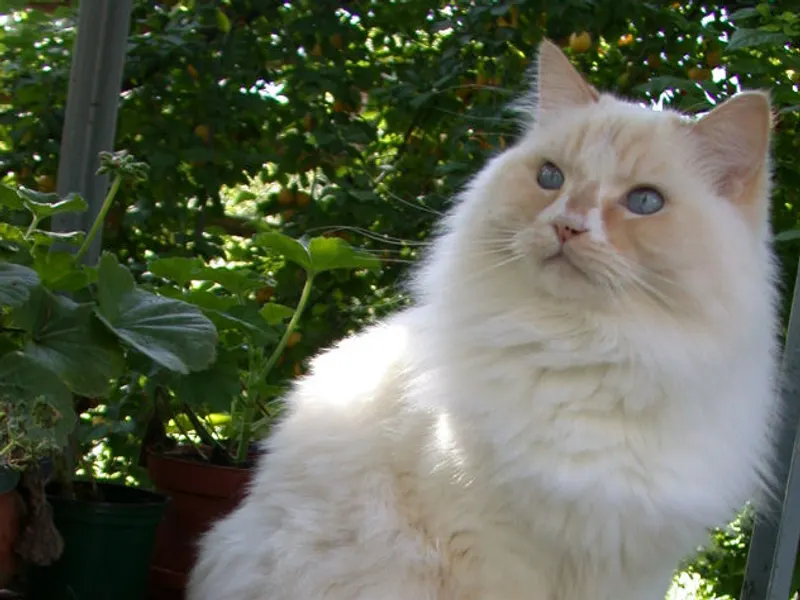
The Ragamuffin emerged in 1994 when a group of breeders broke away from Ragdoll founder Ann Baker's tightly controlled International Ragdoll Cat Association, seeking the freedom to expand the breed's color range and continue development outside Baker's strict licensing terms. Rather than continue calling their cats Ragdolls, the breakaway group established a new name and standard, and the Ragamuffin gained ACFA recognition in 1994 and CFA championship status in 2003 — making it, genetically, an extremely close relative of the Ragdoll that diverged specifically over breeding-program governance rather than any deliberate physical redesign. The 1994 split from Ann Baker's program was contentious enough that some of the earliest Ragamuffin breeders described it publicly as a necessary step to keep the breed's development from being permanently constrained by one individual's licensing terms, a dispute that's still occasionally referenced in cat-fancy histories of the era.
Common health predispositions
- Hypertrophic cardiomyopathy
Temperament
Ragamuffins share the Ragdoll's famously docile, relaxed, people-oriented temperament almost entirely — this is a breed that tolerates handling exceptionally well, tends to go limp or relax when picked up, and forms close, trusting bonds with its household. Kids and other household pets rarely ruffle its calm, reflecting the same low-reactivity, easygoing disposition that made the Ragdoll lineage so popular with families in the first place. Because Ragamuffins were bred with an intentionally wider color palette from the start, individual cats can look quite different from one another while still sharing the same underlying calm, people-oriented temperament that defines the broader Ragdoll-Ragamuffin lineage.
Living with a Ragamuffin
A few weekly brushing sessions keep the medium-long, silky, rabbit-soft coat from tangling, and like the Ragdoll it lacks a dense undercoat, so it resists matting somewhat better than a true plush longhair. Because Ragamuffins are large-bodied and naturally placid, indoor exercise and portioned meals matter for weight management — this breed won't burn off excess calories on its own, and obesity is a real risk without deliberate management. Hypertrophic cardiomyopathy is documented in the breed, consistent with its close Ragdoll ancestry, and periodic cardiac ultrasound is the standard way responsible breeders keep watch for it. Show judges evaluate Ragamuffins on a slightly different standard than Ragdolls despite the shared ancestry, with particular attention to overall coat texture and the breed's rounded, sweet facial expression, details that distinguish competition-quality Ragamuffins from pet-quality cats without affecting a pet's suitability as a companion. Kittens take an unusually long time to reach full size and coat maturity, often not fully filling out until close to four years old, so a young Ragamuffin's eventual adult size and coat plushness aren't always fully apparent at the age most kittens go to new homes.
FAQ
Is the Ragamuffin the same as the Ragdoll?
Genetically very closely related but registered as separate breeds — the Ragamuffin split off in 1994 when a group of breeders left Ragdoll founder Ann Baker's tightly controlled breeding program specifically to gain freedom over color development and governance, not because of any deliberate physical redesign.
What colors do Ragamuffins come in that Ragdolls don't?
A considerably wider range — because the breed split away specifically to escape the original Ragdoll program's strict color and pattern restrictions, Ragamuffin breeders have developed the breed in essentially any color and pattern, unlike the traditionally pointed-only Ragdoll.
Are Ragamuffins good with children?
Yes, generally — the breed shares the Ragdoll's docile, high-tolerance temperament, and Ragamuffins are commonly recommended specifically for households with children given how well most individuals handle being picked up, carried, and generally interacted with.
Do Ragamuffins have the same health concerns as Ragdolls?
Largely yes, given the close genetic relationship — hypertrophic cardiomyopathy is documented in both breeds, and reputable Ragamuffin breeders screen for it via cardiac ultrasound the same way responsible Ragdoll breeders do.
Why did the Ragamuffin breeders leave Ann Baker's original program?
The 1994 split was driven by breeders wanting more freedom over color development and general governance than Ann Baker's tightly controlled licensing terms allowed, a dispute contentious enough at the time that it's still occasionally referenced in histories of the era's cat fancy.
Are Ragamuffins judged the same way as Ragdolls at shows?
Not identically — despite the close shared ancestry, show judges evaluate Ragamuffins under a somewhat different standard, with particular attention to overall coat texture and the breed's rounded, sweet facial expression as distinguishing points from the Ragdoll standard.
Why does the Ragamuffin come in more colors than the Ragdoll?
When the breeders who founded the Ragamuffin split off from Ann Baker's original Ragdoll program in the 1990s, they deliberately opened the new breed's standard to any color and pattern, including solid colors and non-pointed patterns the strict early Ragdoll standard didn't recognize at the time. That broader color acceptance remains one of the clearest practical differences between the two closely related breeds today.
Related on FetchBreed
Whichever breed fits your life, consider adoption or breed-specific rescue first — many purebred and mixed-breed dogs and cats are already waiting for homes.
General breed information, not veterinary advice — consult a vet for your pet's specific health, diet, and behavior needs.