Semi-foreign Body Type
Japanese Bobtail
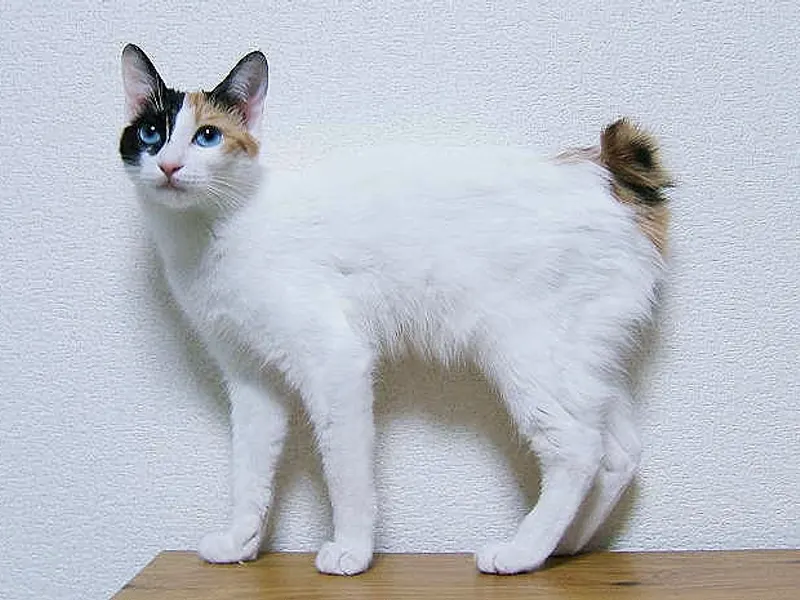
The Japanese Bobtail is an ancient, naturally-occurring breed documented in Japanese art and literature for centuries, with the short, pom-pom-like tail — unique in shape to each individual cat, the result of a natural genetic variation rather than deliberate breeding — appearing consistently across generations of Japanese cat populations long before any formal Western-style breed standard existed. The breed is widely, though not certainly, linked to the maneki-neko, the ubiquitous "beckoning cat" figurine associated with good fortune in Japanese culture, though the figurine's exact origins are themselves debated among historians. American breeder Elizabeth Freret imported the first Japanese Bobtails to the US in 1968, and CFA granted the breed championship recognition in 1976. The breed appears in Japanese woodblock prints and folk art dating back centuries, often depicted alongside its owner in scenes of daily life, a level of documented cultural presence relatively few cat breeds worldwide can claim with comparable historical depth.
Common health predispositions
- Generally healthy; no documented tail-related spinal defects unlike Manx
Temperament
Japanese Bobtails are typically described as active, vocal, and highly social — this is a breed that engages readily with its household, often described by owners as talkative in a softer, more melodic register than the sharper Siamese voice, sometimes said to "sing" rather than simply meow. They tend to be excellent with children and other pets, reflecting centuries of the breed living in close daily contact with Japanese households and communities as a genuinely integrated companion animal rather than a working or show-focused breed. The breed is also known for sitting upright with one paw raised in a pose widely believed to have influenced the maneki-neko figurine's iconic beckoning gesture, a posture many Japanese Bobtail owners report seeing their cats adopt naturally.
Living with a Japanese Bobtail
Both a shorthaired and a longhaired version of the breed exist, so grooming can mean anything from an occasional once-over to weekly brushing depending on which type a given cat is. The distinctive bobtail itself, unlike the Manx's tailless mutation, is not associated with the serious spinal cord defects documented in Manx cats; the shortened, kinked, or pom-pom tail structure in Japanese Bobtails comes from a different, generally benign genetic mechanism, and the breed is considered robust overall with few well-documented breed-specific health conditions. Japanese Bobtails are active and benefit from regular interactive play and climbing opportunities. Because the breed has such a long, informally documented history as an everyday household cat in Japan rather than a rigorously bred show type, individual Japanese Bobtails today can still show some natural variation in body proportions even within the modern breed standard.
FAQ
Is the Japanese Bobtail's tail dangerous to the cat's health, like the Manx's?
No — the two short-tailed looks come from entirely separate genetic mechanisms, and the Japanese Bobtail's is a generally benign one, unconnected to the spinal cord defects documented in the Manx's tailless mutation.
Is every Japanese Bobtail's tail shaped the same way?
No — part of the breed's charm is that each cat's pom-pom-like tail is genuinely unique in exact shape and length, a natural result of the underlying genetic variation rather than a uniform, deliberately bred trait.
Is the maneki-neko figurine based on the Japanese Bobtail?
It's a widely held and plausible cultural association, though not definitively proven — the beckoning-cat figurine's exact historical origins are debated among researchers, but the Japanese Bobtail's long-documented presence in Japanese art and households makes the connection a reasonable, commonly cited one.
Are Japanese Bobtails good with children?
Yes, generally — the breed has a long history as an integrated household companion in Japan rather than a purely show-bred type, and it's typically described as social, adaptable, and tolerant of children and other pets.
How old is the Japanese Bobtail as a breed?
Genuinely ancient by cat-fancy standards — the type appears in Japanese art and literature going back centuries, long before any Western-style breed standard existed, making it one of the older documented natural cat populations, even though formal international recognition only came in the late 20th century.
Why does the Japanese Bobtail sometimes sit with one paw raised?
It's a naturally occurring posture many owners report their cats adopting, and it's widely believed — though not definitively proven historically — to be connected to the beckoning gesture depicted by the maneki-neko figurine long associated with the breed.
Is the calico Japanese Bobtail especially significant in Japan?
Yes — the tricolor pattern, known locally as mi-ke ('three fur'), is considered particularly lucky in Japanese folklore and is the color most associated with the maneki-neko beckoning-cat figurines sold throughout the country. While the breed standard accepts many colors and patterns beyond mi-ke, tricolor Japanese Bobtails have historically carried extra cultural cachet that plain solid or bicolor cats of the same breed don't share.
Related on FetchBreed
Whichever breed fits your life, consider adoption or breed-specific rescue first — many purebred and mixed-breed dogs and cats are already waiting for homes.
General breed information, not veterinary advice — consult a vet for your pet's specific health, diet, and behavior needs.