Semi-foreign Body Type
Domestic Longhair
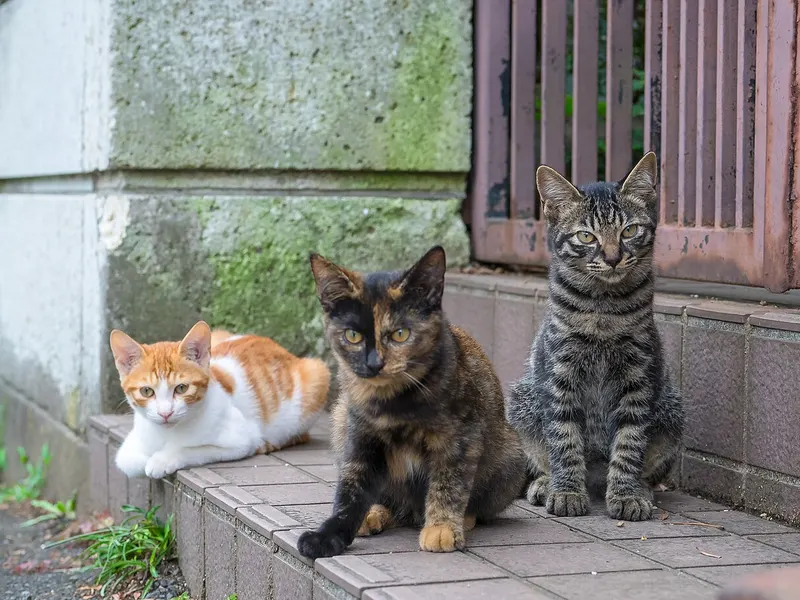
Domestic Longhair describes an unpedigreed cat carrying the recessive long-hair gene, which entered general cat populations centuries ago through interbreeding with early longhaired imports such as Angora-type cats from Turkey and Persian-type cats from Iran as they moved along trade routes into Europe and beyond. Unlike Domestic Shorthair, which is simply the default coat length, Domestic Longhair requires two copies of a specific recessive allele, so these cats are a smaller, genetically distinct subset of the general unpedigreed population rather than a formal breed. Because the trait is recessive, a longhaired kitten can appear unexpectedly in a litter of otherwise shorthaired cats whenever both parents happen to carry a hidden copy of the gene, which is part of why the ratio of DLH to DSH cats varies noticeably by region and local gene-pool history.
Common health predispositions
- Matting
- Obesity
Temperament
As with Domestic Shorthairs, there is no single breed-level temperament to point to — personality in a Domestic Longhair reflects the individual cat's genetics and early experience rather than any deliberate selection program. What owners and shelter staff do note anecdotally is that the longhair gene itself carries no known temperament association; a Domestic Longhair kitten from the same litter as shorthaired siblings shows the same range of confident-to-shy personalities as its coat-length peers. Feral and semi-feral longhaired populations, when they persist in a colony over generations, tend to show the same resilience and independence documented in shorthaired strays, since natural selection in an unmanaged colony acts on survival traits rather than coat length.
Living with a Domestic Longhair
The practical difference from a Domestic Shorthair is entirely about coat maintenance: the long, often loosely structured coat mats more readily than a pedigreed longhair's denser, purpose-bred coat, particularly behind the ears, in the armpits, and around the haunches, so regular brushing — several times a week at minimum — is the real ownership commitment here rather than anything temperament-related. Shedding is correspondingly heavier than a shorthaired cat, and matted coat that goes unaddressed can progress to painful pelting that requires a vet or groomer to shave out, which is worth knowing before adopting a longhaired stray or shelter cat. As with any undocumented-ancestry cat, a thorough new-adopter vet visit is the practical substitute for the health-testing history a pedigreed breed would come with. Regional gene-pool history matters here too: in colder climates with a long history of ship or farm cats, such as parts of the Northeast US and Scandinavia, the long-hair gene tends to be more common in the general stray population, which is part of why pedigreed longhaired landrace breeds like the Maine Coon and Norwegian Forest Cat historically developed in those same regions.
FAQ
Do Domestic Longhairs need professional grooming?
Not necessarily, if brushed consistently at home several times a week, but a cat whose coat has already matted before adoption often needs a professional groomer or vet visit to shave out pelted fur safely rather than attempting to comb it out at home.
Is a Domestic Longhair related to Maine Coons or Persians?
Not directly in most cases — the long-hair gene is shared across many longhaired lineages, so a Domestic Longhair may carry ancestry from any combination of longhaired cats in its regional gene pool, but it lacks the documented pedigree that would classify it as a Maine Coon, Persian, or any other recognized longhaired breed.
Do Domestic Longhairs shed more than shorthairs?
Yes, generally — more hair volume means more shed hair, and the loose undercoat many Domestic Longhairs carry sheds seasonally in noticeable amounts, making regular brushing useful for reducing both loose hair around the home and the cat's own hairball risk.
Why do longhaired kittens sometimes appear in litters of shorthaired cats?
Because the long-hair gene is recessive, two shorthaired parents can each silently carry one hidden copy without showing it themselves, and if a kitten inherits a copy from both parents, it will be longhaired even though neither visible parent was.
Why are Domestic Longhairs more common in some regions than others?
Because the recessive long-hair gene has to be inherited from both parents, its frequency in the general stray population depends heavily on regional breeding history — colder regions with a long history of ship or farm cats, such as the northeastern US or Scandinavia, tend to show a higher proportion of naturally longhaired strays.
Will a Domestic Longhair ever be recognized as an official breed?
Unlikely under the current definition — because 'Domestic Longhair' describes any unpedigreed cat carrying the recessive long-hair gene regardless of its other ancestry, it lacks the consistent, documented lineage and standardized traits that cat registries require to recognize something as a formal breed. Registries recognize specific breeds built from documented, selectively bred lines, not a broad population-level genetic trait shared across an otherwise uncoordinated mixed-ancestry group.
Related on FetchBreed
Comparisons
- Domestic Longhair vs Abyssinian
- Domestic Longhair vs American Shorthair
- Domestic Longhair vs Bengal
- Domestic Longhair vs Birman
- Domestic Longhair vs British Shorthair
- Domestic Longhair vs Burmese
- Domestic Longhair vs Domestic Shorthair
- Domestic Longhair vs Exotic Shorthair
- Domestic Longhair vs Himalayan
- Domestic Longhair vs Persian
- Domestic Longhair vs Russian Blue
- Domestic Longhair vs Scottish Fold
Whichever breed fits your life, consider adoption or breed-specific rescue first — many purebred and mixed-breed dogs and cats are already waiting for homes.
General breed information, not veterinary advice — consult a vet for your pet's specific health, diet, and behavior needs.