Semi-cobby Body Type
Burmilla
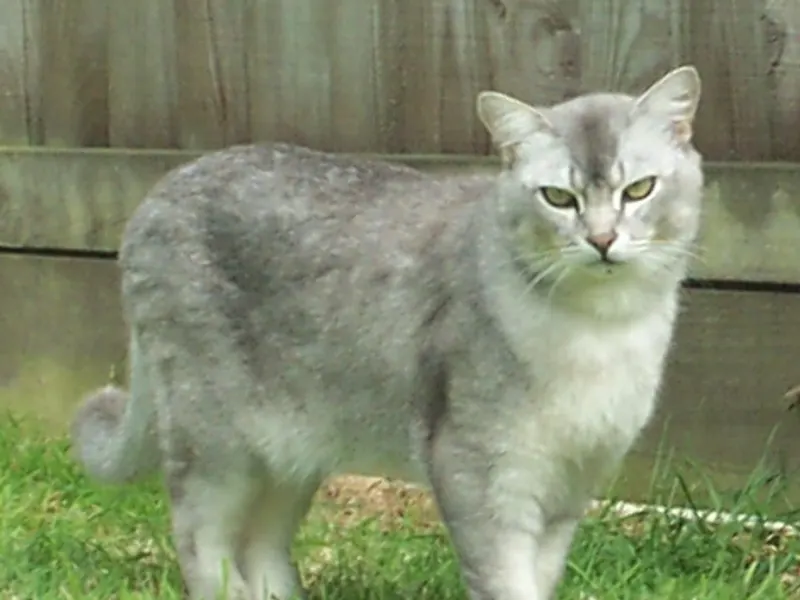
The Burmilla began as an accident: in 1981, a lilac Burmese owned by British breeder Miranda von Kirchberg escaped and mated with a Chinchilla Persian, and the resulting litter's striking shaded-silver coat over a Burmese-style body impressed onlookers enough that von Kirchberg and fellow breeders decided to develop the cross deliberately into a new breed rather than treat it as an unplanned mismatch. The Governing Council of the Cat Fancy in the UK granted the Burmilla championship status in 1990, and the breed remains more established in Europe than in North America, where it's still comparatively rare. The breed's founders specifically chose to keep developing the accidental cross rather than treat it as a one-off novelty litter, and subsequent planned Burmese-Chinchilla Persian pairings were used deliberately to reproduce and stabilize the shaded coat pattern that made the original accidental litter so visually striking.
Common health predispositions
- Polycystic kidney disease (via Chinchilla Persian ancestry)
- Gingivitis
Temperament
Burmillas combine the Burmese's playful, people-oriented sociability with a somewhat calmer, less relentlessly demanding energy — owners often describe the breed as affectionate but easygoing, content to follow household activity without needing constant interaction the way a purebred Burmese sometimes does. Households with kids or other resident animals generally find the Burmilla an easy fit, and its moderate vocalization sits between the chattier Burmese and the quieter Persian sides of its ancestry. The breed's temperament is often described by fanciers as landing squarely between its two parent breeds — more relaxed than a purebred Burmese but more interactive and playful than a purebred Chinchilla Persian, which many owners find an appealing middle ground.
Living with a Burmilla
The Burmilla's coat comes in both short and semi-long lengths, and either variety needs only modest regular brushing — the coat's defining shaded or tipped silver pattern, where color concentrates at the hair tips over a paler base, doesn't require the intensive care a solid long coat would. Because the breed carries Chinchilla Persian ancestry, polycystic kidney disease is a documented concern worth screening for, and gingivitis has also been noted in some lines. Since the Burmilla remains rare outside the UK and Europe, North American buyers should be prepared for a longer search, possibly involving an overseas breeder, before finding a kitten. Because the Burmilla is still comparatively rare, breed clubs in the UK and Europe maintain active registries and health-testing recommendations that prospective buyers should ask about directly, since the smaller population makes individual line health history especially relevant. Kittens are often born darker than their eventual adult shade, with the signature shaded-silver tipping continuing to develop and lighten over the cat's first year or so, another detail worth knowing so a young kitten's coat isn't judged against its future adult appearance.
FAQ
Was the Burmilla created deliberately or by accident?
By accident — the breed traces to an unplanned 1981 mating between a Burmese and a Chinchilla Persian in the UK, and breeders only decided to develop it into a formal breed after seeing how striking and appealing the resulting kittens' shaded-silver coats and Burmese-style bodies were.
Is the Burmilla easy to find in the US?
Not especially — the UK and Europe are where the breed is genuinely established, while North American numbers stay thin, so buyers here should budget extra time and possibly an overseas breeder into their search.
What does 'shaded' or 'tipped' coat mean on a Burmilla?
It describes a coat pattern where color concentrates at the tip of each hair over a paler base color, producing a shimmering, silvery effect rather than a single flat solid tone — a pattern inherited from the breed's Chinchilla Persian ancestor.
Does the Burmilla have health issues from its Persian ancestry?
Polycystic kidney disease is a documented concern worth screening for given the breed's Chinchilla Persian foundation, and reputable breeders should be able to discuss genetic testing history in their specific lines.
What is the Burmilla's coat pattern called?
Shaded or tipped silver, depending on how much of each hair carries color — the pattern comes directly from the Chinchilla Persian side of the breed's ancestry and is considered one of the Burmilla's most defining visual features.
Where is the Burmilla most popular?
The UK and continental Europe, where the breed originated and where dedicated breed clubs maintain active registries — it remains considerably less common in North America, where finding a breeder often means looking further afield.
How exactly did the accidental Burmilla litter come about?
In 1981, a Chinchilla Persian and a lilac Burmese belonging to the same UK household mated unsupervised, producing a litter of kittens with the Burmese's sleek body type and the Chinchilla's shimmering tipped silver coat, a combination nobody had deliberately set out to create. Breeder Miranda von Kirchberg was reportedly impressed enough with the result to found a dedicated breeding program from that single accidental pairing.
Related on FetchBreed
Whichever breed fits your life, consider adoption or breed-specific rescue first — many purebred and mixed-breed dogs and cats are already waiting for homes.
General breed information, not veterinary advice — consult a vet for your pet's specific health, diet, and behavior needs.