Rex Cats
7 breeds in this group.
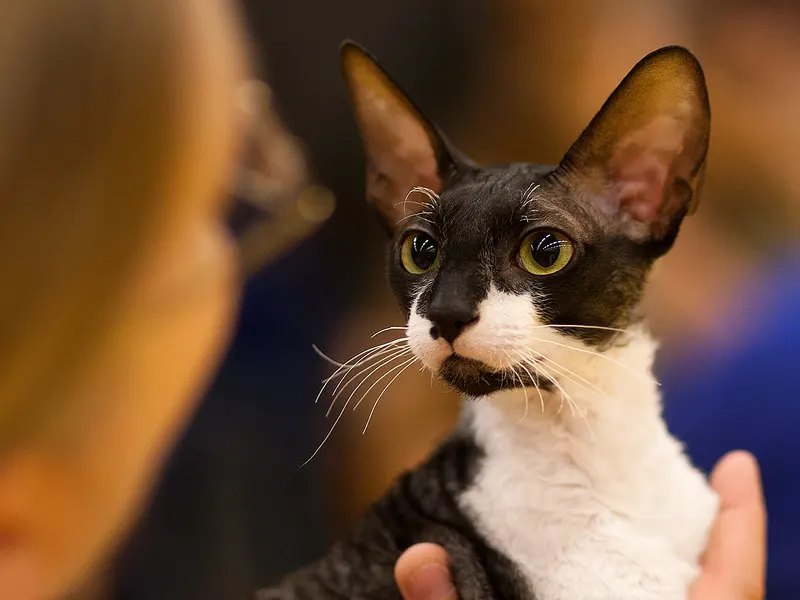
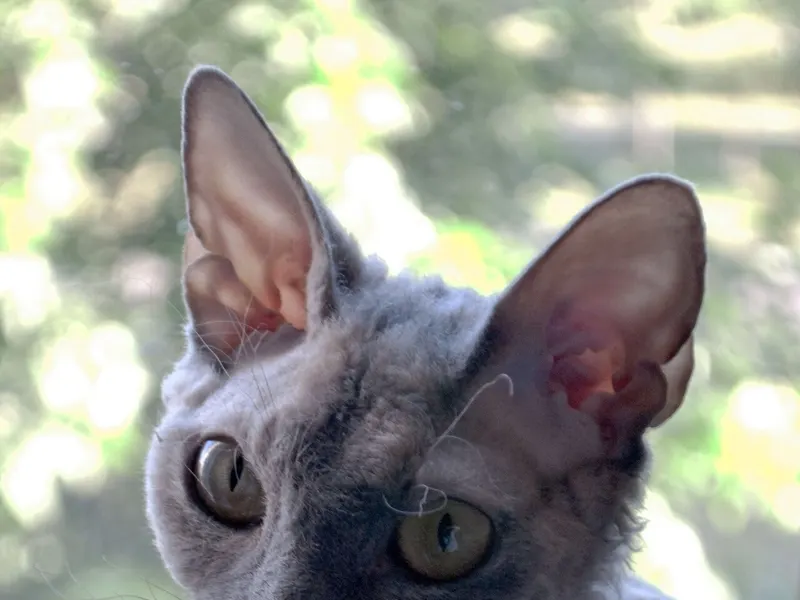
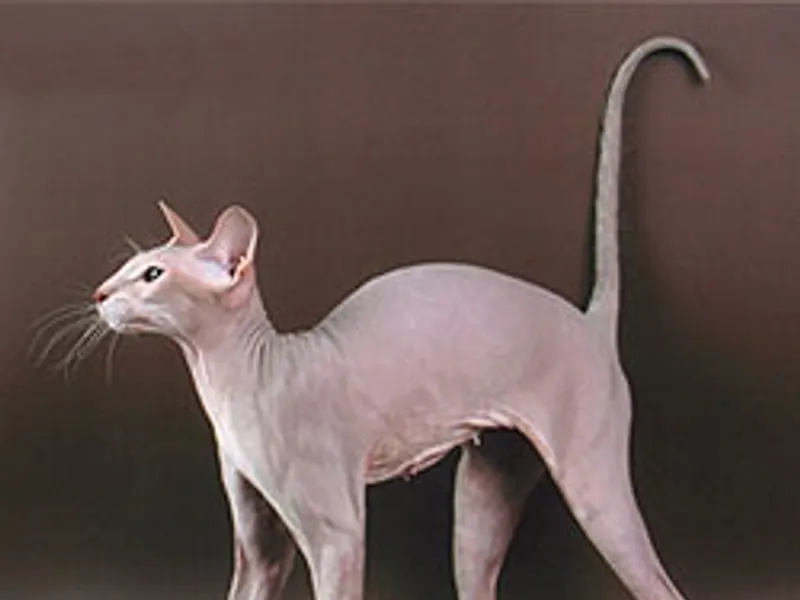
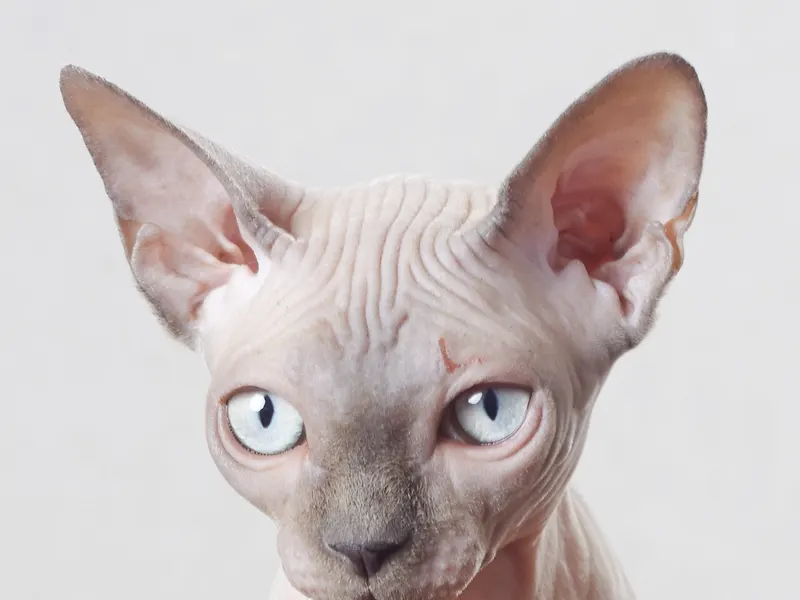
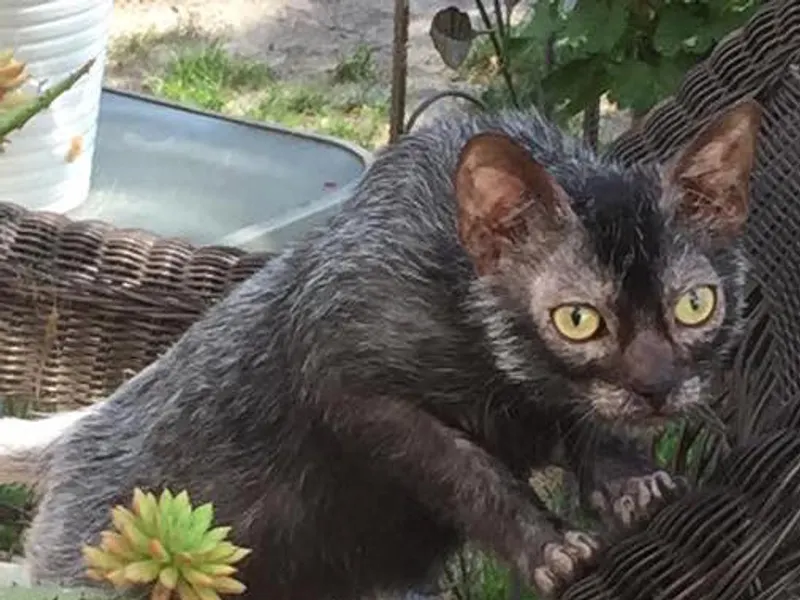
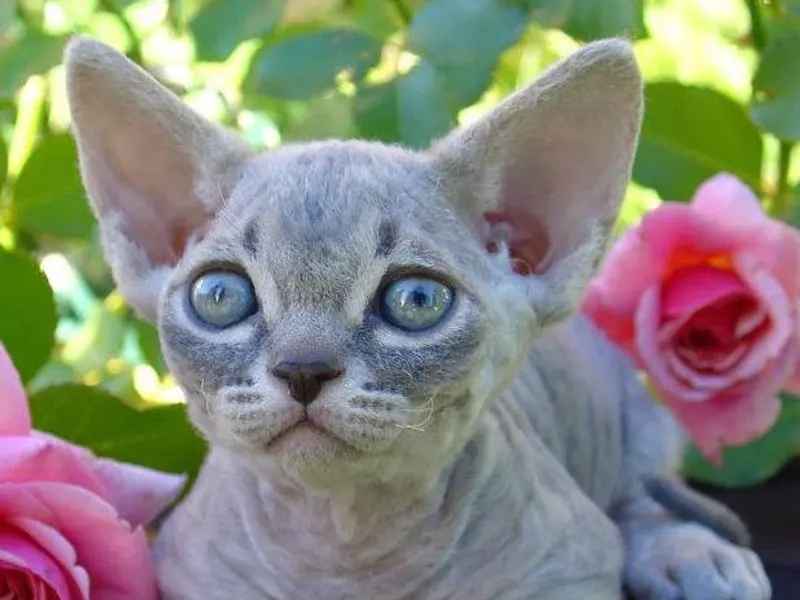
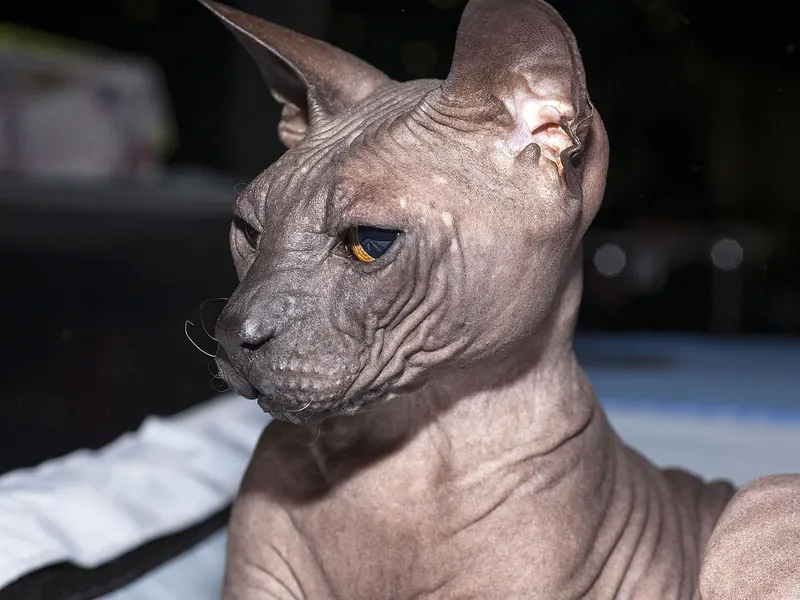
The Rex category groups cat breeds defined not by overall body shape but by a shared coat trait: a curly, wavy, or in some cases entirely absent coat, caused in each breed by its own distinct genetic mutation affecting hair growth — importantly, these are separate mutations arising independently in different cat populations at different times, not variations of a single gene, which is why crossing, say, a Cornish Rex with a Devon Rex doesn't reliably produce curly-coated kittens the way breeding two Cornish Rex cats together does. The Cornish Rex traces to a single kitten named Kallibunker, born in 1950 on a farm in Cornwall, England, to an otherwise straight-coated barn cat, whose unusual, tightly curled coat turned out to result from a recessive mutation affecting the guard hairs that normally give a cat's coat its coarser outer texture — a Cornish Rex's coat consists almost entirely of the soft undercoat layer, since the coarser guard hairs either don't grow or grow abnormally short and curled, giving the breed its distinctive velvety, rippled texture and a notably thin coat that leaves these cats more sensitive to cold than most breeds. The Devon Rex emerged independently just a decade later, in 1960, from a stray cat population in Devon, England, and was initially assumed to be the same mutation as the Cornish Rex until breeding trials revealed the two didn't produce curly offspring when crossed, proving the mutations were genetically distinct despite the similar curled-coat result — the Devon Rex's coat is generally coarser and less uniformly wavy than the Cornish Rex's, and the breed's proportionally large ears and impish face have earned it nicknames like "pixie cat" or "alien cat" within the fancy. The Sphynx is the category's best-known member and, despite widespread assumption, is not simply a rex breed taken to its logical hairless extreme — it results from a different mutation entirely, discovered in a hairless kitten born in Toronto, Canada in 1966, and "hairless" is something of a misnomer since Sphynx cats typically retain a fine, downy layer of extremely short hair that gives the skin a suede-like texture rather than true baldness. That minimal coat means Sphynx cats require meaningfully more hands-on care than a typical cat rather than less, despite the "no grooming" assumption their look invites: without a coat to absorb the skin's natural oils, Sphynx cats develop noticeably oilier skin than haired breeds and need regular bathing (often weekly) to prevent buildup, they sunburn easily and need protection outdoors, and they lose body heat faster than a haired cat, meaning owners often keep homes warmer or provide extra bedding and clothing for the breed's comfort. Three considerably rarer and more recently developed hairless or sparse-coated breeds round out this category, each with a distinct mutation and origin. The Peterbald was developed in Russia in the mid-1990s by crossing a Don Sphynx (itself a separate Russian hairless mutation, the ancestor of the modern Donskoy breed) with Oriental Shorthairs, producing a hairless or minimally coated breed with the elongated Oriental body type rather than the Sphynx's more moderate build — Peterbalds can actually be born with several different coat textures from the same litter, ranging from fully bald to a fine, brush-like coat, since the gene's expression is more variable than the Sphynx mutation. The Donskoy (or Don Sphynx) traces to a rescued stray cat in Rostov-on-Don, Russia in 1987, whose hairlessness turned out to be a dominant mutation, distinct from the Sphynx's recessive one — meaning a Donskoy needs only one copy of the gene from either parent to be hairless, while a Sphynx needs a copy from both parents. The Lykoi, nicknamed the "werewolf cat" for its patchy, partially-haired appearance that resembles a molting or balding pattern, emerged even more recently, first bred deliberately in the U.S. starting around 2010 from naturally occurring hairless-patterned cats found in feral populations, and represents yet another independent genetic mutation affecting hair follicle function. The Minskin, a deliberately created hybrid combining Sphynx and Munchkin ancestry, brings the short-legged Munchkin mutation together with the sparse coat of a Sphynx-derived line, layering two separate, unrelated genetic traits into one breed. Because every breed in this category carries a coat-related mutation with real downstream care implications, prospective owners should treat "low maintenance because no fur" as a myth rather than a given: hairless and minimally-coated breeds generally need more skin care, more temperature management, and more sun protection than a typically-coated cat, not less, and the curly-coated Cornish and Devon Rex still shed some, just in a texture and volume that some allergy sufferers find more tolerable, though — as with any coat type marketed toward allergy sufferers — no breed is a guaranteed hypoallergenic choice, since cat allergens come primarily from saliva and skin secretions rather than the hair itself. Skin and temperature care for the hairless and minimally-coated breeds in this category deserves a more concrete, practical treatment than a general warning, since the day-to-day routine differs meaningfully from any coated cat's care. Sphynx owners typically bathe their cats weekly to manage the oily buildup that accumulates on skin with no coat to absorb it, using a gentle, cat-specific shampoo, and skip this routine invites both an unpleasant residue and a higher risk of skin irritation. Sun exposure through a window is a real concern for hairless breeds in a way it simply isn't for a coated cat, and owners of Sphynx, Donskoy, and Peterbald cats in sunny climates often apply pet-safe sunscreen to exposed skin or limit direct window-sill sunbathing during peak hours. Ambient home temperature matters more too — hairless cats lose body heat faster than a coated cat and often seek out warm spots (laps, heating vents, sunny windowsills) more insistently, and many owners of these breeds keep their homes a few degrees warmer or provide extra bedding specifically for the cat's comfort. The curly-coated Cornish and Devon Rex require a lighter touch than the hairless breeds but aren't entirely maintenance-free either — their fine, sparse coats offer less natural insulation than a typical cat's, so both breeds tend to seek warmth actively and can be more cold-sensitive than their fully-coated relatives, though nowhere near as extreme as the truly hairless breeds. Both breeds also shed some, contrary to a common assumption that curly or thin coats mean no shedding at all, just in a texture many people find less noticeable or irritating than a typical cat's fur. Temperamentally, breeds in this category are frequently described by owners as unusually people-oriented, playful, and even dog-like in their eagerness to interact, a pattern anecdotally common enough across hairless and rex breeds specifically that it's worth mentioning, though it isn't fully understood whether this reflects genuine temperament differences tied to the same mutations affecting coat, or simply that owners drawn to an unusual-looking breed in the first place tend to invest more deliberately in socialization and interactive play from kittenhood onward. Breeder health-testing practices are worth asking about directly for every breed in this category, since the underlying mutations, while generally not associated with major systemic health problems beyond the coat and skin considerations already discussed, are recent enough in several of these breeds (Lykoi, Minskin, Peterbald) that long-term, multi-generation health data remains genuinely thinner than for older, more established breeds, making direct breeder transparency about known issues within their specific lines especially valuable. Breed-specific rescue organizations exist for several breeds in this category and are worth seeking out directly, since Sphynx and rex-breed rescues in particular often end up caring for cats surrendered by owners who underestimated the skin-care and temperature-management commitment discussed above, meaning choosing an adult cat from one of these rescues sidesteps a real unknown that buying a kitten carries, since an adult's temperament and any skin sensitivities are already fully visible rather than still developing. Kitten development in the rex breeds is worth a brief practical note: Cornish and Devon Rex kittens are sometimes born with a noticeably curlier coat than they'll carry as adults, and the coat's final adult texture and density isn't always fully apparent until closer to a year of age, so a breeder's description of an individual kitten's expected adult coat should be treated as a reasonable estimate rather than a certainty at a very young age. Breed name confusion is worth clearing up directly: "rex" as applied to cats and rabbits alike simply describes a curly-coat mutation broadly, borrowed terminology rather than any shared ancestry, and a rex rabbit and a rex cat share nothing genetically beyond both carrying an unrelated mutation that happens to produce a broadly similar curled-coat effect. The term traces back to early twentieth-century rabbit breeding, where "rex" coat mutations were first documented and named, with cat breeders later borrowing the same descriptive word once similarly textured curly-coated cats began appearing decades afterward. Insurance providers occasionally categorize the rex and hairless breeds separately from standard-coated cats given their distinct skin-care needs, and it's worth checking a specific pet insurance policy's fine print for any breed-specific exclusions or premium adjustments tied to dermatological conditions before assuming coverage will match a standard shorthair policy exactly. Prospective buyers should also ask a breeder directly which specific mutation a kitten carries when more than one rex-type breed is involved in a cattery's programs, since the visual similarity between, say, a Cornish Rex and a Selkirk Rex coat can be genuinely difficult for a newcomer to distinguish by eye alone despite the two arising from entirely unrelated genes.