Rex Body Type
Sphynx
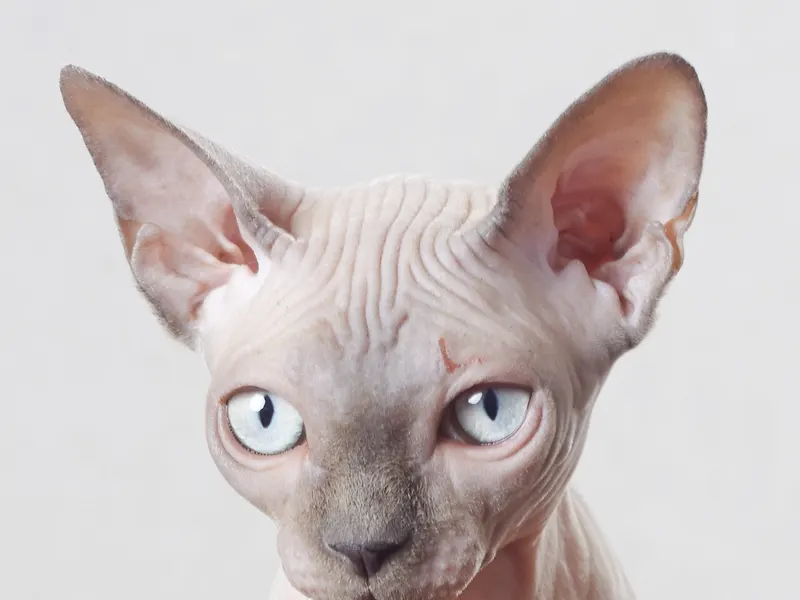
The Sphynx's hairless mutation first appeared spontaneously in a litter born in Toronto, Canada, in 1966, from a kitten named Prune; early breeding attempts using only that original hairless line struggled with a narrow gene pool and associated health problems, so breeders later incorporated additional hairless mutations found separately in Minnesota and France, along with outcrosses to Devon Rex, to build a healthier, more genetically diverse population. The Sphynx is genetically distinct from the Devon Rex's curly-coat mutation despite the historical crossbreeding between the two, and the breed's name references the ancient Egyptian Sphinx statue, evoking the cat's smooth, sculptural appearance; it is also sometimes called the Canadian Hairless in reference to its country of origin.
Common health predispositions
- Hypertrophic cardiomyopathy
- Skin sensitivity/sunburn
- Periodontal disease
Temperament
Sphynx cats are famously extroverted and attention-seeking — this is one of the most people-oriented, dog-like cat breeds, prone to greeting visitors at the door, following owners closely, and actively seeking physical contact and warmth (a practical need given the lack of an insulating coat, not just a personality trait). They're highly energetic and playful, often described by owners as clownish, and generally do poorly being left alone for long periods given how attachment-driven the breed is. Many Sphynx owners describe the breed's constant need for warmth and contact as almost dog-like, with individual cats regularly burrowing under blankets or draping themselves across a person's shoulders.
Living with a Sphynx
The Sphynx is not truly hairless — it's covered in a fine, suede-like down — but without a full coat, the skin produces oil that would normally be absorbed by fur, so regular bathing (commonly weekly) is a genuine, non-negotiable part of ownership to prevent oil buildup, skin irritation, and odor. The lack of fur also means real vulnerability to both cold (many owners keep cat sweaters on hand) and sunburn, so unsupervised time in direct sun needs to be limited. The breed's distinctive loose, wrinkled skin — especially prominent around the head, neck, and shoulders — is a deliberately selected standard feature rather than a health defect on its own. Hypertrophic cardiomyopathy is well documented in the breed and screened for by reputable breeders via cardiac ultrasound; skin sensitivity and a higher susceptibility to periodontal disease are also recognized concerns that make regular dental care a real budget consideration. Direct sun exposure carries genuine sunburn risk given the lack of a protective coat, so many owners apply pet-safe sunscreen or limit outdoor time during peak sun hours, treating sun protection as a routine part of the breed's care rather than an occasional concern.
FAQ
Do Sphynx cats need baths?
Yes, regularly — typically weekly — because without fur to absorb the skin's natural oils, they build up on the skin surface and can cause irritation or odor if not washed off; this is one of the most consistent, non-optional grooming tasks of any cat breed.
Are Sphynx cats hypoallergenic?
No, despite the common assumption — the main cat allergen is a protein in saliva and skin oil, not fur, and hairless cats still produce it, sometimes at levels comparable to or even higher than furred breeds because of the oil buildup on exposed skin; allergy sufferers should do an in-person trial rather than assume the breed is safe.
Do Sphynx cats get cold easily?
Yes — without an insulating coat, Sphynx cats are genuinely more sensitive to cold than furred breeds, which is why many owners keep the home warmer than usual or dress the cat in a sweater during cooler months, and why the breed strongly prefers curling up against warm people or sunny spots.
Is the Sphynx really completely hairless?
Not entirely — most Sphynx cats carry a very fine, short down that can be barely visible but is still detectable to the touch, giving the skin a suede-like texture rather than the perfectly smooth, bald appearance some people expect from photos.
Can Sphynx cats get sunburned?
Yes — without a protective coat, Sphynx skin is genuinely vulnerable to sunburn during extended direct sun exposure, and many owners manage this with pet-safe sunscreen or by limiting outdoor time during peak sun hours, treating it as routine care rather than a rare concern.
How often does a Sphynx actually need bathing?
Most owners settle into a weekly bathing routine, since the breed's skin produces the same sebaceous oils a coated cat would normally wick away and redistribute through fur, and without hair to absorb it that oil accumulates directly on bare skin. Skipping baths for more than a couple of weeks tends to leave a noticeably oily film and can contribute to clogged ears, which many owners clean separately from the bath itself.
Related on FetchBreed
Comparisons
Care equipment for a Sphynx
As an Amazon Associate we earn from qualifying purchases made through these links, at no extra cost to you.
- Gentle cat shampoo
The page calls weekly bathing a genuine, non-negotiable part of ownership: without a full coat, the skin produces oil that fur would normally absorb. There is no brush in this block because there is no coat to brush.
- Cat sweater
The lack of fur means real vulnerability to cold, and this page notes many owners keep cat sweaters on hand.
- Pet-safe sunscreen
The page says many owners apply pet-safe sunscreen or limit peak-sun time, treating sun protection as routine care for this breed rather than an occasional concern.
- Cat toothbrush kit
Higher susceptibility to periodontal disease is listed here as a recognised concern that makes regular dental care a real budget consideration.
Whichever breed fits your life, consider adoption or breed-specific rescue first — many purebred and mixed-breed dogs and cats are already waiting for homes.
General breed information, not veterinary advice — consult a vet for your pet's specific health, diet, and behavior needs.