Rex Body Type
Donskoy
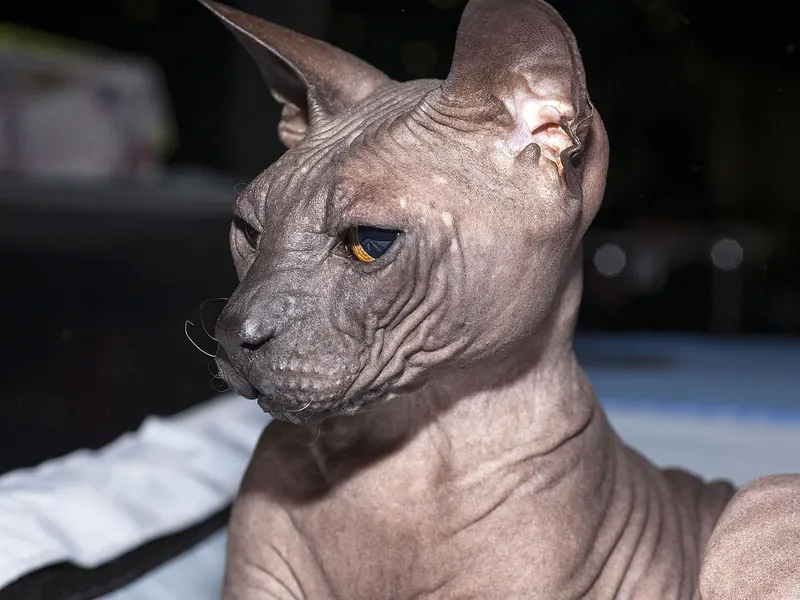
The Donskoy, also known as the Don Sphynx, originates from Rostov-on-Don, Russia, where breeder Elena Kovaleva rescued a hairless kitten in 1987, later named Varvara, and confirmed through subsequent breeding that the hairlessness was caused by a dominant gene entirely distinct from the Sphynx's recessive mutation — meaning the two hairless breeds arose independently on different continents rather than sharing a common genetic origin, despite looking broadly similar. Because the Donskoy's gene has variable dominant expression, individual kittens can end up anywhere on a spectrum from completely bald to a short velvety coat, sorted into four recognized categories (rubber-bald, flock, velour, and brush) once they've matured enough to classify, the same variable-expression pattern documented in the related Peterbald, which was later developed by crossing Donskoy lines with Oriental Shorthairs. Kovaleva reportedly took in Varvara as a rescue without any intention of starting a breeding program, and it was only after Varvara's own offspring began showing the same hairless trait that the genetic significance became apparent and a deliberate breeding effort began.
Common health predispositions
- Skin sensitivity/sunburn
- Dental issues
- Hypertrophic cardiomyopathy (monitored)
Temperament
Donskoy cats are typically described as intelligent, affectionate, and highly people-oriented, often seeking out warmth and physical contact — a genuine thermoregulation habit in the more hairless individuals, whose thin coat leaves them chillier than a fully-coated cat, not just an affectionate quirk. They tend to be playful and curious well into adulthood, sticking close to household routines and engaging directly with people rather than entertaining themselves off in a corner — a dog-like habit many owners specifically remark on. Many Donskoy owners describe the breed as having a notably expressive face, with loose, wrinkled skin around the head that some compare to the Sphynx's, giving the cat an alert, attentive appearance even at rest.
Living with a Donskoy
Coat care depends heavily on which of the four recognized coat types a given Donskoy has — the more hairless rubber-bald and flock varieties do best with a weekly bath to keep the skin's natural oils (which fur would normally soak up) from building up, while brush-coated individuals get by with considerably less specialized skin care. Whatever the coat type, a Donskoy feels the cold and sun more acutely than a fully-coated cat would, so many owners keep the house warmer or provide a sweater during cooler months. Vets recommend periodic cardiac screening given the breed's documented rate of hypertrophic cardiomyopathy, and dental problems turn up often enough that a regular veterinary dental checkup schedule belongs in every Donskoy owner's routine. Because the Donskoy's hairlessness gene is dominant, breeding two Donskoy cats together reliably produces hairless or partially-haired kittens, unlike the Sphynx's recessive gene, which requires both parents to carry a copy for the trait to appear — a genuinely different breeding dynamic between the two superficially similar hairless breeds.
FAQ
Is the Donskoy related to the Sphynx?
Not genetically, despite the similar hairless appearance — the two breeds' hairlessness mutations arose independently, with the Donskoy's dominant gene discovered in Russia in 1987 and the Sphynx's recessive gene discovered in Canada in 1966, meaning the resemblance is convergent rather than the result of shared ancestry.
How many coat types does a Donskoy have?
Four recognized categories — rubber-bald, flock, velour, and brush — a direct reflection of how unevenly the breed's dominant hairlessness gene expresses itself from kitten to kitten, a trait shared with the related Peterbald, which was later developed by crossing Donskoy lines with Oriental Shorthairs.
Does the Donskoy need baths like a Sphynx?
The rubber-bald and flock coat types benefit from a weekly bath to manage skin oil buildup, while brush-coated Donskoy cats get by with far less fuss — how often a given cat needs bathing really comes down to which of the four coat types it has.
Are Donskoy cats prone to heart problems?
Yes, it's the breed's single most significant documented health concern, which is why periodic cardiac ultrasound screening is recommended, and asking a breeder about testing history and family health background is a reasonable step before buying a kitten.
Is the Donskoy hypoallergenic?
Not entirely, though many allergy-sensitive owners report doing better around a Donskoy than around a fully-coated breed, since the biggest allergy trigger is a protein found in saliva and skin oils rather than the hair itself — with far less fur to spread that protein around the house, airborne allergen levels often measure lower in Donskoy-owning households. That said, the breed's mostly bare skin actually produces more oil buildup than a haired cat's skin normally would, which is part of why regular bathing is recommended, so no dog or cat breed, hairless included, can be called truly allergen-free.
Is breeding two Donskoy cats together predictable?
More predictable than with the Sphynx, actually — because the Donskoy's hairlessness gene is dominant rather than recessive, breeding two Donskoy cats together reliably produces hairless or partially-haired kittens, a genuinely different breeding dynamic than the Sphynx's recessive-gene inheritance pattern.
Related on FetchBreed
Care equipment for a Donskoy
As an Amazon Associate we earn from qualifying purchases made through these links, at no extra cost to you.
- Gentle cat shampoo
The page says the more hairless rubber-bald and flock varieties do best with a weekly bath to keep skin oils from building up, while brush-coated individuals need far less.
- Cat sweater
Whatever the coat type, a Donskoy feels cold more acutely than a fully-coated cat, and this page notes many owners provide a sweater during cooler months.
Whichever breed fits your life, consider adoption or breed-specific rescue first — many purebred and mixed-breed dogs and cats are already waiting for homes.
General breed information, not veterinary advice — consult a vet for your pet's specific health, diet, and behavior needs.