Sporting Group
Wirehaired Pointing Griffon
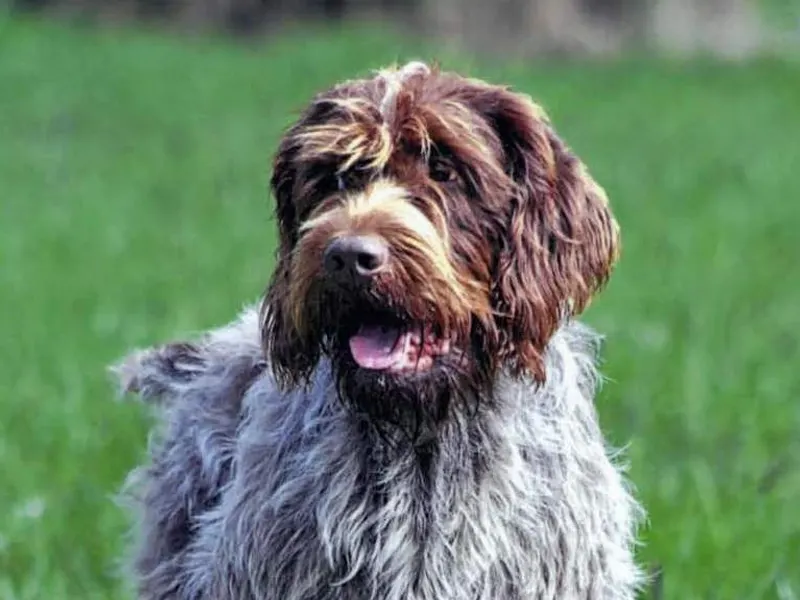
Dutch breeder Eduard Korthals developed this breed in the Netherlands and later France during the 1870s and 1880s, deliberately crossing several pointer, spaniel, and griffon-type breeds to create a genuinely versatile gundog capable of pointing, retrieving, and working comfortably on both land and water — a true all-purpose hunting companion rather than a specialist in any single task. Korthals kept meticulous breeding records throughout the process, a genuinely unusual level of documentation for the era that gives modern breed historians an unusually clear picture of exactly which breeds and individual dogs contributed to the Wirehaired Pointing Griffon's foundation. That deliberate design shows in the breed's harsh, wiry double coat, engineered specifically to protect against thorny cover and cold water alike, along with distinctive bushy eyebrows and a beard that give the breed its genuinely distinctive, scruffy expression among AKC sporting breeds. AKC recognition dates to 1887, remarkably soon after Korthals completed his foundational breeding work, reflecting how quickly the breed's genuine versatility earned it recognition on both sides of the Atlantic. Hunters continue to value the breed today specifically for its calm, methodical working style, genuinely different from the higher-intensity pace of many pointing breeds, making it a favorite among hunters who prioritize a steady, close-working gundog over raw speed.
Common health predispositions
- Hip dysplasia
- Epilepsy
- Eye disorders
Temperament
Even-tempered, intelligent, and genuinely eager to work alongside its handler, the Wirehaired Pointing Griffon carries a calmer, more methodical energy than many pointing breeds, a direct reflection of Korthals's original design goal of a versatile, closely cooperative hunting partner rather than a wide-ranging speed specialist. Family devotion runs deep, and the breed's genuinely gentle disposition around children and other household animals often surprises people expecting a rougher edge from a serious working gundog. That scruffy, bearded face often reads as comical or endearing to new owners, but underneath it sits a genuinely sharp working mind, and a Griffon denied real mental and physical engagement tends toward real restlessness despite its outwardly calm baseline temperament.
Living with a Wirehaired Pointing Griffon
Real field-bred stamina is the norm here — 75 minutes of vigorous daily activity, ideally mixing structured exercise with genuine scent work or retrieving, suits this versatile hunting breed well. The harsh, wiry coat needs regular hand-stripping a few times a year to maintain its proper texture, plus routine brushing in between, though it sheds comparatively little for a double-coated breed given that wiry texture. Hip dysplasia and epilepsy both deserve real attention from a responsible breeder, and general eye disorders round out the health conversation worth having before committing to a puppy. A genuinely active household drawn to the breed's calm, methodical working style and distinctive scruffy appearance, and willing to keep up the periodic hand-stripping routine, will do well with a Wirehaired Pointing Griffon. Breed-specific rescue in the US exists mainly through dedicated field-sport and versatile-hunting-dog networks, given the breed's continued popularity among practical hunters even as its general pet-owner recognition stays modest. Between the periodic hand-stripping appointments and a large working dog's real appetite, the ongoing budget lands toward the higher end of what a Sporting Group breed typically costs.
FAQ
Who developed the Wirehaired Pointing Griffon?
Dutch breeder Eduard Korthals developed the breed during the 1870s and 1880s in the Netherlands and later France, deliberately crossing several pointer, spaniel, and griffon-type breeds and keeping meticulous records, giving modern historians an unusually clear picture of the breed's exact foundation.
Why does the Wirehaired Pointing Griffon have a beard and eyebrows?
The harsh, wiry coat, including the distinctive bushy eyebrows and beard, was deliberately bred to protect against thorny cover and cold water during hunting work, giving the breed its scruffy, genuinely distinctive expression among sporting breeds.
Is a Wirehaired Pointing Griffon hypoallergenic?
No dog is completely allergen-free, but the breed's wiry double coat sheds relatively little compared to many other double-coated sporting breeds, which is why some allergy-sensitive households find it a somewhat more manageable option worth confirming through direct exposure first.
How much grooming does a Wirehaired Pointing Griffon need?
The harsh, wiry coat needs hand-stripping a few times a year to maintain its proper protective texture, along with regular brushing in between sessions to keep it in good working condition.
Is a Wirehaired Pointing Griffon good for a first-time hunting dog owner?
Often yes, more so than many pointing breeds — the breed's calmer, more methodical working style and genuine eagerness to cooperate closely with a handler makes it a comparatively forgiving choice for someone newer to training a versatile gundog.
Related on FetchBreed
Whichever breed fits your life, consider adoption or breed-specific rescue first — many purebred and mixed-breed dogs and cats are already waiting for homes.
General breed information, not veterinary advice — consult a vet for your pet's specific health, diet, and behavior needs.