Sporting Group
Vizsla
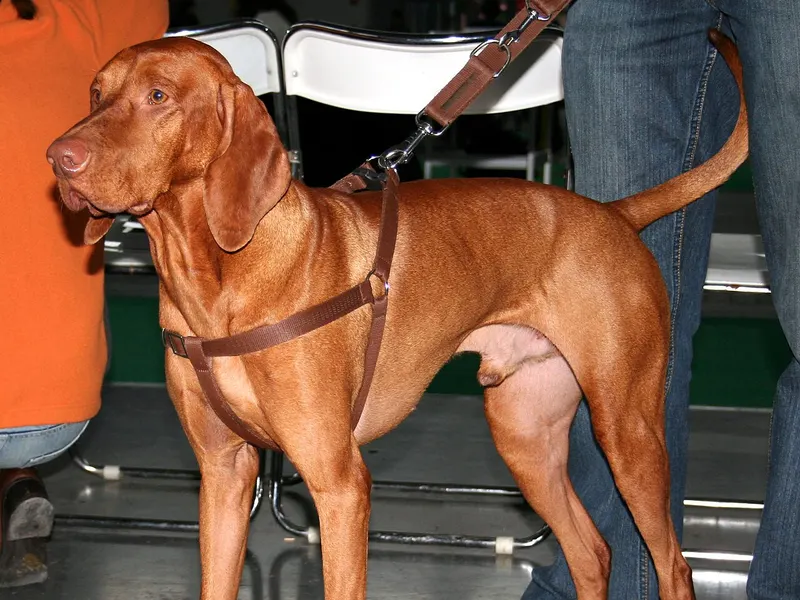
The Vizsla's ancestors accompanied Magyar tribes and later Hungarian nobility for close to a thousand years as an all-purpose hunting companion prized for pointing and retrieving on the open plains of the Hungarian steppe, with the breed's distinctive rust-gold coat color possibly selected in part so hunters could distinguish their dogs at a distance among other hunting breeds. The breed nearly vanished during and after World War II as Hungary's upheavals scattered breeding stock, and the modern population descends largely from a small number of dogs smuggled or exported out of the country by refugees and returning soldiers in the 1940s and '50s. The AKC recognized the Vizsla in 1960, and the breed's distinctive rust-gold coat and lean, athletic silhouette have made it an increasingly visible presence in both field-trial and companion circles over the decades since, even as the breed club works to preserve genetic diversity given its narrow historical bottleneck.
Common health predispositions
- Hip dysplasia
- Epilepsy
- Separation anxiety
Temperament
Vizslas carry maxed-out ratings for both energy and trainability, and the breed's nickname among owners — the 'velcro dog' — undersells just how intensely people-focused this breed is; Vizslas are documented as one of the more separation-anxiety-prone sporting breeds, genuinely struggling when left alone for long stretches rather than merely preferring company. That same intensity translates into excellent responsiveness to training and very high compatibility with children, though the breed's sensitivity means it does best with calm, consistent, positive handling rather than a heavy-handed approach. Vizslas also tend to be reserved, sometimes genuinely anxious, around unfamiliar people and situations without consistent early socialization, a trait breed clubs attribute to the tight genetic bottleneck the breed passed through mid-century rather than any deliberate temperament selection.
Living with a Vizsla
Ninety minutes of vigorous daily exercise is a genuine baseline, not a luxury, for this breed — Vizslas were bred to run alongside hunters and horses across open ground for hours, and modern pet Vizslas retain that stamina whether or not they ever see a hunting field. The short, smooth coat needs minimal grooming and sheds only lightly. Hip dysplasia and epilepsy are both documented in the breed, and because of the well-established separation anxiety tendency, many trainers recommend deliberate alone-time conditioning starting in puppyhood rather than waiting for problems to develop. The breed's thin coat and low body fat also mean genuine cold sensitivity, worth planning for with a coat or sweater in cold climates despite the dog's high energy. There is also a wirehaired Vizsla, developed later in the 20th century by crossing the smooth Vizsla with German Wirehaired Pointer lines for better cold-weather protection; the AKC recognizes it as a fully separate breed rather than a coat variety of the standard Vizsla.
FAQ
Do Vizslas get separation anxiety?
Very commonly, yes — this is one of the breed's most consistently reported behavioral traits among owners and trainers, rooted in a working history of close, constant partnership with a handler. Crate training and gradual alone-time conditioning from puppyhood are standard preventive advice.
Do Vizslas need a coat in cold weather?
Many owners find they do — the short, close-lying coat and lean, low-fat build don't hold heat well, so freezing-temperature walks often call for a jacket even though the dog's own energy level stays high year-round.
Are Vizslas good with kids?
Yes, generally very good — the breed's high trainability and gentle, people-oriented temperament make it a popular family choice, provided its substantial exercise needs are met so the dog isn't channeling excess energy into over-exuberant play.
Why is the Vizsla population descended from so few dogs?
Hungary's disruption during and after World War II scattered most of the country's breeding stock, and the modern Vizsla population worldwide traces back largely to a relatively small number of dogs that refugees and returning soldiers managed to bring out of the country in the 1940s and '50s, a genetic bottleneck breed researchers still reference today.
Is a Wirehaired Vizsla the same breed as a Vizsla?
No — though closely related, the AKC recognizes the Wirehaired Vizsla as a fully separate breed, developed later in the 20th century by crossing the smooth Vizsla with German Wirehaired Pointer lines specifically for a coarser, weatherproof coat suited to colder or wetter hunting conditions than the original smooth Vizsla handles well.
How long has the Vizsla's ancestry been documented in Hungary?
Stone etchings and early manuscripts suggest hunting dogs resembling the Vizsla accompanied Magyar tribes into the Carpathian Basin over a thousand years ago, and Hungarian nobility later refined the breed specifically as a versatile pointer-retriever for falconry and upland bird hunting.
Related on FetchBreed
Comparisons
Care equipment for a Vizsla
As an Amazon Associate we earn from qualifying purchases made through these links, at no extra cost to you.
- Winter dog coat
The page notes genuine cold sensitivity worth planning for with a coat in cold climates, despite the dog's high energy. The smooth coat needs minimal grooming, so nothing here is a brush.
- Puzzle feeder
Ninety minutes of vigorous daily exercise is called a genuine baseline, and the page recommends deliberate alone-time conditioning for the breed's documented separation anxiety.
Whichever breed fits your life, consider adoption or breed-specific rescue first — many purebred and mixed-breed dogs and cats are already waiting for homes.
General breed information, not veterinary advice — consult a vet for your pet's specific health, diet, and behavior needs.