Working Group
Saint Bernard
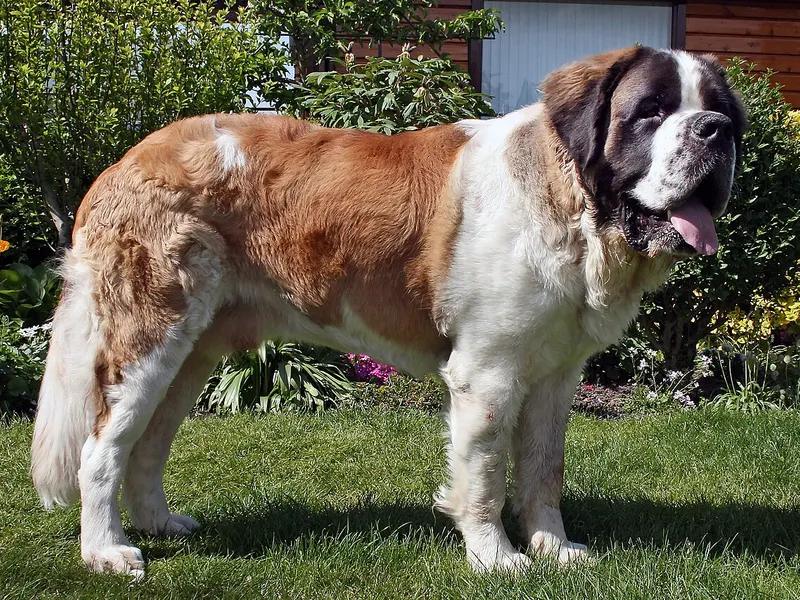
Monks at the Great St. Bernard Hospice, a refuge high in the Swiss Alps founded to aid travelers crossing a dangerous mountain pass, bred and kept large dogs from at least the 1600s onward, using them for both companionship and, famously, alpine rescue work — the dogs' powerful build, thick coat, and reported ability to sense oncoming avalanches made them well-suited to finding travelers buried or lost in snow. A Saint Bernard named Barry is credited with saving dozens of lives in the early 1800s and remains commemorated with a monument in Paris, arguably the most famous individual working dog in history. Some historical accounts suggest the breed's rescue dogs were bred larger and heavier over the 19th century partly in response to public fascination following Barry's fame, potentially at some cost to the breed's original working agility in deep snow — a tension between show-ring size and working function seen in several large breeds' histories. The breed comes in both a short-haired ('smooth') and long-haired ('rough') variety, both descended from the same original working stock, with the long-haired variety reportedly developed partly by crossing in Newfoundland blood for extra cold and wet-weather protection. The breed's coat comes in red-and-white or brindle-and-white patterns, and the specific placement of colored patches carries no functional or health significance despite being closely scrutinized in the show ring.
Common health predispositions
- Hip/elbow dysplasia
- Bloat
- Cardiomyopathy
Temperament
Saint Bernards are gentle giants in the most literal sense — calm, patient, and famously good with children, reflected in top marks for that compatibility trait — a temperament well-suited to a breed whose historical job required approaching frightened, injured strangers in emergency conditions rather than guarding territory aggressively. Training sits in the middle of the pack — smart enough to pick things up, but like most giant breeds it isn't the food- or drive-obsessed type you'd find in a working sporting dog, so patient, low-key sessions get further than intensity ever will.
Living with a Saint Bernard
Forty minutes of gentle daily activity is plenty here; the breed's alpine heritage built it for cold-weather endurance, not speed, and hot, humid conditions are genuinely hard on a Saint Bernard's thick coat and heavy frame. Which coat variety a given dog has — short or long — determines the grooming workload, with the long-haired type needing noticeably more brushing time. Health-wise, the giant frame carries the usual costs of that size: hip and elbow dysplasia, bloat, and cardiomyopathy are all on the breed's documented list, and 8 to 10 years is a typical lifespan even by giant-breed standards. Budget realistically, too — a dog that clears 100+ pounds eats, drools, and needs medication in quantities most owners of smaller breeds never plan for. A large-breed puppy formula, aimed at slowing bone growth just enough to protect developing joints, is standard veterinary guidance given how fast Saint Bernard puppies pack on size.
FAQ
Who was Barry the Saint Bernard?
A real dog credited with saving dozens of stranded travelers in the Swiss Alps in the early 1800s while working at the Great St. Bernard Hospice; his story is commemorated with a monument in Paris and he remains the most famous individual working dog associated with the breed's alpine rescue history.
Do Saint Bernards drool a lot?
Yes, heavily — the breed's loose jowls produce substantial drooling, especially after eating or drinking, and it's a normal, expected part of Saint Bernard ownership rather than a sign of a health problem.
Can Saint Bernards handle hot weather?
Not comfortably — the same thick coat and massive body that suited alpine winters work against the breed in heat and humidity, and owners in warm regions generally need to lean hard on air-conditioned indoor time and push exercise into the coolest hours available.
How much does it cost to feed a Saint Bernard?
Substantially more than most breeds given its giant size — food volume alone puts the typical monthly cost in the $150-270 range, and larger medication doses and bigger equipment (crates, beds) add further ongoing expense worth budgeting for before adopting.
Should Saint Bernard puppies eat regular puppy food?
Most vets recommend a large-breed-specific puppy formula instead — it's designed to moderate the rapid growth rate typical of giant-breed puppies, which helps reduce the risk of developmental joint problems like hip and elbow dysplasia that fast bone growth can contribute to in breeds this size.
How many lives is the Saint Bernard credited with saving in the Alps?
Monks at the Great St Bernard Hospice, who bred the dogs starting in the 17th century to locate travelers lost in Alpine snowstorms, credit the breed with an estimated 2,000 rescues over roughly two centuries of active mountain-pass work, with a single dog named Barry alone reportedly credited with around 40 rescues before his death in 1814.
Related on FetchBreed
Comparisons
- Saint Bernard vs Akita
- Saint Bernard vs Alaskan Malamute
- Saint Bernard vs Bernese Mountain Dog
- Saint Bernard vs Boxer
- Saint Bernard vs Cane Corso
- Saint Bernard vs Doberman Pinscher
- Saint Bernard vs Great Dane
- Saint Bernard vs Great Pyrenees
- Saint Bernard vs Mastiff
- Saint Bernard vs Newfoundland
- Saint Bernard vs Rottweiler
- Saint Bernard vs Samoyed
Care equipment for a Saint Bernard
As an Amazon Associate we earn from qualifying purchases made through these links, at no extra cost to you.
- Undercoat rake
The long-haired variety of this breed needs noticeably more brushing time for its dense double coat, per the page.
- Cooling mat
Hot, humid conditions are described as genuinely hard on a Saint Bernard's thick coat and heavy frame.
Whichever breed fits your life, consider adoption or breed-specific rescue first — many purebred and mixed-breed dogs and cats are already waiting for homes.
General breed information, not veterinary advice — consult a vet for your pet's specific health, diet, and behavior needs.