Non-Sporting Group
Löwchen
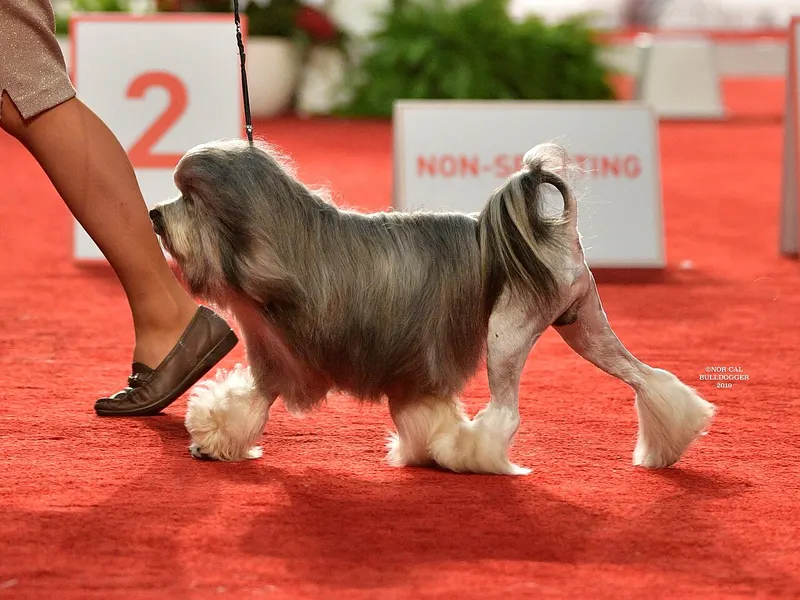
European nobility kept dogs matching this breed's description in royal and aristocratic households for centuries, with visual evidence appearing in European paintings and tapestries dating back several hundred years, though the exact early history remains genuinely difficult to pin down with precision the way some more recently developed breeds can be. The name translates from German roughly to "little lion dog," a direct reference to the breed's traditional grooming style, in which the coat is clipped to leave a full mane around the head and shoulders along with a tufted tail tip while the hindquarters are shaved close, deliberately mimicking a heraldic lion's silhouette. That distinctive lion clip isn't merely decorative flourish but a centuries-old European grooming tradition specific to this breed, historically believed by some to have practical origins in reducing matting on a working or hunting dog, though today it persists mainly as an aesthetic and show-ring convention. The breed came remarkably close to disappearing entirely in the mid-20th century — rare enough at that low point to earn a Guinness World Records entry as the planet's scarcest dog breed — before dedicated European and later American breeders worked to rebuild a stable population. AKC recognition came in 1999, and the Löwchen remains genuinely uncommon in the US today despite that established recognition.
Common health predispositions
- Patellar luxation
- Progressive retinal atrophy
- Hip dysplasia
Temperament
A confident, outgoing personality belies this breed's small size and rather formal-looking traditional grooming style — the Löwchen is lively, affectionate, and genuinely well-rounded, adaptable enough to suit anything from a quiet single-owner home to a busier family household. Kids and other pets are rarely an issue once trust is established. Real intelligence makes this a genuinely responsive training subject too, and the breed often takes readily to trick training and other structured mental activities given the chance to show off.
Living with a Löwchen
Roughly 45 unhurried minutes a day meets this small, adaptable breed's exercise needs comfortably. Whether an owner keeps the traditional lion clip or opts for a simpler, shorter pet trim, the long, silky, wavy coat still needs regular brushing, and the full show-style cut in particular calls for more frequent professional grooming visits. A responsible breeder should have real answers on patellar luxation and progressive retinal atrophy, with hip dysplasia rounding out the conversation. This distinctive centuries-old grooming tradition and adaptable, intelligent temperament suit a household genuinely willing to keep up a consistent coat-care routine. The population never fully rebounded from its mid-20th-century low point, so most interested owners bypass rescue entirely and go straight to one of the limited number of established breeders. Professional grooming, especially for anyone pursuing the full lion clip, is the standout cost beyond otherwise typical food and veterinary basics for a small breed.
FAQ
Is the Löwchen's lion clip required for pet ownership?
No — the dramatic lion clip is purely a show-ring and traditional aesthetic choice, and pet owners are free to keep the coat in a simple, even, all-over trim that's considerably easier to maintain and doesn't require the specialized clipping skill the full show cut demands. Most companion Löwchen actually wear a shorter, uniform pet clip day-to-day, with the elaborate mane-and-pompom style reserved mainly for conformation events.
Was the Löwchen really the world's rarest dog breed?
According to the Guinness Book of World Records at one point, yes — the breed came remarkably close to disappearing entirely in the mid-20th century before dedicated European and later American breeders worked to rebuild a stable population.
Do all Löwchens get the lion haircut?
Not necessarily — the traditional lion clip remains a distinctive centuries-old European grooming tradition and is common in the show ring, but many pet owners opt for a simpler, shorter trim that still requires regular brushing but less specialized professional maintenance.
Is a Löwchen a good family dog?
Generally yes — most individuals are lively, affectionate, and adaptable, doing reasonably well with children and other pets, and the breed's confident, outgoing personality suits a range of household types from quiet single-owner homes to more active families.
How hard is it to find a Löwchen puppy?
Genuinely hard — 1999 AKC recognition never translated into large numbers, since the population still hasn't fully bounced back from its mid-20th-century low point, so a waiting list with a small handful of breeders is the realistic path rather than rescue.
What does 'Lowchen' mean, and why the lion-style clip?
The name translates from German as 'little lion dog,' and the traditional show clip, which leaves a full mane around the head and chest while shaving the hindquarters, deliberately echoes a lion's silhouette — a grooming tradition documented in European art for centuries even though the breed's actual working history was as a companion and lap-warmer rather than any guarding role.
Related on FetchBreed
Whichever breed fits your life, consider adoption or breed-specific rescue first — many purebred and mixed-breed dogs and cats are already waiting for homes.
General breed information, not veterinary advice — consult a vet for your pet's specific health, diet, and behavior needs.