Non-Sporting Group
Coton de Tulear
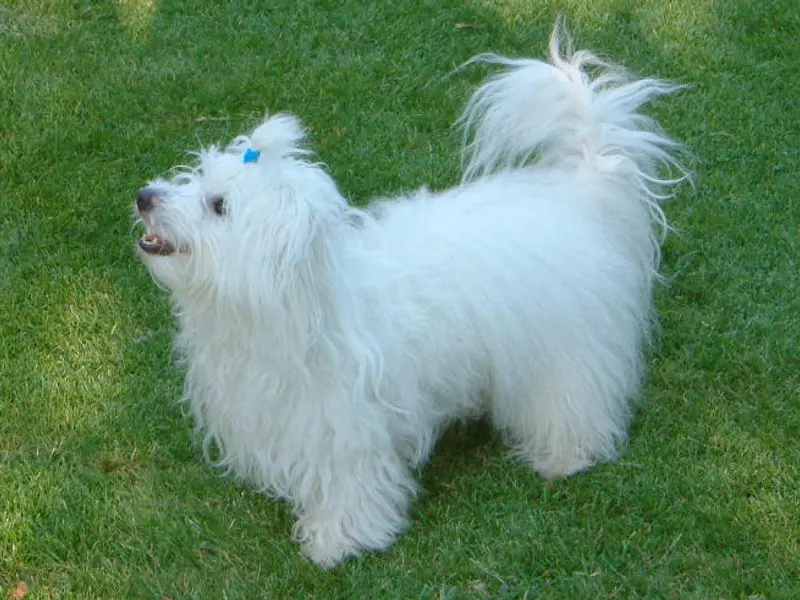
The port city of Tuléar (also spelled Toliara) on the island of Madagascar gives this breed its name, and local legend holds that the breed's ancestors survived a shipwreck off the Madagascar coast, swimming ashore and eventually developing into a distinct island population — a colorful origin story that breed historians treat as unverified but persistent folklore rather than documented fact. What's better established is that the breed developed in relative isolation on Madagascar for generations, eventually becoming associated closely enough with the island's ruling class that ownership was reportedly restricted to nobility for a period, giving the Coton de Tulear an informal reputation as "the royal dog of Madagascar." French colonial settlers on Madagascar are generally credited with introducing the Bichon-type ancestor stock that eventually crossed with local island dogs to produce the breed, giving the Coton de Tulear a genuinely blended European-and-island ancestry distinct from purely Western Bichon breeds. AKC recognition came comparatively recently, official Miscellaneous Class status arriving in the 2000s and full recognition following after. The breed's name translates roughly to "cotton dog of Tuléar," a direct reference to its distinctively soft, cotton-like coat texture, genuinely different from the silkier coats of related Bichon-type breeds it likely shares distant ancestry with.
Common health predispositions
- Patellar luxation
- Hip dysplasia
- Cataracts
Temperament
Playful, affectionate, and famously good-natured, the Coton de Tulear tends toward a genuinely easygoing temperament that adapts well to a wide range of households, from active families to quieter single-owner homes. Kids and other pets both tend to be safe bets, and the breed is often noted for a distinctive, almost comedic tendency to walk on its hind legs when excited, a quirky behavioral trait common enough across the breed to be considered genuinely characteristic rather than an individual dog's oddity. Working drive or independence isn't really part of the package here — this is a dog whose ancestors were bred purely as companions, and it shows in how happy it is simply staying close to its people. That people-focused temperament also makes the Coton de Tulear a genuinely responsive training subject, and the breed has picked up a following in dog-sport circles like agility and trick training, where its eagerness to engage translates readily into real enthusiasm for structured activities.
Living with a Coton de Tulear
This small, easygoing breed does fine on 45 minutes of gentle daily activity. Left unbrushed for more than a few days, the soft, cotton-like coat tangles fast, so many pet owners keep it in a shorter, more manageable trim instead of the fuller show length; whatever the length, it sheds very little, a genuine plus for tidiness though no guarantee against allergic reaction in sensitive people. Patellar luxation and hip dysplasia both turn up despite the breed's small size, worth catching early with screening, and cataracts are the third item to raise with a breeder. Families, singles, quieter households, more active ones — nearly any household type tends to do well with a Coton de Tulear given how genuinely adaptable and good-natured the breed is, provided the grooming routine gets kept up. This breed's population in the US is still modest relative to more established toy and companion breeds, so dedicated rescue is uncommon and most puppies come from the relatively small number of dedicated breeders. Monthly costs run moderate for a small breed, and coat-care time again outweighs food or typical veterinary costs as the bigger recurring commitment.
FAQ
What does 'Coton de Tulear' mean?
It translates roughly to 'cotton dog of Tuléar,' referring both to the breed's distinctively soft, cotton-like coat texture and to Tuléar, the port city on Madagascar where the breed developed.
Is it true that Coton de Tulear ancestors survived a shipwreck?
That's a persistent piece of local Madagascar folklore — that the breed's ancestors swam ashore after a shipwreck off the coast — but breed historians generally treat it as unverified legend rather than documented historical fact.
Was the Coton de Tulear really a royal dog?
The breed developed a close association with Madagascar's ruling class over generations, and ownership was reportedly restricted to nobility for a period, giving it an informal reputation as 'the royal dog of Madagascar,' though the precise historical details are not exhaustively documented.
Is the Coton de Tulear the same as a Bichon Frise?
No, though the two are related — both likely descend from similar Mediterranean Bichon-type stock, but the Coton de Tulear developed in relative isolation on Madagascar for generations, producing a distinctly cottony, less tightly curled coat texture than the Bichon Frise's denser curls. The Coton also tends to run a bit larger, and many owners describe it as having a slightly calmer, less classically bouncy temperament than the more energetic Bichon Frise.
How much does a Coton de Tulear shed?
Very little regardless of coat length — the soft, cotton-like coat is a genuinely low-shedding type, a real plus for household tidiness, though it still demands a brushing session several times weekly to avoid matting.
Related on FetchBreed
Whichever breed fits your life, consider adoption or breed-specific rescue first — many purebred and mixed-breed dogs and cats are already waiting for homes.
General breed information, not veterinary advice — consult a vet for your pet's specific health, diet, and behavior needs.