Toy Group
Cavalier King Charles Spaniel
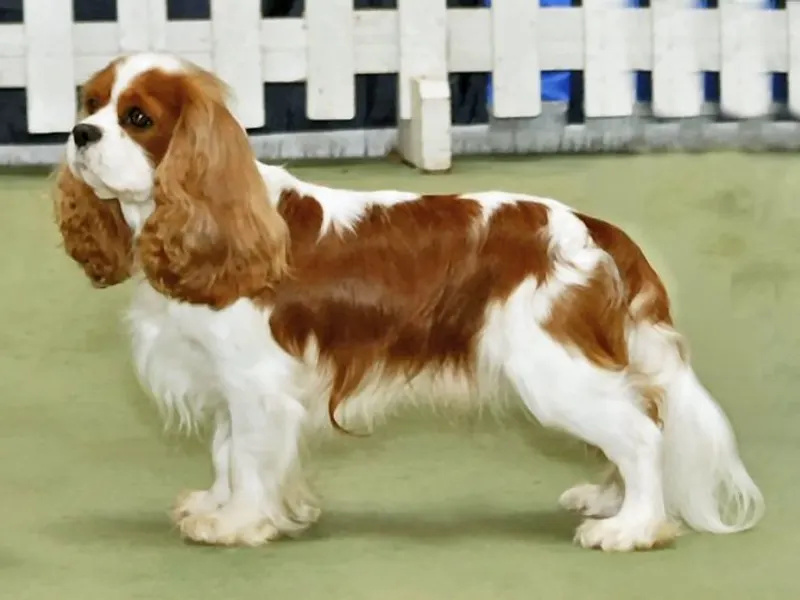
Toy spaniels of this general type were fixtures of the English royal court from the Tudor period onward and are named for King Charles II, who was reportedly rarely seen without several dogs underfoot. By the early 1900s, selective breeding for a flatter face had produced a separate breed, the King Charles Spaniel (called the English Toy Spaniel in America); in 1926, American breeder Roswell Eldridge offered a cash prize at Crufts for spaniels matching the longer-nosed type shown in 17th-century paintings, sparking a deliberate 'recreation' effort that became the modern Cavalier — a rare case of a breed's current form being restored from historical art rather than simply evolving forward. The AKC didn't recognize the Cavalier as a separate breed from the King Charles Spaniel (English Toy Spaniel) until 1995, reflecting how recently the deliberately 'recreated' longer-nosed type became formally distinct, even though the recreation effort itself began in the 1920s.
Common health predispositions
- Mitral valve disease
- Syringomyelia
- Hip dysplasia
Temperament
Bred purely as a companion across its entire history, the Cavalier's temperament reflects that singular purpose more clearly than almost any other breed in this list: the trait scale puts it at the top for how well it handles kids and other pets, alongside moderate energy and genuinely eager, easy trainability. Cavaliers are rarely food-aggressive or possessive and are consistently described by owners and breed clubs alike as one of the gentlest temperaments among popular toy breeds, with none of the wariness or fragility-driven defensiveness seen in some other small companion breeds. Despite being bred purely as a companion, Cavaliers pick up basic obedience and even agility work readily, and their eagerness to please means training sessions tend to be genuinely pleasant for both dog and owner rather than a battle of wills seen in more independent-minded breeds.
Living with a Cavalier King Charles Spaniel
Cavaliers need about 40 minutes of exercise and, unusually for a toy breed, genuinely enjoy it. The silky coat with its feathered ears and legs needs regular brushing to prevent tangles, a moderate but real grooming commitment. The breed's defining health concern by far is mitral valve disease, a heart condition so prevalent in Cavaliers that most individuals develop a heart murmur by middle age — it's one of the most extensively studied breed-specific health issues in veterinary cardiology. Syringomyelia, a serious neurological condition linked to the breed's skull being too small in some lines for the brain it contains, is also a genuine and Cavalier-associated concern. Both are strong reasons to insist on cardiac- and MRI-screened parents when buying a puppy rather than treating them as rare edge cases. Because mitral valve disease is so prevalent, many Cavalier owners schedule annual cardiac auscultation with a vet starting well before middle age simply as routine monitoring rather than waiting for symptoms, and some breed-specific rescue and advocacy groups maintain lists of breeders whose lines show later average onset of heart murmurs, worth researching before buying a puppy. The breed's silky ear feathering also needs regular checking for ear infections given how much hair covers the ear canal.
FAQ
Why is mitral valve disease such a big deal for Cavaliers?
The condition is unusually prevalent and early-onset in this breed compared with dogs generally — most Cavaliers develop a heart murmur by middle age, and mitral valve disease is what ultimately claims more Cavalier lives than any other single cause, which is why breed clubs strongly recommend buying only from parents with recent cardiac clearances.
What is syringomyelia in Cavalier King Charles Spaniels?
A neurological condition in which fluid-filled cavities form within the spinal cord, often linked in this breed to a skull shape too small to comfortably fit the brain — symptoms can include pain, scratching at the neck/shoulder area, and in severe cases mobility problems, and MRI screening of breeding stock is the main prevention tool.
Are Cavaliers good with other pets?
Yes, generally very good — bred for nothing but companionship across its entire history, the Cavalier developed a gentle, non-territorial temperament that adapts well to cats and other dogs already in the household.
At what age should a Cavalier get its heart checked?
Many vets and breed clubs recommend starting annual cardiac auscultation well before middle age given how prevalent and early-onset mitral valve disease is in the breed, rather than waiting until symptoms like coughing or exercise intolerance appear.
Related on FetchBreed
Comparisons
- Cavalier King Charles Spaniel vs Beagle
- Cavalier King Charles Spaniel vs Boston Terrier
- Cavalier King Charles Spaniel vs Cavapoo
- Cavalier King Charles Spaniel vs Chihuahua
- Cavalier King Charles Spaniel vs Cockapoo
- Cavalier King Charles Spaniel vs Dachshund
- Cavalier King Charles Spaniel vs Havanese
- Cavalier King Charles Spaniel vs Maltese
- Cavalier King Charles Spaniel vs Pomeranian
- Cavalier King Charles Spaniel vs Pug
- Cavalier King Charles Spaniel vs Shih Tzu
- Cavalier King Charles Spaniel vs Yorkshire Terrier
Whichever breed fits your life, consider adoption or breed-specific rescue first — many purebred and mixed-breed dogs and cats are already waiting for homes.
General breed information, not veterinary advice — consult a vet for your pet's specific health, diet, and behavior needs.