Semi-foreign Body Type
Tonkinese
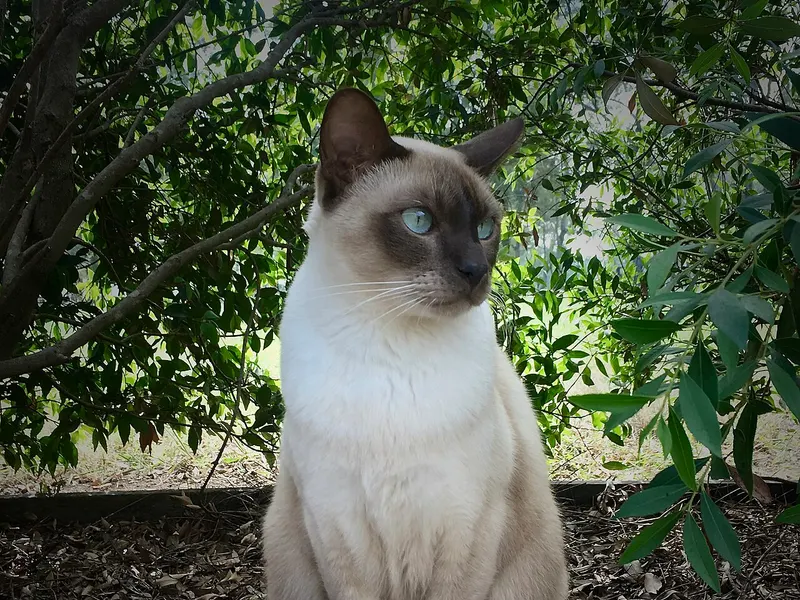
The Tonkinese is a deliberate cross between the Siamese and the Burmese, aiming to blend the Siamese's pointed pattern and vocal personality with the Burmese's more solid coloring and compact body — early hybrid cats existed informally for decades, but Canadian breeder Margaret Conroy is generally credited with formalizing the Tonkinese as a distinct breeding program in the 1960s. CFA granted full championship recognition in 1984, following an extended path shaped partly by disagreement within the cat fancy over whether the Tonkinese should be treated as its own breed or simply an intermediate crossing point between Siamese and Burmese, a debate the breed's now-established standard has settled in its favor. The breed is recognized in two coat variations tied to how the underlying Siamese and Burmese color genes combine in a given cat — a fully pointed pattern closer to the Siamese and a "mink" pattern with a more even, subtle gradient of color, the mink pattern being the one most specifically associated with the Tonkinese standard.
Common health predispositions
- Progressive retinal atrophy
- Amyloidosis
- Gingivitis
Temperament
Tonkinese cats are often described as landing squarely between their two parent breeds in both look and temperament — more vocal and energetic than a Burmese, but somewhat less relentlessly talkative than a Siamese. They're highly social, people-oriented, and tend not to thrive when routinely isolated for long workdays, following their households closely and engaging readily with visitors and other pets alike. Because the Tonkinese descends from two already highly social parent breeds, individual cats can sometimes lean more toward one parent's temperament than the other, and prospective buyers who want a specific balance of Siamese-like talkativeness versus Burmese-like steadiness may want to ask a breeder about a particular litter's parentage.
Living with a Tonkinese
The short, close-lying coat needs minimal grooming and sheds moderately. Health concerns draw from both parent breeds: progressive retinal atrophy and amyloidosis, both documented in the Siamese line, appear in the Tonkinese's health literature, and gingivitis — a documented Burmese-side concern — is also relatively common, making regular dental checkups a genuinely useful part of routine care. Because the breed is so people-oriented, a household with long, regular stretches away at work often finds a second cat meaningfully helps meet the Tonkinese's need for companionship and engagement. Reputable Tonkinese breeders can typically speak to which specific Siamese and Burmese lines contributed to a given litter, since tracking that lineage helps predict both coat pattern outcomes and the general temperament balance a kitten is likely to grow into.
FAQ
Can two Tonkinese cats produce Siamese or Burmese-looking kittens?
Yes, genuinely — because the Tonkinese's signature mink coloring comes from combining one Siamese-pattern gene copy with one Burmese-pattern gene copy, breeding two Tonkinese together follows predictable genetics that can still produce kittens with the fully pointed Siamese-like pattern or the more solid Burmese-like pattern alongside typical mink kittens in the same litter. Breeders generally consider this a normal, expected outcome rather than a breeding error, and many breed standards allow all three resulting patterns to be shown, just in different color-pattern classes.
Is the Tonkinese more like a Siamese or a Burmese?
Genuinely intermediate between the two — the breed talks noticeably less than a purebred Siamese but stays more chatty and energetic than a purebred Burmese, reflecting its deliberate position as a blend of both parent breeds' traits.
Why did it take so long for the Tonkinese to be recognized?
Part of the delay traced to disagreement within the cat fancy over whether the cross should be treated as its own distinct breed or simply an intermediate crossing point between Siamese and Burmese, a debate that wasn't fully settled in the breed's favor until CFA granted full championship recognition in 1984.
Are Tonkinese cats prone to dental issues?
Gingivitis is a documented concern in the breed, inherited partly from its Burmese ancestry, making regular veterinary dental checkups a genuinely useful part of routine Tonkinese care.
What is the 'mink' pattern in Tonkinese cats?
A coat pattern showing a more even, subtle color gradient across the body rather than the sharply contrasted point pattern of a Siamese — it's the coat pattern most specifically associated with and unique to the Tonkinese standard, distinguishing it visually from a straightforward Siamese-Burmese blend.
Do Tonkinese cats lean more Siamese or more Burmese in temperament?
It varies genuinely by individual cat and specific lineage — because the breed descends from two already distinct, highly social parent breeds, some Tonkinese lean more toward Siamese-style talkativeness while others lean toward Burmese-style steadiness, and asking a breeder about a specific litter's parentage can help predict which way a kitten leans.
Why do Tonkinese cats often have a distinctive aqua eye color?
The 'mink' Tonkinese, which carries one copy each of the Siamese pointing gene and the Burmese sepia gene, typically develops a blue-green aqua eye color found in essentially no other breed, since it results from that specific genetic combination rather than any single dominant color gene. Solid and pointed Tonkinese, which carry two copies of one gene or the other, show gold or blue eyes instead, following the Burmese or Siamese pattern respectively.
Related on FetchBreed
Whichever breed fits your life, consider adoption or breed-specific rescue first — many purebred and mixed-breed dogs and cats are already waiting for homes.
General breed information, not veterinary advice — consult a vet for your pet's specific health, diet, and behavior needs.