Semi-cobby Body Type
Pixie-bob
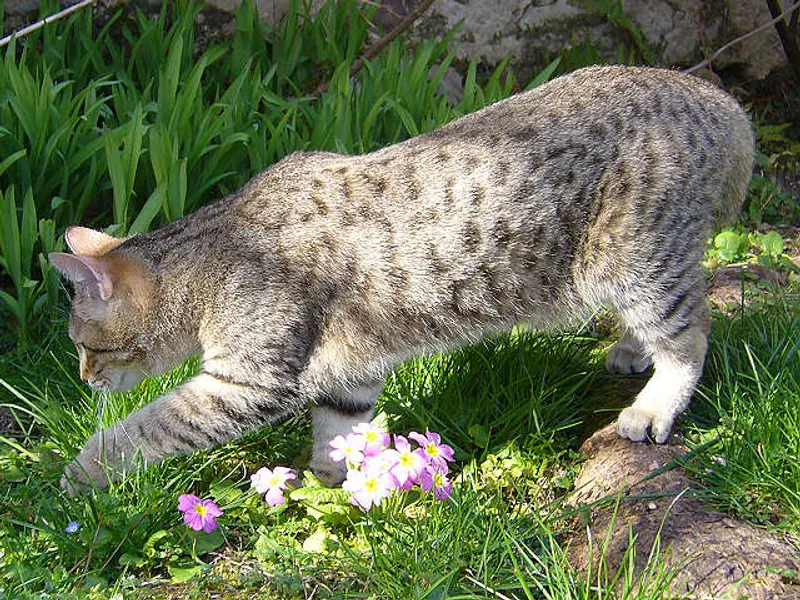
The Pixie-bob was developed in the Pacific Northwest starting in the 1980s by breeder Carol Ann Brewer, based on a bobtailed, spotted barn cat and an unverified local legend that some Washington State cats carried natural bobcat ancestry from wild matings — a claim that has never been genetically substantiated and that TICA and most cat geneticists now treat as breed folklore rather than documented fact. Regardless of the disputed origin story, the Pixie-bob developed into a genuinely domestic breed with no confirmed wildcat DNA, deliberately bred for a bobcat-like rugged appearance, and TICA granted the breed full recognition in 1998. TICA's official breed standard for the Pixie-bob explicitly notes the cat is fully domestic despite its wild-inspired look, a clarification the registry added specifically to head off ongoing buyer confusion stemming from the breed's disputed founding legend.
Common health predispositions
- Polydactyly (harmless, common in the breed)
- Generally healthy
Temperament
Pixie-bobs are typically described as confident, dog-like, and highly trainable — leash-walking, trick-learning, and following its owner room to room with real attentiveness are all things this breed is known for, and many owners describe the breed's loyalty and trainability as closer to a dog's than a typical cat's. Kids and resident dogs or cats rarely faze the breed, and its calm, steady confidence makes it comparatively easy to socialize even as an adult. Pixie-bobs are notably vocal in a distinctive, quieter chirping register rather than a typical meow, a trait some owners find reminiscent of the vocalizations reported in certain wild feline species, adding to the breed's overall wild-inspired mystique despite its fully domestic genetics.
Living with a Pixie-bob
The breed is shown in both short and long coat varieties, both with a rugged, wild-looking double coat that sheds moderately to heavily and benefits from regular brushing, especially in the longhaired variety. Polydactyly (extra toes) is genuinely common in the breed and considered a normal, harmless variant rather than a fault, tracing back to the original foundation cats. Pixie-bobs are large, solidly built cats, and while the breed is generally considered healthy, its substantial size means owners should watch for the same joint and weight-management considerations that apply to any large-bodied cat breed. Because the Pixie-bob's bobtail can range from nearly absent to several inches long depending on the individual, similar to the American Bobtail's variable tail length, breed standards accommodate a real range rather than requiring one specific tail length for show eligibility. The breed's growling, chirping vocal range is broader than a typical domestic cat's, and many owners report their Pixie-bob using distinct sounds for different situations, from greeting to mild annoyance, adding to the breed's overall reputation for expressive, almost dog-like communication.
FAQ
Does the Pixie-bob really have wildcat ancestry?
It's an unverified legend rather than a documented fact — the breed's founding story includes a claim of natural bobcat crossbreeding in the Pacific Northwest, but no genetic testing has ever substantiated wildcat DNA in the breed, and most researchers and TICA treat it as breed folklore rather than established history.
Do Pixie-bob cats commonly have extra toes?
Yes — polydactyly is genuinely common in the breed, tracing back to the original foundation cats, and it's considered a normal, harmless variant rather than a fault within the Pixie-bob standard, unlike in some other breeds where it's simply an incidental occurrence.
Are Pixie-bobs trainable like dogs?
Many owners report exactly that — the breed is known for leash-walking, learning tricks, and following commands with a level of trainability and attentiveness that's genuinely unusual among cat breeds, often compared favorably to a dog's responsiveness.
How big do Pixie-bob cats get?
Large and solidly built — the breed's substantial frame is part of its deliberately bobcat-inspired look, and owners should factor in the same weight-management and joint-health considerations relevant to any large-bodied cat breed.
Do Pixie-bob cats chirp instead of meow?
Many do, at least some of the time — the breed is known for a distinctive, quieter chirping vocalization alongside more typical meowing, a trait some owners find reminiscent of certain wild feline vocalizations, adding to the breed's overall wild-inspired mystique.
Do all Pixie-bob cats have the same length tail?
No — like the American Bobtail, tail length in the Pixie-bob varies considerably between individuals, ranging from nearly absent to several inches long, and the breed standard accommodates this real range rather than requiring one specific tail length.
Is polydactyly (extra toes) actually written into the Pixie-bob breed standard?
Yes — the Pixie-bob is one of the very few pedigreed breeds where polydactyly is explicitly permitted by the official standard rather than being treated as a disqualifying fault, reflecting the trait's presence in the original bobtailed farm cats the breed was built from. Up to seven toes per paw is allowed under TICA's standard, though plenty of Pixie-bobs still have the ordinary toe count.
Related on FetchBreed
Whichever breed fits your life, consider adoption or breed-specific rescue first — many purebred and mixed-breed dogs and cats are already waiting for homes.
General breed information, not veterinary advice — consult a vet for your pet's specific health, diet, and behavior needs.