Cobby Body Type
Persian
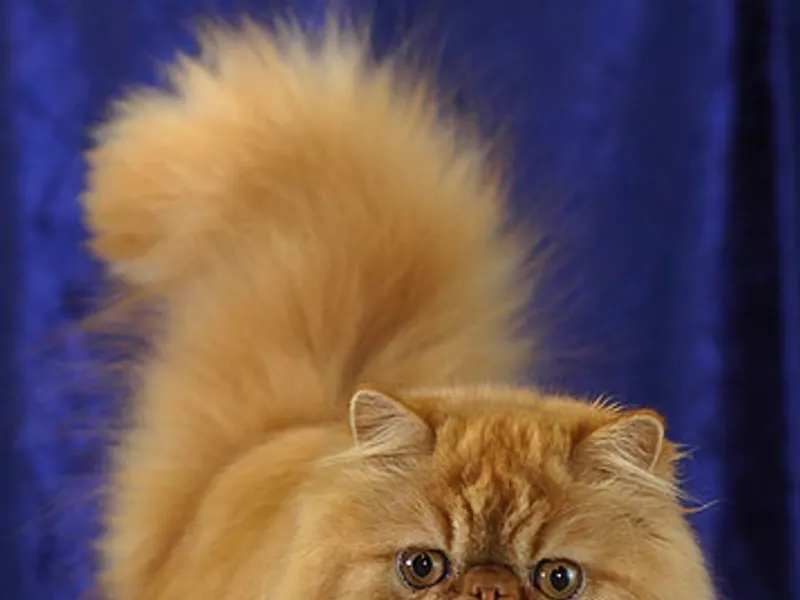
The Persian's ancestors were long-haired cats from the region encompassing modern Iran and Turkey, brought to Italy around 1620 by traveler Pietro della Valle and to France around the same period, making it one of the oldest documented cat breeds in the Western cat fancy. The extremely flat-faced "peke-face" or "doll-face" modern show type is a comparatively recent development, the product of deliberate selective breeding through the 20th century that progressively shortened the muzzle well beyond the more moderately-faced Persians of the breed's early Victorian-era popularity — a change controversial enough within the cat fancy that some breeders and registries now actively promote a return to the older, less extreme "traditional" or "doll-face" type. The Persian was among the breeds shown at England's first organized cat show at Crystal Palace in 1871 and has remained one of the most consistently popular breeds worldwide ever since.
Common health predispositions
- Polycystic kidney disease
- Brachycephalic breathing issues
- Dental crowding
Temperament
Persians are the archetypal calm, low-energy lap cat — content with a quiet, predictable indoor routine, minimally vocal, and generally unbothered by handling once accustomed to it, which is part of why the breed remains consistently popular despite its heavy grooming demands. They're affectionate but not typically demanding, preferring to settle near their people rather than actively seek constant interaction, and their gentle disposition generally makes them tolerant of children and other pets. Persians also tend to prefer a stable, unchanging environment, and sudden disruptions to routine or a new pet in the household can take the breed longer to adjust to than a more adaptable, higher-energy breed.
Living with a Persian
The Persian's coat is the single biggest ownership consideration of any popular cat breed: the very long, dense coat mats quickly without daily brushing, and a neglected Persian coat can pelt into painful mats requiring a full shave-down. The breed's extremely flat face brings real, well-documented health considerations — chronic tear-duct overflow requiring regular face cleaning to prevent staining and skin irritation, and breathing difficulty that ranges from mild to genuinely serious depending on how extreme an individual cat's facial structure is. Polycystic kidney disease is also a significant documented concern in the breed, common enough that genetic testing before breeding is now standard practice among reputable Persian breeders, and dental crowding from the shortened jaw is common as well. The breed is recognized in an especially wide range of colors and patterns, including solid, tabby, silver/golden, shaded, smoke, and bicolor divisions. The Chinchilla Persian, a striking silver-tipped variety popularized in the mid-20th century, remains one of the breed's most visually iconic color varieties and helped drive the Persian's broader mid-century popularity boom in both Europe and America.
FAQ
Why do Persian cats need daily grooming?
The extremely long, dense coat lacks the self-maintaining structure of shorter or less profuse coats, so without daily brushing it mats quickly, particularly around the legs, belly, and behind the ears — a genuinely daily task, not a weekly one, for keeping the coat in a healthy, tangle-free state.
Do all Persian cats have breathing problems?
Not all, but many to some degree — severity depends heavily on how extreme an individual cat's flat-faced conformation is, with the modern extreme "peke-face" show type generally showing more breathing difficulty than the older, more moderate "traditional" or "doll-face" type some breeders still produce.
What is polycystic kidney disease in Persians?
An inherited condition in which fluid-filled cysts develop in the kidneys and gradually impair function, often not causing symptoms until middle age; a genetic test identifies the mutation, and testing breeding stock before pairing them is now considered standard responsible practice in the breed.
What is the difference between traditional and modern Persians?
"Traditional" or "doll-face" Persians retain a more moderate muzzle length closer to the breed's early 20th-century look, while the modern show-standard "peke-face" type has a far more extreme, flattened profile developed through decades of additional selective breeding — some breeders and buyers specifically seek out traditional-type lines partly to reduce brachycephalic health issues.
What is a Chinchilla Persian?
A specific silver-tipped color variety of the Persian, where each hair is lightly tipped with black over a white base, giving a sparkling, frosted appearance — it became especially fashionable in the mid-20th century and remains one of the breed's most recognizable color varieties today.
How old is the Persian as a recognized breed type?
Among the oldest of all recorded cat breeds — longhaired cats resembling the modern Persian were reportedly brought from the region of historic Persia (modern-day Iran) into Italy and other parts of Europe as early as the 1600s, well before organized cat fancy or breed standards existed in any formal sense. The extreme flat-faced 'peke-face' look common in show Persians today is a comparatively recent development, achieved through selective breeding over the 20th century rather than present in those early imports.
Related on FetchBreed
Comparisons
Care equipment for a Persian
As an Amazon Associate we earn from qualifying purchases made through these links, at no extra cost to you.
- Steel grooming comb
The page calls this the single biggest ownership consideration of any popular cat breed: the coat mats quickly without daily brushing, and a neglected Persian coat can pelt into painful mats requiring a full shave-down.
- Slicker brush
The brush half of a daily routine on a very long, dense coat, working with the comb rather than instead of it.
- Tear-stain wipes
The flat face brings chronic tear-duct overflow that this page says needs regular face cleaning to prevent staining and skin irritation.
Whichever breed fits your life, consider adoption or breed-specific rescue first — many purebred and mixed-breed dogs and cats are already waiting for homes.
General breed information, not veterinary advice — consult a vet for your pet's specific health, diet, and behavior needs.