Long & Substantial Body Type
Maine Coon
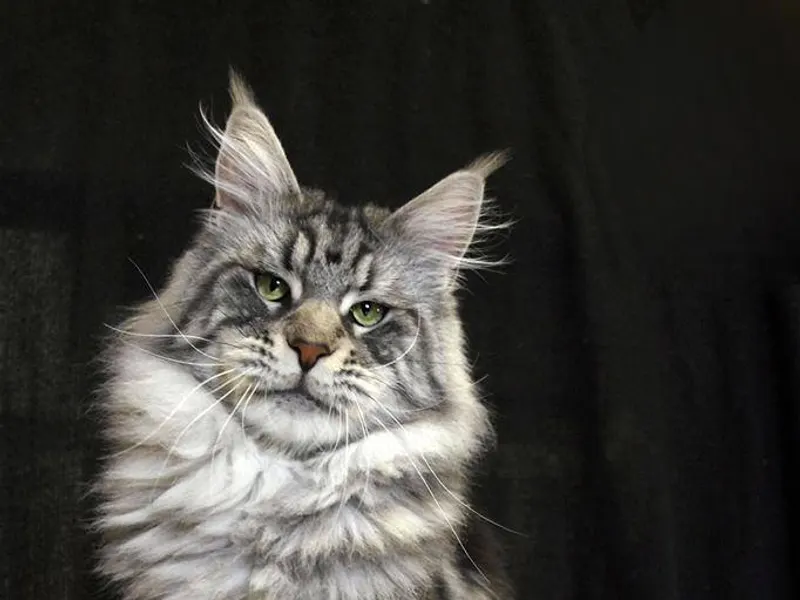
The Maine Coon's true origin is genuinely unclear — the once-popular legend that it descends from Marie Antoinette's cats, smuggled to America during the French Revolution, or from domestic cats crossbred with raccoons (biologically impossible, but a durable folk explanation for the breed's bushy tail) are both unsupported by evidence. The more credible account is that European sailors' ship cats interbred with local New England shorthairs and possibly longhaired cats brought by Scandinavian settlers over the 1700s and 1800s, producing a large, weatherized barn cat suited to Maine's harsh winters; the breed was documented at cat shows by the 1860s-70s, and a brown tabby Maine Coon named Cosey won Best in Show at New York's prestigious Madison Square Garden cat show in 1895, one of the earliest documented major show wins for any American breed. The breed was named Maine's official state cat in 1985.
Common health predispositions
- Hypertrophic cardiomyopathy
- Hip dysplasia
- Spinal muscular atrophy
Temperament
Maine Coons are famous for a friendly, sociable, almost dog-like temperament that belies their large size — they're commonly reported to follow owners around the house, greet visitors rather than hide from them, and get along unusually well with both children and other pets, reflected in the breed's top-tier compatibility ratings. Many Maine Coons retain a distinctive chirping or trilling vocalization rather than a typical meow, and despite their size, they tend to be gentle and slow to anger. The breed nearly disappeared from popularity in the early 20th century once glamorous newly-imported longhaired show cats stole the spotlight, and dedicated fanciers formed the Maine Coon Cat Club and later the Central Maine Cat Club through the mid-20th century specifically to keep the breed from vanishing before CFA granted it full recognition in 1976.
Living with a Maine Coon
The Maine Coon's long, shaggy double coat evolved for genuine weather resistance and needs a real brushing routine, ideally a few sessions a week, to prevent matting, particularly around the ruff and britches. As one of the largest domestic cat breeds, with some males reaching 20+ lbs, Maine Coons need sturdy furniture and scratching posts built for their size, and their exercise needs run moderate rather than low, since they retain real physical capability from their working-cat ancestry. Hypertrophic cardiomyopathy is a well-documented, genetically tested concern in the breed, along with hip dysplasia (unusual for a cat breed but real in this large-bodied one) and spinal muscular atrophy, a hereditary condition for which a DNA test exists. Full physical maturity isn't reached until three to five years, among the slower-maturing cat breeds. Polydactyly (extra toes) was historically common in working Maine Coons, since sailors and farmers reportedly valued the wider paw for balance on ship decks and snow, and while many modern show lines have selectively bred the trait out, some breeders still specifically preserve polydactyl lines.
FAQ
How big do Maine Coons get?
Among the largest domestic cat breeds, with males commonly reaching 15-25 lbs and females somewhat smaller — full physical maturity isn't reached until 3-5 years of age, notably slower than most cat breeds.
Are Maine Coons part raccoon?
No — this is a persistent folk legend with no biological basis, since cats and raccoons cannot interbreed; the myth likely arose from the breed's bushy, ringed-looking tail rather than any genetic reality.
Do Maine Coons make good family pets?
Yes, generally — the breed's gentle, sociable temperament and high tolerance for children and other pets make it one of the more consistently recommended breeds for multi-person, multi-pet households.
Did a Maine Coon really win a major cat show in the 1800s?
Yes — a brown tabby Maine Coon named Cosey won Best in Show at New York's 1895 Madison Square Garden cat show, one of the earliest large-scale American cat shows, a genuinely documented historical milestone for the breed.
Do Maine Coons have extra toes?
Some do — polydactyly (extra toes) was historically common in the breed's working ship-and-farm-cat ancestry, and while many modern show-standard lines have bred away from it, some breeders still deliberately preserve polydactyl Maine Coon lines as a recognized, harmless variant.
Why do Maine Coons have tufted ears and paws?
The lynx-tip ear tufts and toe tufts between the paw pads are both cold-weather adaptations, believed to have helped the breed's working-cat ancestors survive harsh New England winters by insulating the ears and providing extra traction and warmth on snow and ice. Breed standards treat generous tufting as a desirable trait today, though it's a functional holdover from the Maine Coon's farm-cat past rather than a purely cosmetic addition.
Related on FetchBreed
Comparisons
Care equipment for a Maine Coon
As an Amazon Associate we earn from qualifying purchases made through these links, at no extra cost to you.
- Steel grooming comb
The long shaggy double coat needs a real brushing routine a few times a week to prevent matting, particularly around the ruff and britches.
- Heavy-duty scratching post
Named on the page: with some males over twenty pounds, Maine Coons need sturdy furniture and scratching posts built for their size.
Whichever breed fits your life, consider adoption or breed-specific rescue first — many purebred and mixed-breed dogs and cats are already waiting for homes.
General breed information, not veterinary advice — consult a vet for your pet's specific health, diet, and behavior needs.