Foreign Body Type
Havana Brown
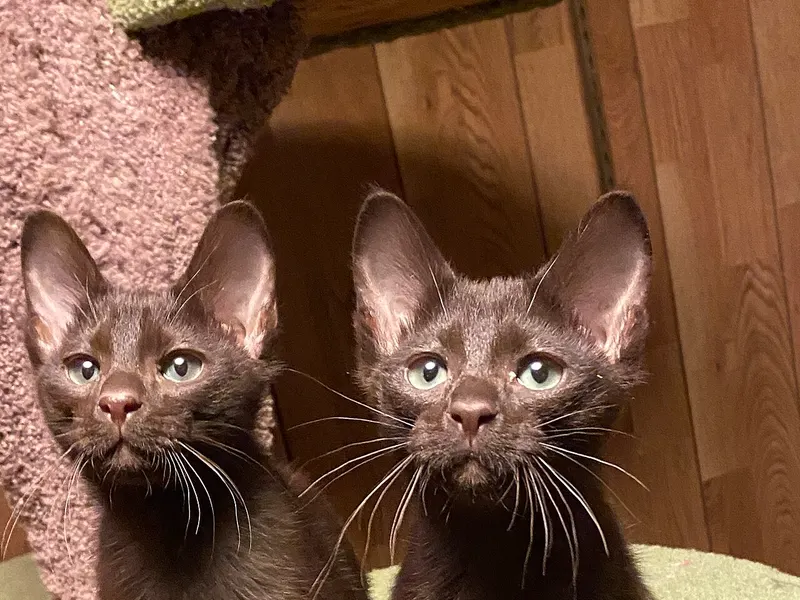
The Havana Brown was developed in 1950s England by a small group of breeders deliberately crossing Siamese cats with black domestic shorthairs, aiming to fix and stabilize a rich, solid mahogany-brown coat color that had appeared occasionally but inconsistently in earlier Siamese-related breeding. The breed's name references its resemblance to the color of a fine Havana cigar, and it was one of the first breeds developed specifically around a coat color rather than a body type or coat texture. The Cat Fanciers' Association recognized the Havana Brown in 1964, though the breed has remained genuinely rare ever since, with a small dedicated population of breeders working to keep it going. The breed nearly disappeared entirely at least once in its history when the small founding population in England dwindled, and it took renewed interest from American breeders working with imported stock to keep the Havana Brown from vanishing before its population stabilized.
Common health predispositions
- Dental disease
- Generally a robust, low-issue breed
Temperament
Havana Browns are intelligent, curious, and notably interactive — the breed is known for using its paws to investigate objects almost the way a raccoon or a hand would, batting at, patting, and exploring anything new in its environment. They're affectionate and people-oriented without the intensity of full vocal demandingness some Oriental-type breeds show, and they tend to form close bonds with their households while remaining playful and engaged well into adulthood. The breed's distinctive muzzle shape — a slightly squared, forward-thrusting profile unlike the rounder American Shorthair or the sharply wedge-shaped Siamese — is a defining show standard feature that developed specifically through the breed's mixed Siamese and domestic shorthair ancestry.
Living with a Havana Brown
An occasional wipe-down is all it takes to maintain the coat's rich mahogany shine, and shedding runs moderate. The breed is generally considered robust and low in documented breed-specific health issues, though as with many breeds carrying a compact jaw and dental crowding tendency, dental disease is worth monitoring with regular checkups. Because the Havana Brown remains genuinely rare, finding a kitten often means joining a wait list with one of a relatively small number of dedicated breeders rather than a quick local purchase, and prospective owners should budget real patience into the acquisition process. Because the Havana Brown remains a small-population breed, prospective owners should ask breeders directly about the specific health-testing practices and lineage diversity efforts within their program, since a small gene pool makes individual breeder diligence especially relevant to a kitten's long-term health. The breed's distinctive forward-tilted ears, set at a slight angle rather than perfectly upright, are another standard feature judges look for, giving the Havana Brown an alert, attentive expression that owners often describe as almost quizzical.
FAQ
Why is it called the Havana Brown?
The name references the rich, solid mahogany-brown coat color's resemblance to a fine Havana cigar — the breed was developed in 1950s England specifically to fix and stabilize this coat color through deliberate Siamese and black domestic shorthair crosses.
Is the Havana Brown a rare breed?
Yes, genuinely — it has remained one of the rarer recognized breeds since its 1964 CFA recognition, kept going by a relatively small population of dedicated breeders, so finding a kitten often takes real patience and a wait list.
Do Havana Browns use their paws differently from other cats?
Many owners and breed observers report it — the breed has a notable tendency to investigate objects by patting, batting, or reaching out with a single paw in an almost hand-like way, a widely reported behavioral quirk associated with the breed.
Are Havana Browns healthy cats?
Generally yes — the breed is considered fairly robust with few well-documented breed-specific conditions, though regular dental checkups are worthwhile given a tendency toward dental crowding common in many compact-jawed breeds.
Has the Havana Brown ever nearly gone extinct?
The breed's small founding population has faced real bottlenecks more than once, and renewed interest from American breeders working with imported English stock played a meaningful role in keeping the Havana Brown going during periods when its numbers dwindled.
What does a Havana Brown's face look like compared with other breeds?
It has a distinctive, slightly squared, forward-thrusting muzzle profile that's neither as round as an American Shorthair's nor as sharply wedge-shaped as a Siamese's — a defining show standard feature unique among brown-coated breeds.
Is the Havana Brown's whisker color unusual?
Yes — the breed standard actually calls for brown whiskers that match the coat rather than the black or white whiskers seen on most cats regardless of body color, a small detail breed judges specifically check for. That same rich mahogany-brown tone is meant to run consistently from the whiskers through the nose leather and paw pads, with no lighter or darker patches breaking up the uniform color.
Related on FetchBreed
Whichever breed fits your life, consider adoption or breed-specific rescue first — many purebred and mixed-breed dogs and cats are already waiting for homes.
General breed information, not veterinary advice — consult a vet for your pet's specific health, diet, and behavior needs.