Cobby Body Type
British Longhair
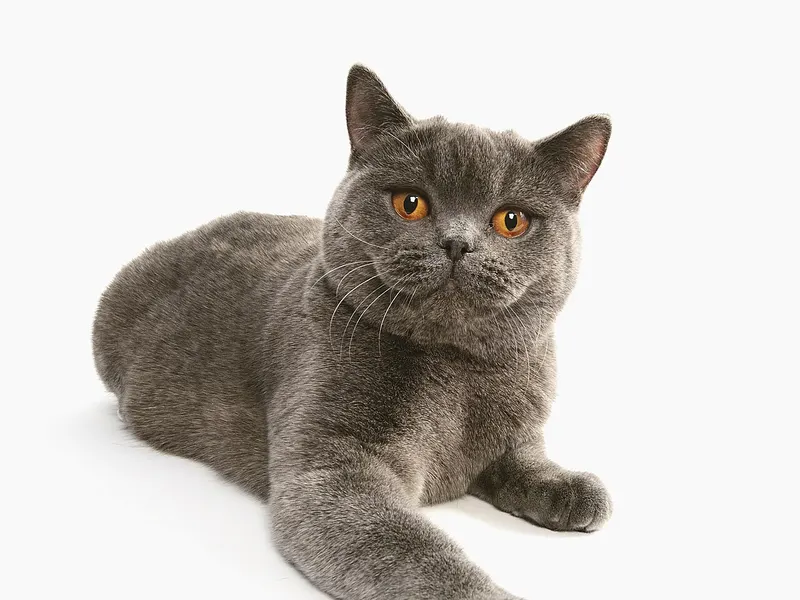
The British Longhair is the long-coated variant of the British Shorthair, carrying the same Roman-cat-derived ancestry and Harrison Weir-era refinement, differing only in a recessive long-hair gene that would occasionally crop up in British Shorthair litters, likely reintroduced when early 20th-century breeders outcrossed to Persians to rebuild the population after both World Wars. For decades the longhaired kittens were simply set aside or registered under other breed names depending on the country, and it's only relatively recently — the breed remains unrecognized by CFA even now, though TICA and several European registries do recognize it, sometimes under the name Lowlander or Britanica — that the long-coated variety has gained a fully separate breed identity of its own. Some breeders and registries treat the British Longhair as simply a coat-length variation to be shown alongside the British Shorthair rather than campaign for full independent-breed status everywhere, which is part of why recognition remains genuinely inconsistent across different countries' cat-fancy organizations.
Common health predispositions
- Hypertrophic cardiomyopathy
- Polycystic kidney disease
- Obesity
Temperament
Temperament closely mirrors the British Shorthair's — placid, undemanding, and quietly affectionate rather than a lap-seeking or vocal breed. British Longhairs tend to observe household activity calmly rather than actively participate, and they form genuine but low-key attachments to their people. They're generally tolerant of children and other pets, reflecting the same easygoing disposition selectively bred into the shorthaired version over a century and a half. Because the breed shares the British Shorthair's slow maturation rate, kittens can take a surprisingly long time — up to three to five years — to develop their final rounded head shape and plush, dense adult coat.
Living with a British Longhair
The medium-long, dense double coat needs considerably more attention than its shorthaired sibling — regular brushing, at least a couple of times weekly, keeps the coat from matting, particularly around the ruff and hindquarters. As with the British Shorthair, obesity is a genuine risk given the breed's low natural energy level and food motivation, making portioned meals a practical necessity rather than an optional nicety. Hypertrophic cardiomyopathy and polycystic kidney disease are both documented in the breed's close relatives and are worth screening for, and reputable breeders can speak to cardiac and genetic testing history in their lines. Owners specifically choosing a British Longhair over the shorthaired version are usually doing so for the visual appeal of the fuller coat, and should be honest with themselves about the added weekly grooming time before committing, since the temperament and care needs are otherwise nearly identical to the shorthaired variety.
FAQ
Is the British Longhair recognized by all cat registries?
No — CFA does not recognize it as a separate breed from the British Shorthair, while TICA and several European registries do recognize it independently, sometimes under alternate names like Lowlander or Britanica, so recognition varies meaningfully depending on which registry a breeder or show uses.
How is the British Longhair different from the British Shorthair?
Coat length is the defining difference — both share the same sturdy, round-faced body type and temperament, but the Longhair carries a recessive long-hair gene that produces a denser, more demanding coat requiring regular brushing that the shorthaired variety doesn't need.
Does the British Longhair shed a lot?
Yes, moderately to heavily, especially through seasonal coat blows — the dense double coat sheds noticeably more than the shorthaired variety's, making regular brushing useful for both matting prevention and reducing loose hair around the home.
Why did the British Longhair take so long to be recognized as its own breed?
For decades, longhaired kittens born in British Shorthair litters were simply set aside rather than promoted as a distinct type, and it took dedicated fanciers choosing to breed for the trait deliberately, rather than treat it as incidental, before some registries began granting the variety separate breed status.
Can a British Shorthair litter produce British Longhair kittens?
Yes — because the long-hair trait is recessive, two British Shorthair parents that each silently carry one copy of the gene can produce a longhaired kitten in an otherwise shorthaired litter, which is part of how the longhaired variety re-emerged in the breed's population.
Why would someone choose a British Longhair over a British Shorthair?
Almost entirely for the coat's appearance — the two share nearly identical temperament, body type, and health considerations, so the choice mainly comes down to whether an owner wants the plush, fuller longhaired look and is willing to take on the additional weekly grooming it requires.
Did outcrossing to Persians introduce the longhair gene into British cats?
Largely yes — early 20th-century British Shorthair breeders occasionally outcrossed to Persians to widen the gene pool and refine coat texture and color options, and that crossbreeding left a recessive longhair gene quietly circulating in some British Shorthair lines for decades. When two carrier shorthairs were paired, the occasional longhaired kitten would appear, and it took until relatively recently for those kittens to be formalized into their own recognized breed.
Related on FetchBreed
Care equipment for a British Longhair
As an Amazon Associate we earn from qualifying purchases made through these links, at no extra cost to you.
- Slicker brush
The dense double coat needs considerably more attention than its shorthaired sibling's — at least a couple of brushings weekly to keep it from matting.
- Steel grooming comb
The ruff and hindquarters are where this page says matting starts, and a comb is what finds it there.
Whichever breed fits your life, consider adoption or breed-specific rescue first — many purebred and mixed-breed dogs and cats are already waiting for homes.
General breed information, not veterinary advice — consult a vet for your pet's specific health, diet, and behavior needs.