Semi-cobby Body Type
American Bobtail
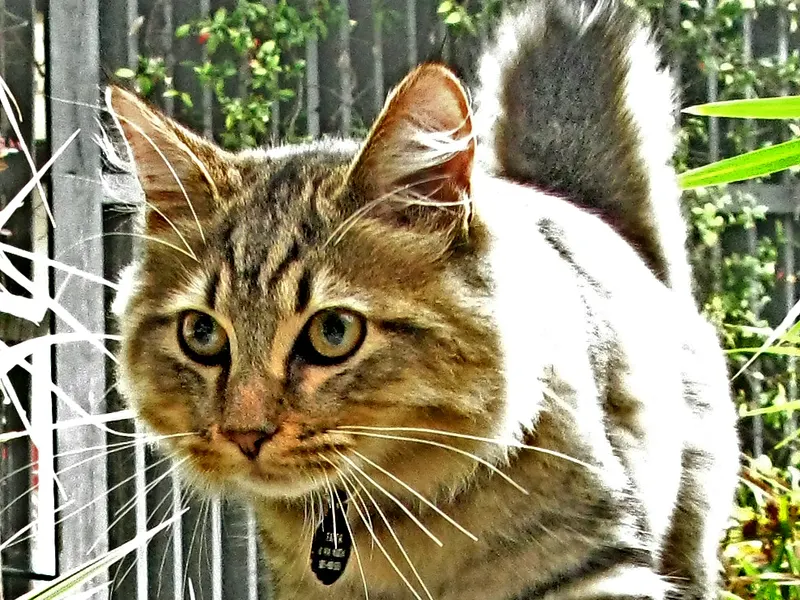
The American Bobtail began with a short-tailed brown tabby tomcat named Yodie, found near an Arizona Indian reservation in the late 1960s by vacationing couple John and Brenda Sanders, who bred him with their domestic female and noticed the short-tail trait carrying forward into the kittens. Unlike the Manx's tailless mutation, the American Bobtail's short, flexible tail comes from a distinct, dominant gene, and early breeders spent decades outcrossing carefully to build a genetically healthy, physically robust breed rather than rushing it to recognition — TICA granted full championship status only in 2000, more than three decades after Yodie's discovery. The breed's rugged, slightly wild look, intentionally reminiscent of a bobcat, is entirely a domestic trait combination and carries no wildcat ancestry. Breed clubs deliberately avoided crossing in wildcat blood despite the bobcat-inspired look buyers sometimes assume, and TICA's cautious, decades-long path to recognition is now cited within the cat fancy as a model for how a spontaneous-mutation breed can be developed responsibly rather than rushed to market for novelty appeal.
Common health predispositions
- Hip dysplasia
- Spinal conformation issues related to the natural bobtail gene
Temperament
American Bobtails are consistently described by owners as unusually people-oriented and adaptable, with a dog-like tendency to greet visitors, learn simple tricks, and even walk on a harness and leash. Breed clubs specifically promote the American Bobtail's calm, patient temperament around children as one of its strongest selling points, and the breed tends to get along well with other cats and dogs when introduced properly. They retain a genuinely playful, athletic streak into adulthood, enjoying interactive toys and puzzle feeders more than many purely lap-oriented breeds. Breed clubs also note the American Bobtail's strong sense of curiosity toward new objects and situations rather than wariness, a trait some trace to the breed's genuinely mixed working-cat ancestry rather than a narrow show-oriented gene pool.
Living with a American Bobtail
The breed comes in both shorthaired and longhaired varieties, both shown under the same standard, and coat care scales with length: a quick brush covers the shorthaired type, while the longhaired type needs a couple of sessions a week to keep the ruff and haunches from matting. American Bobtails are a solidly built, medium-to-large breed, and hip dysplasia has been documented at a higher rate than in many cat breeds, a real consideration given the breed's substantial frame; some conformation traits tied to the short-tail gene also warrant a vet's attention on the spine, though nowhere near the severity of Manx syndrome. Because the breed developed through careful, deliberate outcrossing rather than a rushed program, reputable breeders can typically speak in detail about a kitten's specific lineage and health-testing history. Because the breed reaches full physical maturity relatively slowly, taking two to three years to fill out its final muscular frame, growth-stage nutrition and gradual conditioning matter more here than for faster-maturing breeds.
FAQ
Is the American Bobtail related to the Manx?
No — despite both breeds having short tails, the mutations are genetically distinct. The Manx's tailless gene is linked to serious spinal cord defects when inherited from both parents, while the American Bobtail's short-tail gene is a separate, generally milder trait, though prospective owners should still ask a breeder about spine health in the line.
Does the American Bobtail have any wildcat ancestry?
No — despite a rugged, bobcat-like appearance that was deliberately bred toward, the American Bobtail is entirely a domestic cat breed with no documented wild ancestry, unlike hybrid breeds such as the Bengal or Savannah.
Are American Bobtails good with dogs?
Generally yes — the breed's adaptable, sociable temperament and moderate energy level tend to make for smoother introductions to resident dogs than more reserved or territorial breeds typically manage.
How long did it take for the American Bobtail to become a recognized breed?
Over three decades — the breed began with a single short-tailed cat found in the late 1960s, and TICA didn't grant full championship recognition until 2000, reflecting the deliberate, health-focused pace early breeders took rather than rushing the breed to market.
Do American Bobtails come in many colors?
Yes — the breed standard accepts a very wide range of colors and patterns, since early breeders prioritized health and temperament over a narrow cosmetic standard, giving American Bobtail breeders considerably more flexibility than breeds locked into a tight approved color list.
How long does it take an American Bobtail to reach full size?
Around two to three years — the breed matures slowly compared with many cats, gradually filling out its muscular, medium-to-large frame well after most cats have reached adult size.
Related on FetchBreed
Whichever breed fits your life, consider adoption or breed-specific rescue first — many purebred and mixed-breed dogs and cats are already waiting for homes.
General breed information, not veterinary advice — consult a vet for your pet's specific health, diet, and behavior needs.