Foreign Body Type
Abyssinian
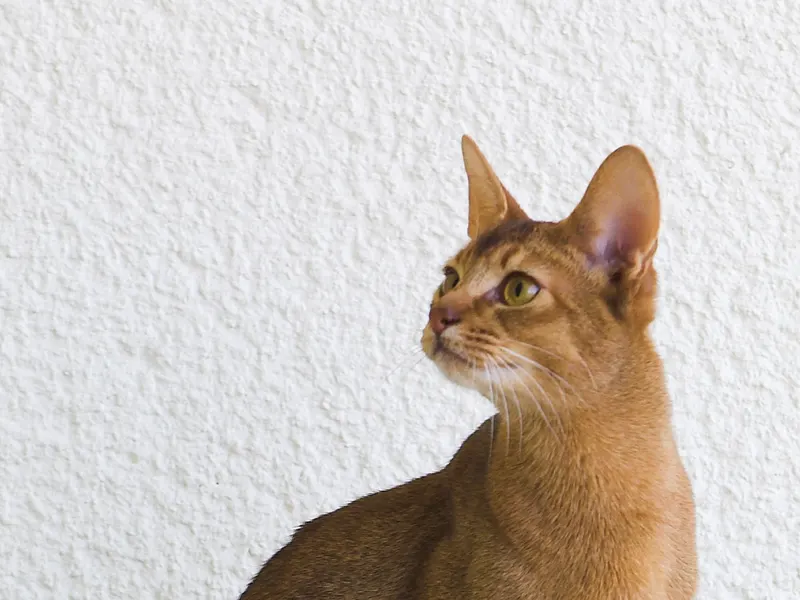
The Abyssinian's exact origin is genuinely disputed among cat historians: the popular story credits a cat named Zula, reportedly brought to England from Abyssinia (modern Ethiopia) by a British soldier around 1868, but genetic studies published in the 2000s point instead to a coastal origin somewhere along the Indian Ocean trade routes, possibly Southeast Asia, with the breed developed and refined largely by English fanciers rather than imported wholesale from Africa. What is settled is the breed's signature agouti "ticked" coat — each hair banded with alternating dark and light color — which gives the Abyssinian its wild, cougar-like appearance and was fixed as a breed standard by the early 1900s. The breed is sometimes nicknamed the "Zanzibar cat" or the "Bunny cat" for the rabbit-like texture and coloring of its ticked fur, and it was one of the earliest pedigreed cats exhibited at Crystal Palace and other Victorian-era English shows in the late 19th century, appearing alongside the Persian and British Shorthair on the same benches. Early breed clubs in England, including the National Cat Club, showed the Abyssinian regularly by the 1880s-90s, and it remains one of CFA's most consistently top-ranked breeds by registration numbers today, prized specifically for the wild, ticked coat that sets it apart visually from nearly every other domestic breed.
Common health predispositions
- Pyruvate kinase deficiency
- Renal amyloidosis
- Gingivitis
Temperament
Abyssinians are consistently described by owners and breed clubs alike as one of the most active, curious cat breeds, closer in energy and problem-solving drive to a dog than a typical lap cat — they climb, investigate closed cabinets, and are notorious for figuring out door handles and latches. That intelligence and activity level make them poor candidates for a cat who's expected to nap all day; an under-stimulated Abyssinian will find its own entertainment, often destructively. They're affectionate on their own terms rather than clingy, generally sociable with other pets, but not typically a cat that wants to be held for long stretches. Many Abyssinian owners describe the breed as almost obsessively interested in whatever the household is doing at any given moment, often supervising cooking, unpacking groceries, or bathroom routines from a close vantage point.
Living with a Abyssinian
The Abyssinian's short, low-maintenance ticked coat needs only occasional brushing and sheds relatively little, but the real daily commitment is enrichment — cat trees, puzzle feeders, and supervised outdoor access (a secured catio, if possible) go a long way toward channeling the breed's high energy productively. Two health concerns are specifically documented in the breed: pyruvate kinase deficiency, an inherited blood disorder for which a genetic test exists and which reputable breeders screen against, and a higher-than-average rate of renal amyloidosis, a kidney disease. Periodontal disease is also common enough in the breed that vets recommend proactive dental care starting relatively young. Coat colors recognized in the breed standard include the classic ruddy (burnt-sienna ticked with black), red/sorrel, blue, and fawn, each showing the same ticked pattern in a different base color.
FAQ
Are Abyssinians good with children?
Generally yes — their playful, active nature tends to match well with kids who want an interactive pet, though their preference for chasing and exploring over cuddling means they suit families expecting a high-energy companion rather than a lap cat.
What is pyruvate kinase deficiency?
An inherited enzyme deficiency that causes red blood cells to break down prematurely, leading to intermittent anemia; a DNA test identifies carrier and affected cats, and responsible Abyssinian breeders test their breeding stock to avoid producing affected kittens.
Do Abyssinians need a lot of space?
They do best with vertical space and things to climb more than raw square footage — cat trees, shelving, and window perches matter more to an Abyssinian's wellbeing than the size of the home itself.
What colors do Abyssinian cats come in?
The main recognized colors are ruddy, red (also called sorrel), blue, and fawn, all showing the breed's signature ticked coat where each hair carries several bands of alternating color rather than a single solid shade.
Why is the Abyssinian's coat called 'ticked'?
Ticking refers to individual hairs banded with two or three alternating colors rather than a single solid shade — the effect is most visible on Abyssinians and gives the coat a shimmering, agouti appearance similar to a wild rabbit's or a big cat's coat, rather than the flat single-tone color of most domestic breeds.
Are Abyssinian cats really descended from ancient Egyptian cats?
That popular claim isn't well supported — genetic studies looking at Abyssinian DNA have instead pointed toward a likely origin along the coast of the Indian Ocean, possibly in Southeast Asia, with the breed's name coming from early exhibition history in Britain rather than any documented lineage back to ancient Egypt. The resemblance some owners see to Egyptian cat statues and paintings is real but appears to be coincidental rather than a sign of genuine ancestry.
Related on FetchBreed
Comparisons
- Abyssinian vs American Shorthair
- Abyssinian vs Bengal
- Abyssinian vs Birman
- Abyssinian vs British Shorthair
- Abyssinian vs Burmese
- Abyssinian vs Domestic Longhair
- Abyssinian vs Domestic Shorthair
- Abyssinian vs Exotic Shorthair
- Abyssinian vs Himalayan
- Abyssinian vs Persian
- Abyssinian vs Russian Blue
- Abyssinian vs Savannah
Care equipment for a Abyssinian
As an Amazon Associate we earn from qualifying purchases made through these links, at no extra cost to you.
- Cat tree
The page says the real daily commitment is enrichment, not grooming — the short ticked coat needs only occasional brushing.
- Puzzle feeder
Named in the same sentence, for channelling the breed's high energy productively.
- Screened catio enclosure
The page's own third suggestion: supervised outdoor access, a secured catio if possible.
- Cat toothbrush kit
Periodontal disease is described as common enough in the breed that vets recommend proactive dental care starting relatively young.
Whichever breed fits your life, consider adoption or breed-specific rescue first — many purebred and mixed-breed dogs and cats are already waiting for homes.
General breed information, not veterinary advice — consult a vet for your pet's specific health, diet, and behavior needs.