Sporting Group
Weimaraner
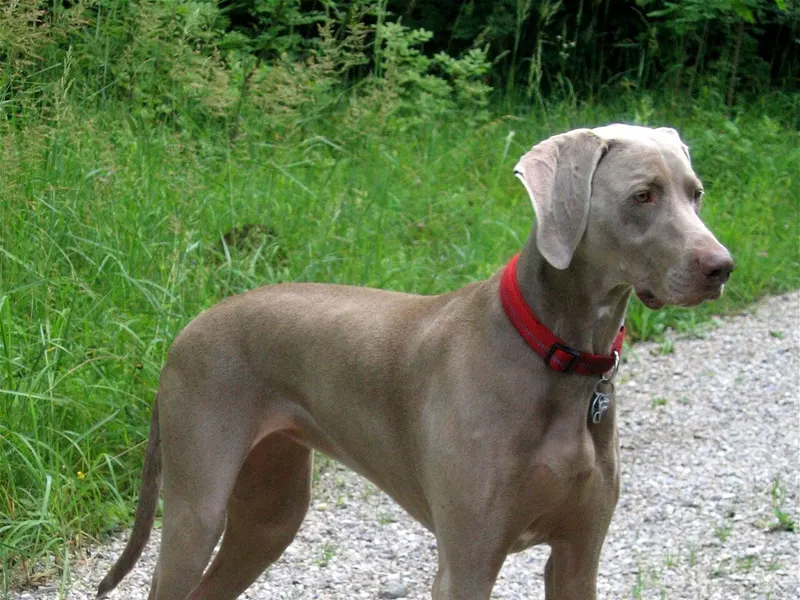
German nobility developed the Weimaraner in the early 19th century at the court of Weimar, originally to hunt large game like boar, bear, and deer before European big-game populations declined and the breed's role shifted toward birds and smaller quarry; the striking silver-gray coat, unusual enough to earn the nickname the 'Gray Ghost,' was reportedly maintained partly for its distinctiveness among the aristocratic breed clubs that controlled Weimaraner ownership tightly for decades, only relaxing export restrictions in the 20th century. The breed's popularity in the U.S. jumped sharply in the 1950s after a wave of celebrity ownership and magazine coverage, a boom that outpaced the number of well-bred, temperamentally sound dogs available and left the breed with a reputation for unpredictability in some lines that responsible modern breeders have worked to correct through selective breeding for stability.
Common health predispositions
- Bloat
- Hip dysplasia
- Von Willebrand's disease
Temperament
Weimaraners were bred as an all-around big-game hunting companion, and the breed retains a bold, high-drive temperament reflected in maxed-out energy along with a genuine independence that keeps trainability solidly good but rarely effortless. They bond intensely with their family, often showing textbook separation-anxiety behavior when left alone, and their compatibility with smaller pets runs notably lower than with most retriever-type sporting breeds given the breed's strong prey drive developed for hunting game larger than a house cat. Weimaraners are also notably vocal and demanding of attention compared with many other pointing breeds, and the breed's intelligence, without a real outlet, commonly turns toward creative problem-solving that owners experience as counter-surfing, opening doors, or otherwise finding trouble.
Living with a Weimaraner
Ninety minutes of serious daily exercise is the realistic minimum for a Weimaraner — this is a large, athletic hunting breed, and under-exercised Weimaraners are notorious among trainers for destructive chewing and escape attempts. The short, smooth coat needs minimal grooming. The breed's deep chest carries a genuine, serious bloat risk, and hip dysplasia shows up at rates typical of large sporting breeds. The breed also carries a higher-than-average rate of a clotting disorder called Von Willebrand's disease, which is why many vets specifically recommend a pre-surgical clotting screen for this breed rather than treating it as routine. Show-ring tradition once called for a docked tail and cropped ears, but that practice has grown genuinely controversial as more European countries ban cosmetic surgical alterations outright, and a growing number of Weimaraners outside the U.S. are shown with natural ears and tails intact. A small number of long-haired Weimaraners also occur from a recessive gene carried within the breed; they're accepted in some international standards but not in the AKC's, and their grooming needs run notably higher than the standard short-coated variety's. Both blue-gray and silver-gray shades occur naturally within the accepted range, with no meaningful health or temperament difference between them despite occasional marketing claims to the contrary from pet sellers.
FAQ
Why is the Weimaraner called the 'Gray Ghost'?
The nickname comes from the breed's distinctive silver-gray coat, unusual among sporting breeds, combined with the dog's fast, low, ghost-like movement in the field — a look German nobility reportedly valued partly for how visually distinctive it made their hunting dogs.
Do Weimaraners do well with small pets?
Often not without careful, early introduction — the breed's history hunting large and small game alike gave it a strong prey drive, and goodWithOtherPets compatibility ratings for the Weimaraner run lower than for many other sporting breeds as a result.
What is Von Willebrand's disease and does it affect Weimaraners?
It's an inherited blood-clotting disorder more prevalent in Weimaraners than in dogs generally, meaning affected dogs bleed more than normal after injury or surgery. Vets commonly recommend a clotting-factor screen before any planned surgical procedure in this breed.
Why did Weimaraners become so popular in America?
A wave of celebrity ownership and magazine features in the 1950s drove a sharp spike in demand, which briefly outpaced the number of careful, temperament-focused breeders producing puppies — a boom-bust pattern breed historians point to as part of why some later Weimaraner lines developed a reputation for instability that responsible modern breeding has worked to reverse.
Are Weimaraners good first dogs?
Not usually recommended — the combination of very high energy, strong independence, and genuine separation-anxiety tendencies makes the breed demanding even for experienced owners, and a Weimaraner that doesn't get enough exercise and structured training commonly develops serious destructive behavior.
Why is the Weimaraner nicknamed the 'Gray Ghost'?
The nickname refers directly to the breed's distinctive silver-gray coat combined with its pale amber or blue-gray eyes, a striking, almost ghostly appearance that made the breed instantly recognizable among German nobility who developed it in the early 19th century in Weimar specifically for hunting large game like deer, bear, and wild boar.
Related on FetchBreed
Comparisons
- Weimaraner vs Brittany
- Weimaraner vs English Springer Spaniel
- Weimaraner vs German Shorthaired Pointer
- Weimaraner vs Golden Retriever
- Weimaraner vs Goldendoodle
- Weimaraner vs Labradoodle
- Weimaraner vs Labrador Retriever
- Weimaraner vs Rhodesian Ridgeback
- Weimaraner vs Siberian Husky
- Weimaraner vs Standard Poodle
- Weimaraner vs Vizsla
- Weimaraner vs Whippet
Whichever breed fits your life, consider adoption or breed-specific rescue first — many purebred and mixed-breed dogs and cats are already waiting for homes.
General breed information, not veterinary advice — consult a vet for your pet's specific health, diet, and behavior needs.