Terrier Group
Skye Terrier
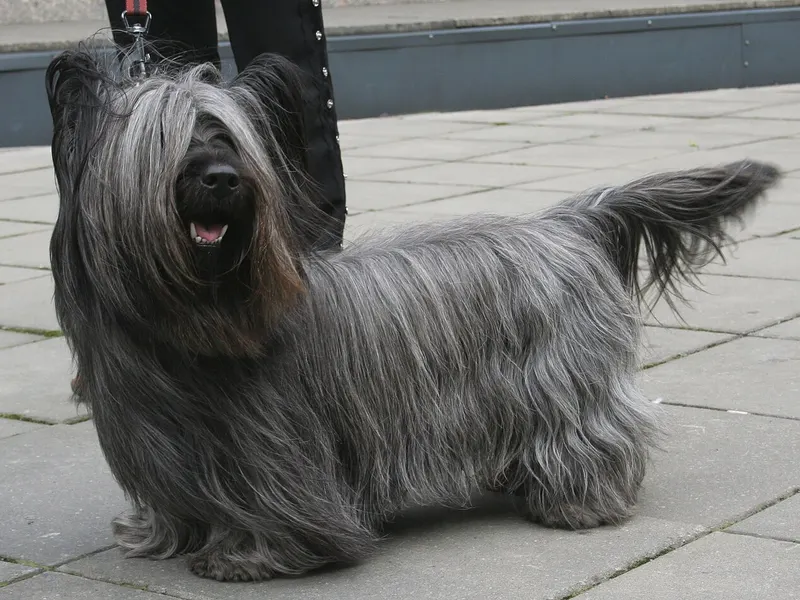
Developed on the Isle of Skye in Scotland's Hebrides islands over several centuries, this terrier was bred to hunt fox, badger, and other burrowing animals across rugged island terrain, its long, low, straight-coated build allowing it to work effectively both above and below ground. Queen Victoria's own well-documented fondness for the breed during her reign gave it real visibility across 19th-century Britain, though that popularity has faded substantially since — today the Skye Terrier ranks among the rarest breeds in the AKC registry, with only a small number of puppies registered annually. The breed's distinctive silhouette — a long, low body with a full drop coat parted along the spine — takes a considerable amount of dedicated grooming time to maintain at full show length, and even pet owners who keep the coat trimmed shorter still invest more upkeep time than most terrier breeds require. AKC recognition came in 1887. Perhaps the breed's most famous individual ambassador wasn't a show dog at all but Greyfriars Bobby, a Skye Terrier from 19th-century Edinburgh whose reputed years-long vigil at his deceased owner's grave became a celebrated (if historically disputed in some details) symbol of canine loyalty still commemorated with a statue in the city today.
Common health predispositions
- Hip dysplasia
- Mast cell tumors
- Hyperadrenocorticism (Cushing's disease)
Temperament
Dignified and reserved with strangers, the Skye Terrier tends to bond intensely with one family or even one person in particular, a one-owner devotion that echoes the famous Greyfriars Bobby story still associated with the breed today. Most individuals are calm and undemanding indoors compared to many higher-energy terriers, though real terrier confidence and independence remain underneath the reserved exterior. A naturally wary breed like this one benefits considerably from early socialization aimed at building reasonable comfort with visitors and unfamiliar situations. The same deep loyalty that produced the Greyfriars Bobby legend shows up in ordinary Skye Terriers today as genuine grief-like behavior when separated from a bonded owner for extended periods, a trait worth planning around for anyone with an unpredictable travel schedule.
Living with a Skye Terrier
Unlike some higher-strung terriers, the Skye doesn't demand intense daily exercise — around 45 minutes covers this low-slung breed's needs comfortably. Grooming is where this breed asks the most — the long, straight double coat, flowing enough to nearly reach the ground, needs thorough brushing several times weekly or it mats badly given its length and density. Hip dysplasia and mast cell tumors are both worth knowing about going in, and hyperadrenocorticism, commonly known as Cushing's disease, is a third condition documented often enough in the breed to raise with a breeder. A calm household genuinely willing to commit to the coat-care schedule and prepared for a dog that bonds intensely with one owner rather than the whole family equally will likely find a devoted companion here; given the breed's extreme rarity, prospective owners should also expect a real wait to find an available puppy. Skye Terrier rescue is essentially nonexistent in the US given the breed's tiny population, and interested adopters typically need to work directly with the small number of active breeders. Monthly costs run on the higher side for a small breed given the substantial coat-care commitment, and a prospective owner should budget real time as well as money for regular brushing sessions.
FAQ
Who was Greyfriars Bobby?
Baroness Angela Burdett-Coutts, a wealthy English philanthropist, commissioned and funded the bronze statue of Bobby that still stands near Greyfriars Kirkyard in Edinburgh, unveiled in 1873 — one of the earliest public statues in Britain dedicated to an individual dog rather than a person, a sign of how quickly and widely the story spread in its own time. The statue and Bobby's own reputed grave marker, a short distance away in the kirkyard, remain a genuine tourist stop in Edinburgh to this day.
Is the Skye Terrier a rare breed?
Yes, genuinely — despite once being fashionable in 19th-century Britain partly through Queen Victoria's own patronage, the Skye Terrier today ranks among the rarest breeds in the AKC registry, with only a small number of puppies registered annually.
How much grooming does a Skye Terrier need?
A serious ongoing commitment — the long, straight double coat, which nearly reaches the ground on a well-coated individual, mats fast without a thorough brush-through several times a week given its length and density.
Is a Skye Terrier good with strangers?
Not without real socialization effort — genuine wariness around unfamiliar people is the norm for this breed, which bonds far more intensely with its own family, particularly one specific owner.
Did Queen Victoria really own Skye Terriers?
She did, and her well-documented fondness for the breed gave it real visibility across 19th-century Britain — a popularity boost that hasn't lasted, leaving the Skye Terrier one of the genuinely rarer AKC breeds today.
Related on FetchBreed
Whichever breed fits your life, consider adoption or breed-specific rescue first — many purebred and mixed-breed dogs and cats are already waiting for homes.
General breed information, not veterinary advice — consult a vet for your pet's specific health, diet, and behavior needs.