Sporting Group
Portuguese Pointer
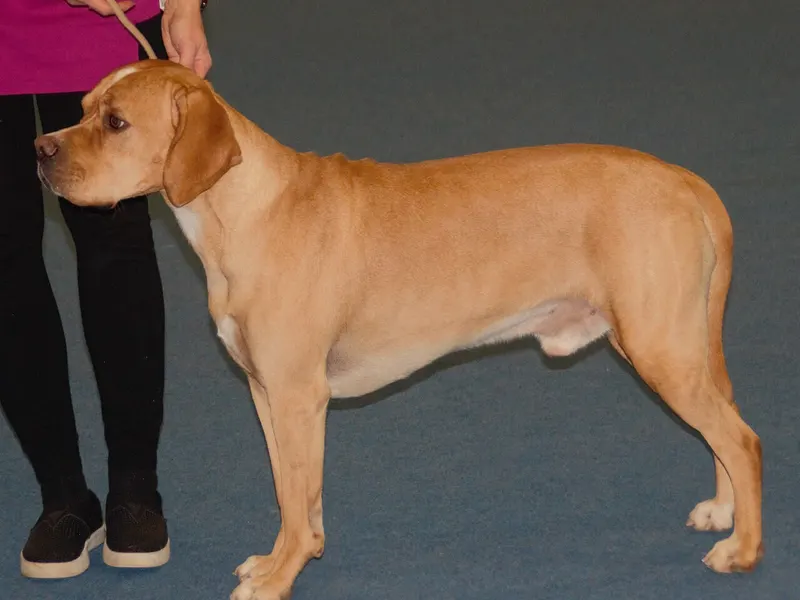
Portuguese hunters developed this breed over centuries, with documented references to dogs matching its description appearing in Portuguese hunting literature dating back several hundred years, making the Portuguese Pointer one of the older documented pointing breeds in continental Europe, predating several of the more internationally famous continental pointer breeds that followed. The breed's traditional job centered on partridge and other upland game bird hunting across Portugal's varied terrain, and its compact, notably efficient build reflects real function suited to working comparatively rough, brush-heavy ground rather than the wide-open plains some other pointing breeds specialize in. Portuguese hunters largely kept the breed close to home for centuries, and it remained almost entirely unknown outside Portugal until relatively recently, with international exposure and eventual AKC Foundation Stock Service interest developing only in recent decades. Stateside, it's still a genuine curiosity, known mainly to dedicated upland bird hunters specifically interested in less common continental pointing breeds.
Common health predispositions
- Hip dysplasia (uncommon)
- Generally hardy working breed
Temperament
Focused and genuinely determined in the field, the Portuguese Pointer carries real pointing instinct alongside a notably affectionate, people-oriented disposition at home, a combination that Portuguese hunters have long valued precisely because it produces a dog equally comfortable working and relaxing with family. Devotion to its own household runs deep, and most individuals integrate well with children given the breed's generally sociable baseline temperament. Real intelligence and genuine eagerness to work show up as fast learning too, both in the field and around the house, according to Portuguese hunting enthusiasts who've worked the breed directly. It's still put to work bird-hunting in Portugal today, and keeping that field role alive is treated as a real part of preserving the breed's working character even as international interest slowly grows.
Living with a Portuguese Pointer
A genuine 75 minutes of daily activity suits this working pointing breed well, and pairing it with real bird-hunting or scent-based enrichment beats plain exercise every time. Brushing occasionally is really all the short, smooth coat asks for. The Portuguese Pointer is widely considered a genuinely hardy working breed; hip dysplasia shows up occasionally but nowhere near as often as it does in some larger sporting breeds. Real field focus and genuine affection at home suit an active hunting or outdoor-oriented household rather than a sedentary one. Given how recently the breed gained any real international exposure, tracking down a puppy in the US usually means reaching out to a specialist importer or building a relationship with a Portuguese breeder directly, since a nearby domestic litter is a long shot. Everyday costs stay reasonable thanks to the low grooming demands and general hardiness, though anyone actually importing one from Portugal should budget separately for that added logistical expense.
FAQ
How old is the Portuguese Pointer breed?
Genuinely old — documented references to dogs matching its description appear in Portuguese hunting literature dating back several hundred years, making it one of the older documented pointing breeds in continental Europe, predating several more internationally famous continental pointer breeds.
What does a Portuguese Pointer hunt?
Traditionally partridge and other upland game birds across Portugal's varied terrain, and the breed's compact, efficient build reflects real function suited to comparatively rough, brush-heavy ground rather than wide-open plains hunting.
Is the Portuguese Pointer AKC recognized?
Only at the Foundation Stock Service level so far, not full group status — a direct consequence of Portuguese hunters keeping the breed close to home for centuries before international interest really picked up.
Is a Portuguese Pointer a good family dog?
Usually, yes — a dog that hunts with real focus in the field but turns notably affectionate and people-oriented at home, exactly the dual personality Portuguese hunters have long bred and valued in this breed.
Is the Portuguese Pointer easy to find in the US?
No — domestic litters are genuinely scarce enough that a specialist importer or a Portuguese breeder contact ends up doing most of the legwork for interested American owners.
How big does a Portuguese Pointer get?
A compact, muscular breed, typically 35 to 50 pounds and 18 to 22 inches at the shoulder, noticeably smaller and stockier than the German Shorthaired Pointer or English Pointer, a build Portuguese hunters favored specifically for working thick, brush-heavy cover rather than covering open ground at a dead run.
Does the Portuguese Pointer have a distinctive color pattern?
Yes — most individuals show solid or patched yellow-brown to chestnut coloring, sometimes with white markings on the chest and feet, a warmer, earthier palette than the black-and-white or liver-and-white patterns more common among Northern European pointing breeds.
How does the Portuguese Pointer's temperament compare to a Vizsla's?
Broadly similar in its close, family-oriented bond with its own household, though the Portuguese Pointer developed independently in a different part of the Iberian Peninsula for different terrain, and it tends to carry a somewhat calmer, less velcro-like disposition around the house than the notably clingy Vizsla is known for.
Related on FetchBreed
Whichever breed fits your life, consider adoption or breed-specific rescue first — many purebred and mixed-breed dogs and cats are already waiting for homes.
General breed information, not veterinary advice — consult a vet for your pet's specific health, diet, and behavior needs.