Sporting Group
Lagotto Romagnolo
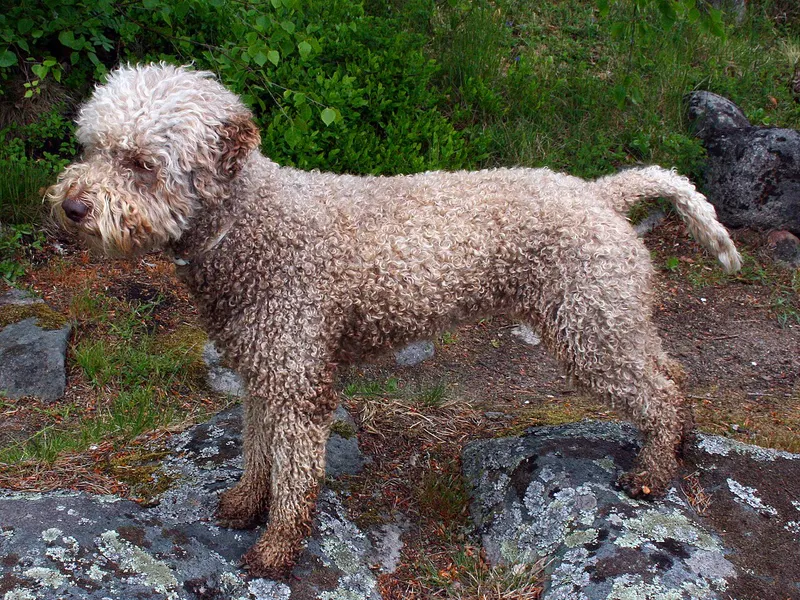
Long before it became known internationally as a truffle-hunting specialist, this curly-coated Italian breed worked the marshlands of the Romagna region as a genuine water retriever, its name literally translating to "lake dog" and referring directly to that original wetland-retrieving job. As Italian marshland was gradually drained for agriculture through the 19th and 20th centuries, the breed's original water-retrieving work largely disappeared, and Lagotto owners in the truffle-rich hills of Romagna discovered the dog's genuinely exceptional nose transferred remarkably well to locating truffles buried underground, a second working career that has since become the breed's defining modern purpose. That transition from retriever to truffle-hunter is well documented in Italian breed records and represents one of the more unusual functional pivots in dog-breed history — most working breeds keep a single job across generations rather than switching entirely. AKC recognition arrived in 2015, relatively recent given the breed's genuinely ancient roots, and today professional truffle hunters across Italy and increasingly elsewhere in Europe favor the Lagotto specifically because, unlike pigs traditionally used for truffle-hunting, it doesn't try to eat the truffle once it finds one. The breed's dense, curly, wool-like coat, functionally similar to a Poodle's, likely shares distant ancestry with other European water-dog breeds, though the exact historical connection remains genuinely uncertain among breed historians.
Common health predispositions
- Hip dysplasia
- Benign familial juvenile epilepsy
- Patellar luxation
Temperament
Sharp-nosed and genuinely food-motivated — a trait that makes real sense given its truffle-hunting career — the Lagotto Romagnolo combines a real working drive with an affectionate, family-oriented disposition at home. Most individuals are alert without being reactive, and the breed's centuries of close cooperative work alongside a single human handler translates into a dog that reads its owner's cues unusually well. Kids and other household pets generally do fine with a properly socialized Lagotto, and the breed's genuine scenting talent shows up constantly in everyday life as an eagerness to investigate and search out anything interesting by nose, truffle or otherwise.
Living with a Lagotto Romagnolo
Scent games and nose-work activities suit this breed particularly well alongside its roughly 60 minutes of daily exercise, channeling real working instinct that a simple walk doesn't fully satisfy. Preventing painful matting close to the skin on the dense, curly, non-shedding coat takes consistent brushing plus a professional trim roughly every two months — real ongoing work, though it pays off in minimal loose hair around the house. Hip dysplasia deserves standard attention, but a form of benign familial juvenile epilepsy documented specifically in Lagotto puppies, sometimes called Lagotto storage disease in older literature, is the condition most worth a direct conversation with a breeder about, alongside patellar luxation. Owners who genuinely value the breed's intelligence and scenting drive, and who don't mind the demanding coat-care schedule, tend to find a rewarding, food-motivated companion in the Lagotto Romagnolo — nose-work classes in particular tend to be an excellent fit for the breed's original talent. US rescue remains limited given how recently the breed gained real popularity outside Italy, so most prospective owners connect with the growing number of North American breeders instead. Professional grooming appointments push the monthly budget toward the higher end for a dog this size, on top of ordinary food and veterinary costs.
FAQ
Why is the Lagotto Romagnolo used for truffle hunting?
The breed's exceptional nose, originally developed for water retrieving in the Romagna marshlands, transferred remarkably well to locating truffles once that wetland habitat was drained for agriculture, and unlike pigs traditionally used for the job, a Lagotto doesn't try to eat the truffle once it finds one.
What does 'Lagotto Romagnolo' mean?
Roughly 'lake dog of Romagna' — the name points back to the breed's original job as a water retriever working the marshlands of Italy's Romagna region before that habitat was largely drained for farmland.
Is the Lagotto Romagnolo hypoallergenic?
No dog qualifies as completely allergen-free, but the breed's dense, curly, wool-like coat sheds very little, similar in that respect to a Poodle, which is why allergy-sensitive households often find it a more manageable option worth confirming with an in-person visit first.
What is Lagotto storage disease?
It's an older term for a form of benign familial juvenile epilepsy documented specifically in Lagotto puppies, a condition responsible breeders test for directly, and it's one of the more breed-specific health items worth raising before committing to a puppy.
How much grooming does a Lagotto Romagnolo need?
A serious ongoing commitment — the dense, curly, non-shedding coat needs consistent brushing plus a professional trim every couple of months to prevent painful matting close to the skin.
Related on FetchBreed
Care equipment for a Lagotto Romagnolo
As an Amazon Associate we earn from qualifying purchases made through these links, at no extra cost to you.
- Steel grooming comb
The stated risk is painful matting close to the skin on a dense non-shedding coat — a comb is what tests for it.
- Scent-work starter kit
This profile singles out nose-work classes as an excellent fit for the breed's original talent as a truffle dog.
Whichever breed fits your life, consider adoption or breed-specific rescue first — many purebred and mixed-breed dogs and cats are already waiting for homes.
General breed information, not veterinary advice — consult a vet for your pet's specific health, diet, and behavior needs.