Sporting Group
Labrador Retriever
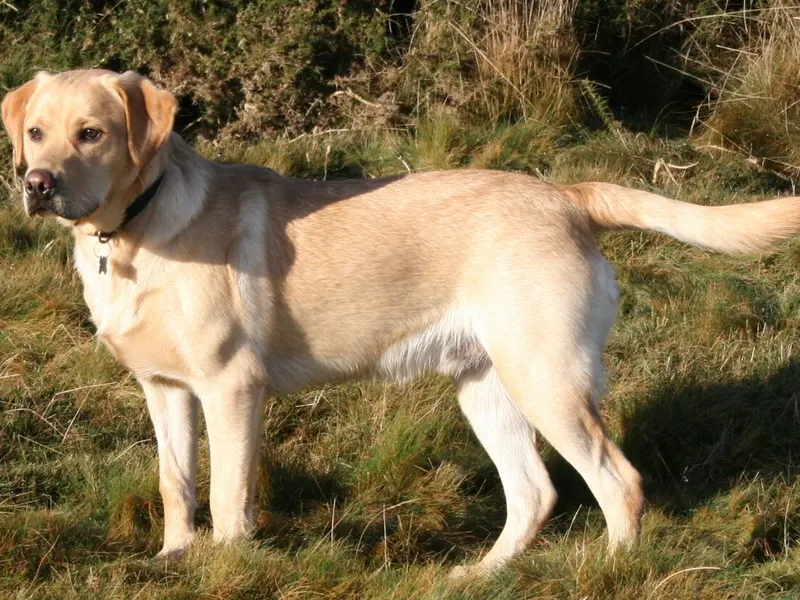
The Labrador Retriever traces back to the St. John's water dog of Newfoundland, a working companion of Canadian fishermen who used the breed's ancestors to haul nets and retrieve fish that slipped the line. English sportsmen imported the type in the early 1800s, refined it for upland and waterfowl retrieving, and the modern Labrador emerged from that Sporting-group foundation. It has been the AKC's most-registered breed for over three decades running, a popularity built less on looks than on an unusually stable, biddable temperament that suits families, hunters, and service-dog programs equally well. The AKC formally recognized the breed in 1917, and Labradors have held the AKC's top registration spot continuously since 1991 — a run unmatched by any other breed in the registry's history, edged only by the French Bulldog's more recent 2022 rise.
Common health predispositions
- Hip dysplasia
- Elbow dysplasia
- Obesity
- Exercise-induced collapse
Temperament
Labradors are built around a strong retrieving drive and an eagerness to work with people rather than around them, which is why the breed dominates guide-dog, detection, and search-and-rescue programs. That same drive means an under-exercised Lab can become a demolition crew of chewed furniture and raided counters — this is a food-motivated breed prone to weight gain, and portion control matters as much as walks. Labs are rarely one-person dogs; they tend to greet strangers, other dogs, and cats with the same open enthusiasm, which is a real asset for busy multi-pet households but a poor fit for anyone wanting a natural watchdog. Labs also excel at dock diving and retrieving trials, sports built directly around the instincts the breed was created for, and many owners find channeling that instinct into a structured sport does more for behavior than simple leash walks alone.
Living with a Labrador Retriever
At roughly 55–80 lbs and needing about an hour of real exercise daily — fetch, swimming, or a structured run, not just a yard — a Labrador is not a passive apartment companion, though a physically tired Lab settles calmly indoors. The short double coat sheds heavily twice a year and steadily the rest of it, so weekly brushing is closer to a minimum than a maximum. Hip and elbow dysplasia and exercise-induced collapse are documented in the breed; buying from a breeder who health-tests both parents (OFA hips/elbows, EIC DNA panel) materially lowers the odds, and keeping the dog lean is one of the few owner-controlled variables shown to reduce joint problems over the dog's life. Labs come in three recognized colors — black, yellow, and chocolate — which are cosmetic only and carry no meaningful temperament or health difference despite persistent owner folklore claiming otherwise. The breed splits loosely into 'field' lines (leaner, higher-drive, bred from working/hunting stock) and 'show' or 'English' lines (stockier, calmer), and it's worth asking a breeder which type a puppy's parents represent since the energy-level difference between the two is real and noticeable day to day.
FAQ
Are Labradors good with young kids?
Generally yes — the breed's trait profile skews toward high tolerance and low reactivity, which is why Labs are a common first family dog. Early socialization and teaching children to respect the dog's space still matter, especially for a boisterous adolescent Lab that hasn't learned body control yet.
How much food does a Labrador need?
Portion by body condition, not the bag's chart — Labs carry a genetic tendency toward obesity, and vets recommend feeling for ribs under a thin fat layer as the practical check rather than relying on weight alone.
Do Labradors do well in apartments?
Only with a firm daily exercise commitment; the breed's energy level is high, and a Lab that gets under an hour of real activity a day is far more likely to become destructive indoors regardless of square footage.
Do black, yellow, and chocolate Labs behave differently?
No meaningful temperament difference exists between coat colors — that's a persistent myth. The bigger behavioral split in the breed is between field-bred and show-bred lines, where field lines tend to run noticeably higher-energy.
Did the Labrador Retriever actually originate in Labrador, Canada?
Not quite — the breed's direct ancestors, the St. John's Water Dog, developed in Newfoundland rather than Labrador, working alongside fishermen retrieving nets and escaped fish, and English sportsmen who imported the dogs in the 19th century applied the 'Labrador' name, which stuck even though the breed's actual working roots trace to a different Canadian region.
Related on FetchBreed
Comparisons
- Labrador Retriever vs Belgian Malinois
- Labrador Retriever vs Brittany
- Labrador Retriever vs Collie
- Labrador Retriever vs English Springer Spaniel
- Labrador Retriever vs German Shepherd Dog
- Labrador Retriever vs German Shorthaired Pointer
- Labrador Retriever vs Golden Retriever
- Labrador Retriever vs Goldendoodle
- Labrador Retriever vs Labradoodle
- Labrador Retriever vs Rhodesian Ridgeback
- Labrador Retriever vs Vizsla
- Labrador Retriever vs Weimaraner
Care equipment for a Labrador Retriever
As an Amazon Associate we earn from qualifying purchases made through these links, at no extra cost to you.
- De-shedding tool
The short double coat sheds heavily twice a year and steadily the rest of it. This page asks for weekly brushing, not the slicker-and-comb routine a matting coat needs, because a short coat does not mat.
- Floating fetch bumper
Fetch and swimming are the two forms of real exercise this profile names for the hour a day it asks for.
Whichever breed fits your life, consider adoption or breed-specific rescue first — many purebred and mixed-breed dogs and cats are already waiting for homes.
General breed information, not veterinary advice — consult a vet for your pet's specific health, diet, and behavior needs.