Toy Group
Japanese Chin
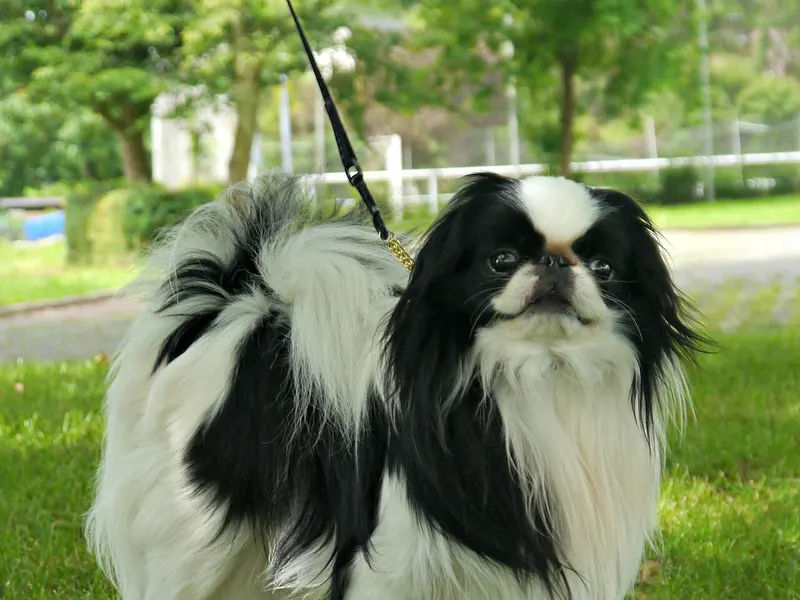
Chinese imperial courts are thought to have first developed dogs of this general type, gifting them to Japanese nobility possibly as early as the Nara period over a thousand years ago, after which Japanese breeders refined the Chin into the distinctly small, cat-like companion dog recognized today, kept almost exclusively by Japanese aristocracy for centuries. Commodore Matthew Perry is credited with bringing some of the first Japanese Chins to the West in the 1850s as gifts to Queen Victoria and others, sparking European and American interest in the breed. AKC recognition came in 1888, making the Japanese Chin one of the older Toy Group breeds in the registry. Japanese aristocratic households reportedly kept the breed in genuinely small, ornamental cages when not being carried or held, a practice tied to the dog's status as a precious luxury companion rather than a household pet in the more casual modern sense, and only nobility were traditionally permitted to own them. The breed's introduction to Europe is often credited to Portuguese traders in the 16th century, predating Commodore Perry's better-documented mid-19th-century gifts by roughly 300 years.
Common health predispositions
- Mild brachycephalic airway restriction
- Patellar luxation
- Heart murmurs
Temperament
Often described as cat-like, the Japanese Chin is notably independent for a toy breed, capable of entertaining itself and sometimes choosing when it wants affection rather than constantly seeking it out. That said, the breed is also genuinely devoted to its family and typically gentle, quiet, and well-suited to calm households, a temperament shaped by centuries as an indoor companion for Japanese and later European nobility rather than any working role. Japanese Chins are generally good with other pets, including cats, and their soft nature makes harsh training methods counterproductive. Centuries as an exclusively indoor companion for Japanese nobility left the breed with genuinely minimal working or hunting instincts compared to most dog breeds, and that history shows up today as a dog remarkably content with a purely domestic, low-key lifestyle rather than one seeking outdoor adventure or physical challenge.
Living with a Japanese Chin
About 30 minutes of gentle daily activity suits this breed's modest exercise needs, reflecting centuries spent as an indoor companion rather than a working dog. The long, silky single coat needs regular brushing a few times a week to prevent tangling, though the coat doesn't mat as readily as some longer-haired breeds. Like many flat-faced toy breeds, Japanese Chins can experience mild breathing restriction in hot weather, so temperature management during exercise matters. Patellar luxation and heart murmurs both appear often enough in the breed's health records to bring up directly before choosing a puppy. A calm household wanting an affectionate, low-energy companion — apartment dwellers and less physically active owners included — will find a natural fit here, while anyone hoping for a highly active outdoor companion or a dog built for rough play should look elsewhere. Japanese Chin rescue exists through small-breed and toy-breed rescue networks, with the breed appearing periodically alongside more common toy breeds in general shelters as well.
FAQ
Are Japanese Chins good apartment dogs?
Yes, generally — their modest exercise needs, quiet nature, and history as an indoor companion breed for centuries make them well-suited to smaller living spaces, provided they get daily gentle activity and companionship.
Do Japanese Chins get along with cats?
Usually yes — the breed's calm, low-prey-drive temperament, shaped by generations as a purely companion dog rather than a hunting or working breed, tends to make introductions to cats and other small pets go smoothly.
Is the Japanese Chin a brachycephalic breed?
It has a moderately flat face, milder than a Pug or Bulldog but enough to cause some breathing restriction in hot or humid conditions, so exercise and temperature should be managed carefully during warm weather.
Were Japanese Chins kept differently than typical companion dogs historically?
Yes — Japanese aristocratic households reportedly kept them in small, ornamental cages when not being carried or held, treating them as precious luxury objects reserved for nobility rather than as casual household pets in the modern sense.
Did the Japanese Chin reach Europe before Commodore Perry?
Likely yes — some historical accounts credit Portuguese traders with introducing the breed to Europe in the 16th century, roughly 300 years before Commodore Perry's better-documented mid-19th-century gifts helped popularize the breed more broadly in the West.
Are Japanese Chins good with other pets?
Generally very good — centuries of breeding purely for companionship rather than any working or hunting role left the breed with low prey drive, and most Japanese Chins get along well with cats and other calm household pets.
Did the Japanese Chin actually originate in Japan?
Its exact origins are debated, with some historians tracing ancestors to China before the breed was refined within the Japanese imperial court, where it was kept almost exclusively by nobility for centuries as a treasured indoor companion rather than any working role.
Related on FetchBreed
Whichever breed fits your life, consider adoption or breed-specific rescue first — many purebred and mixed-breed dogs and cats are already waiting for homes.
General breed information, not veterinary advice — consult a vet for your pet's specific health, diet, and behavior needs.