Hound Group
Greyhound
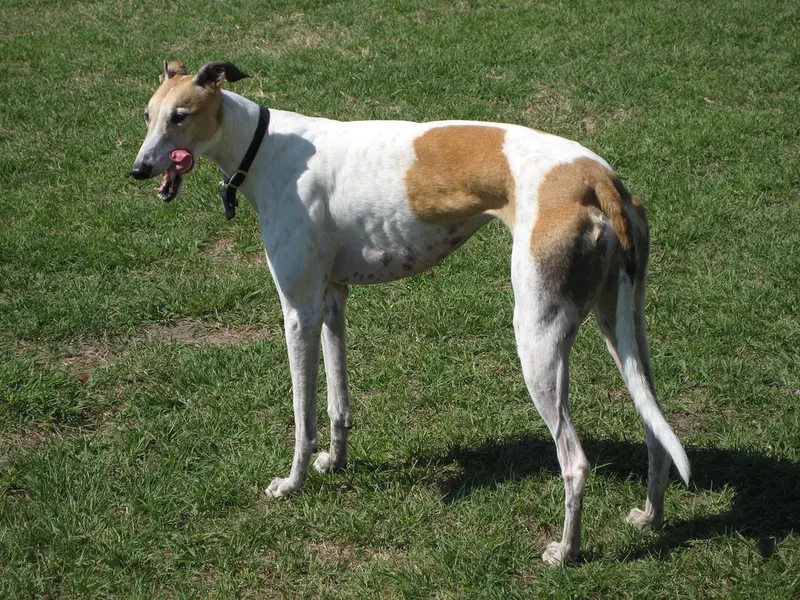
Greyhound-type sighthounds are among the oldest documented dog types, depicted in Egyptian tomb art dating back several thousand years and referenced in ancient Greek and Roman texts as prized coursing dogs bred purely for speed and sight-based hunting rather than scent work. The modern racing and companion Greyhound descends from that ancient sighthound lineage refined through centuries of English coursing tradition, and the breed remains the fastest domestic dog breed, capable of reaching speeds over 40 mph in short bursts. Commercial dog racing's decline across most U.S. states over the past two decades, driven by welfare concerns and shifting public opinion, has shifted the breed's population heavily toward retired racers and companion breeding lines rather than active track dogs, with organized adoption programs now placing thousands of ex-racers into homes annually. Greyhounds also come in a range of coat colors and patterns, including brindle, fawn, black, and blue, none of which carry any meaningful documented health or temperament difference.
Common health predispositions
- Bloat
- Anesthesia sensitivity
- Osteosarcoma
Temperament
Despite the breed's reputation as a racing athlete, Greyhounds are famously low-key house companions — the trait data reflects only moderate energy because the breed is built for explosive short sprints rather than sustained activity, and most Greyhounds spend the majority of the day resting. They're gentle and generally good with children and, notably, quieter than almost any other breed, ranking at the bottom of vocalization ratings. Compatibility with small pets is the one significant caveat: sighthounds retain a strong chase instinct toward fast-moving small animals, and many retired racing Greyhounds specifically have never been socialized with cats.
Living with a Greyhound
Only about 30 minutes of exercise is needed daily — a couple of short walks plus the chance for a genuine sprint in a securely fenced area covers the breed's physical needs surprisingly well given its racing pedigree. Grooming is minimal for the short, thin coat, though the breed's very low body fat and short coat mean real cold sensitivity, and a dog coat for walks in cold weather is standard advice rather than an affectation. Retired racing Greyhounds carry a well-documented sensitivity to certain anesthesia drugs due to their unusually low body fat, a fact worth flagging to any vet performing surgery, and the breed also shows an elevated rate of osteosarcoma (bone cancer) and, less commonly, other cancers compared with dogs generally. Adopting a retired racing Greyhound is a well-established and often recommended path into the breed, with dedicated rescue organizations that specialize in transitioning racing dogs to home life. Retired racers often need to be taught basic household skills many pet dogs take for granted, like navigating stairs or glass doors, since track life doesn't expose them to typical home environments — a genuinely different adjustment period than adopting a dog raised in a house from puppyhood.
FAQ
Are Greyhounds good apartment dogs?
Often yes, somewhat counterintuitively — despite being the fastest dog breed, Greyhounds have only moderate daily exercise needs and are famously calm, low-vocalization indoor companions, making a well-exercised Greyhound a surprisingly good fit for smaller living spaces.
Why are Greyhounds sensitive to anesthesia?
The breed's unusually low body fat percentage means it metabolizes certain anesthesia drugs differently than most dogs, a documented breed-specific sensitivity that vets need to account for with adjusted dosing protocols during any surgical procedure.
Can retired racing Greyhounds live with cats?
It varies and needs careful, gradual introduction — many retired racers have never encountered a cat and retain a genuine chase instinct toward small, fast-moving animals, though dedicated Greyhound rescue organizations often assess and note individual dogs' 'cat-safe' status during adoption evaluations.
Do Greyhounds need special cold-weather gear?
Often yes — the breed's thin coat and very low body fat provide little insulation, so a dog coat for outdoor time in cold weather is common, practical advice rather than a fashion choice for this particular breed.
What should I know about adopting a retired racing Greyhound?
Expect an adjustment period — many retired racers have never lived in a house and need to learn basic skills like navigating stairs, slick floors, or glass doors, and dedicated Greyhound adoption groups typically provide guidance and post-adoption support specifically geared toward that transition.
How fast can a Greyhound actually run?
Over 40 mph in short bursts, making it the fastest domestic dog breed by a meaningful margin — but that speed is built for sprints, not endurance, which is part of why the breed's overall daily exercise needs are only moderate despite its racing reputation.
How fast can a Greyhound actually run?
Greyhounds can reach speeds of roughly 40-45 miles per hour in short sprints, making them the fastest dog breed over a short distance, an ability built on a deep chest, flexible spine, and long legs shaped by centuries of sighthound coursing selection.
Related on FetchBreed
Care equipment for a Greyhound
As an Amazon Associate we earn from qualifying purchases made through these links, at no extra cost to you.
- Winter dog coat
Stated on the page: a dog coat for cold-weather walks is standard advice rather than an affectation, given very low body fat and a short coat. Grooming is described as minimal, so there is no brush here.
- Long training line
The page asks for the chance for a genuine sprint in a securely fenced area — a long line is how that happens where no fenced field is available.
Whichever breed fits your life, consider adoption or breed-specific rescue first — many purebred and mixed-breed dogs and cats are already waiting for homes.
General breed information, not veterinary advice — consult a vet for your pet's specific health, diet, and behavior needs.