Working Group
Dogue de Bordeaux
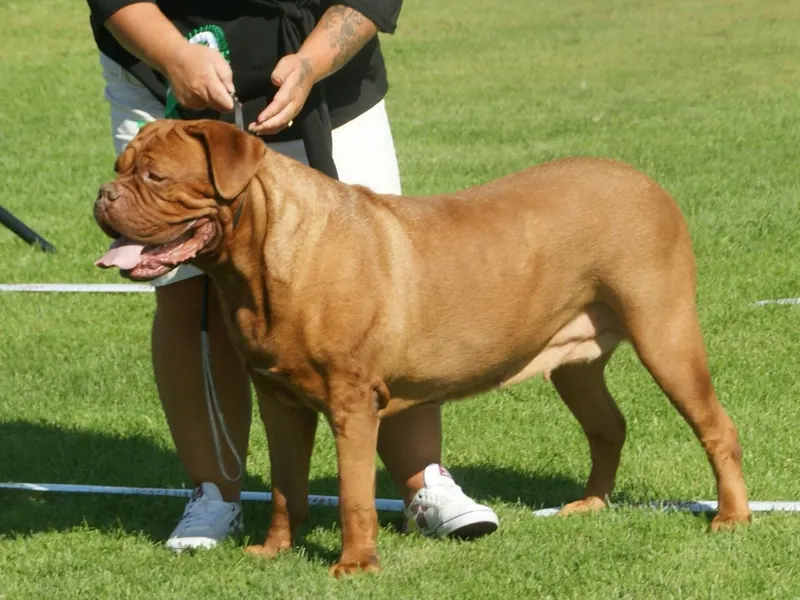
The Dogue de Bordeaux traces its ancestry to ancient Molosser-type mastiffs used across France for centuries in roles including boar hunting, cart-pulling, and, in a darker part of the breed's history, dog fighting before the practice was outlawed. The breed nearly disappeared in France following World War II, and its modern population, along with a real surge in American recognition, owes a considerable debt to Hollywood: the 1989 film Turner & Hooch, starring Tom Hanks alongside a Dogue de Bordeaux, introduced the breed to a wide American audience largely unfamiliar with it before the film's release. The AKC granted formal recognition in 2008, decades after that pop-culture introduction first drove American interest in the breed.
Common health predispositions
- Hip dysplasia
- Dilated cardiomyopathy
- Bloat
Temperament
Despite its imposing, powerfully built appearance, the Dogue de Bordeaux is generally affectionate and gentle with its own family, with goodWithKids ratings landing solidly good — a trait fanciers often point to as one of the breed's more surprising qualities given its guard-dog and fighting-dog history. GoodWithOtherPets runs lower, reflecting the breed's genuine territorial and occasionally same-sex dog-aggressive tendencies inherited from its guarding and fighting background. Trainability is decent, though the breed's independent, confident temperament means training benefits from a calm, consistent, experienced handler rather than a first-time owner improvising as they go.
Living with a Dogue de Bordeaux
Forty minutes of moderate daily exercise suits this breed reasonably well; the Dogue de Bordeaux is not a high-endurance athlete, and its short, brachycephalic-adjacent face — shorter and broader than many mastiff-type breeds — means heat tolerance and strenuous exercise both need careful management. Grooming is minimal thanks to the short, fine coat, though the deep facial wrinkles trap moisture and need regular wiping and drying to keep skin infections from taking hold, the same practical chore that comes with any heavily wrinkled breed. Hip dysplasia, a heart condition called dilated cardiomyopathy that veterinary cardiologists track closely in this breed specifically, and bloat round out the main health concerns, and the breed's relatively short average lifespan of 5 to 8 years is worth understanding clearly before committing to a puppy, a pattern common among the largest, heaviest mastiff-type breeds generally. Because of the breed's substantial size, strength, and guarding instincts, early socialization and consistent training matter considerably, and prospective owners should expect real ongoing management of a large, powerful dog rather than a low-maintenance companion.
FAQ
Was the dog in Turner & Hooch a Dogue de Bordeaux?
Yes — the 1989 film starring Tom Hanks featured a Dogue de Bordeaux, and the movie introduced the breed to a wide American audience that had largely been unfamiliar with it before the film's release, driving a real, lasting surge in U.S. interest.
How long do Dogues de Bordeaux typically live?
Around 5 to 8 years, a short lifespan even by the standards of large mastiff-type breeds, and it's an important, sobering fact for prospective owners to understand clearly before committing to a puppy.
Are Dogues de Bordeaux good with children?
Generally yes, despite the breed's imposing size and guard-dog history — goodWithKids ratings run solidly good, a trait many fanciers point to as one of the breed's more notable qualities, though supervision matters simply given how large and powerful the dog is.
Do Dogues de Bordeaux get along with other dogs?
Occasional same-sex dog aggression and a genuinely territorial guarding history both pull this breed's compatibility with other dogs toward the lower end, which is exactly why careful, early socialization carries real weight.
How much exercise does a Dogue de Bordeaux need?
About 40 minutes a day is plenty — this breed was never built for endurance activity, and its shortened, broad face makes heat and exertion a combination that genuinely needs careful, deliberate management rather than casual disregard.
How big does a Dogue de Bordeaux get?
Massive for its height — typically 99 to 110 pounds packed onto a frame just 23 to 27 inches at the shoulder, giving the breed an unusually dense, powerfully built silhouette among mastiff-type dogs.
How much grooming does a Dogue de Bordeaux need?
Minimal for the coat itself, since it's short and fine, but the facial wrinkles need regular wiping and drying to prevent skin infections, a genuinely separate care task from routine brushing.
Is the Dogue de Bordeaux a good first dog?
Size, strength, and guarding instincts call for real handling experience on their own, and the breed's short lifespan plus health-monitoring needs add even more ongoing veterinary management than most first-time owners expect.
Does the Dogue de Bordeaux drool a lot?
Genuinely, yes — those loose jowls mean drool towels become a normal household fixture rather than something reserved for the occasional messy meal.
Is the Dogue de Bordeaux restricted by breed-specific legislation?
Its size and guard-dog history land it on a fair number of municipal restricted-breed lists and homeowner-insurance exclusion lists, which is reason enough to verify local rules before bringing one home.
Do Dogues de Bordeaux need a lot of space?
Given how modest the breed's actual exercise needs are, raw square footage matters less than making sure whatever fencing exists is genuinely strong enough to hold a dog this powerful.
What colors do Dogues de Bordeaux come in?
Various shades of fawn, from a rich mahogany to a lighter isabella, sometimes with a black or red mask, all cosmetic variations within the breed standard unrelated to temperament or health.
Are Dogues de Bordeaux good watchdogs?
Yes, genuinely — the breed's guarding history left it naturally alert and protective of its family and territory, traits that make it an effective, if independent-minded, watchdog for an experienced household.
Related on FetchBreed
Care equipment for a Dogue de Bordeaux
As an Amazon Associate we earn from qualifying purchases made through these links, at no extra cost to you.
- Skin-fold wipes
The deep facial wrinkles trap moisture and need regular wiping and drying to keep skin infections from taking hold, per this page.
Whichever breed fits your life, consider adoption or breed-specific rescue first — many purebred and mixed-breed dogs and cats are already waiting for homes.
General breed information, not veterinary advice — consult a vet for your pet's specific health, diet, and behavior needs.