Sporting Group
Clumber Spaniel
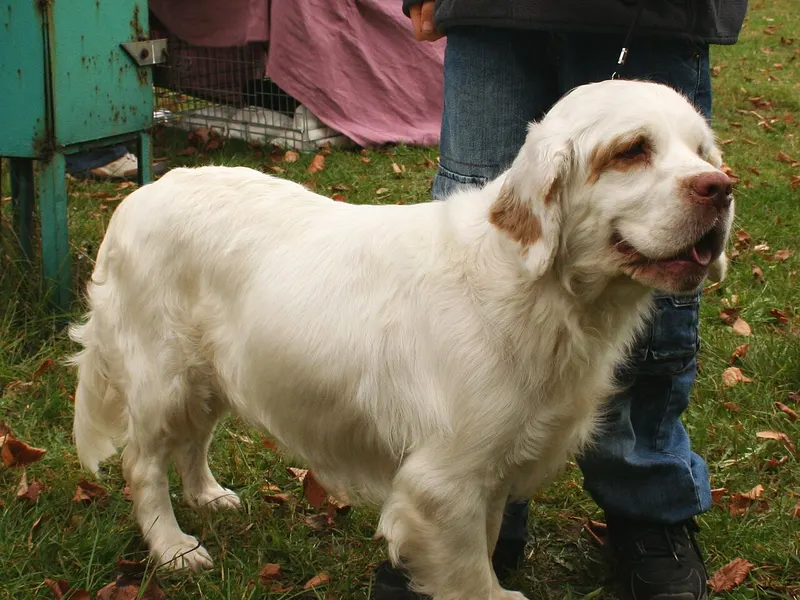
Among the original nine breeds the AKC formally recognized when the club was founded in 1884, the Clumber Spaniel carries genuine claim to being one of America's earliest officially sanctioned dog breeds, a distinction that surprises people more familiar with the breed's low modern profile than its historical pedigree. The name traces to Clumber Park, the Nottinghamshire estate of the Dukes of Newcastle, where the breed was developed and refined through the 18th and 19th centuries specifically as a heavy-boned, methodical flushing spaniel built to work slowly and thoroughly through dense cover rather than cover ground quickly. That deliberate, low-to-the-ground working style is baked into the breed's build — the largest of the AKC's spaniel breeds by a meaningful margin, with a substantial bone structure and a low center of gravity that trades speed for the kind of patient, careful cover-work upland hunters valued when thoroughness mattered more than pace. Prince Albert and other members of British royalty were documented Clumber Spaniel enthusiasts in the 19th century, a royal association that briefly boosted the breed's visibility even as it remained, then as now, considerably less common than flashier spaniel breeds like the Cocker or Springer.
Common health predispositions
- Hip dysplasia
- Entropion/ectropion
- Intervertebral disc disease
- Otitis externa
Temperament
Dignified, mellow, and genuinely affectionate once settled into a household, the Clumber Spaniel's easygoing demeanor stands in real contrast to the higher-strung energy of most other sporting spaniels, a difference that traces directly back to the breed's deliberately slower, more methodical working style. A good-natured disposition around kids and other household pets is close to the norm for the Clumber, whose calm patience makes it a comparatively relaxed presence indoors despite its substantial size. That said, real hunting instinct still lives underneath the laid-back exterior, and a Clumber given the chance to work a scent trail shows genuine focus and drive, a reminder that the breed's mellow house manners don't reflect a lack of working ability so much as a different working style than its faster spaniel cousins.
Living with a Clumber Spaniel
Don't mistake this breed's substantial size for a need for intense exercise — around 45 minutes of moderate daily activity genuinely suits the Clumber Spaniel's more measured energy level well. The dense, weather-resistant white coat sheds a fair amount and needs regular brushing to manage, with particular attention to the ears, which are prone to trapping moisture and debris given their heavy, low-hanging shape. Entropion and ectropion, eyelid conditions that show up with some regularity in the breed's loose facial skin, are worth a direct conversation with a breeder, alongside standard hip screening, a genuine risk of intervertebral disc disease given the Clumber's long, heavy body, and chronic ear infections tied to that same low-hanging ear structure. A household drawn to a calm, substantial, genuinely affectionate spaniel — and prepared for real ear-care vigilance and a dog that drools and sheds more than its sleeker spaniel cousins — will likely do well with a Clumber. Breed-specific rescue exists in the US through dedicated Clumber Spaniel clubs, though given the breed's modest overall population, patience is often part of the process. Ear-care supplies and the sheer volume a heavy-boned dog this size eats push the ongoing budget noticeably above what a smaller spaniel breed would run.
FAQ
Is the Clumber Spaniel one of the oldest AKC-recognized breeds?
Yes — it was among the original nine breeds formally recognized when the American Kennel Club was founded in 1884, giving it genuine claim to being one of the earliest officially sanctioned breeds in the US despite its low modern profile.
Why is the Clumber Spaniel so much bigger than other spaniels?
It's the largest of the AKC's spaniel breeds, developed with substantial bone structure and a low center of gravity specifically to work slowly and thoroughly through dense cover, trading speed for the kind of patient, methodical flushing that upland hunters valued for difficult terrain.
Do Clumber Spaniels need a lot of exercise?
Less than most sporting spaniels — around 45 minutes of moderate daily activity genuinely suits the breed's more measured, deliberate energy level, a direct reflection of its slower historical working style.
What ear problems are common in Clumber Spaniels?
Chronic ear infections turn up regularly given the breed's heavy, low-hanging ear shape, which traps moisture and debris more easily than an upright or smaller ear structure, making routine ear-cleaning a real ongoing part of Clumber ownership.
Were Clumber Spaniels really owned by royalty?
Yes — Prince Albert and other members of 19th-century British royalty were documented enthusiasts of the breed, an association that briefly raised its profile even though it remained, then as now, considerably less common than other spaniel breeds.
Related on FetchBreed
Whichever breed fits your life, consider adoption or breed-specific rescue first — many purebred and mixed-breed dogs and cats are already waiting for homes.
General breed information, not veterinary advice — consult a vet for your pet's specific health, diet, and behavior needs.