Working Group
Bullmastiff
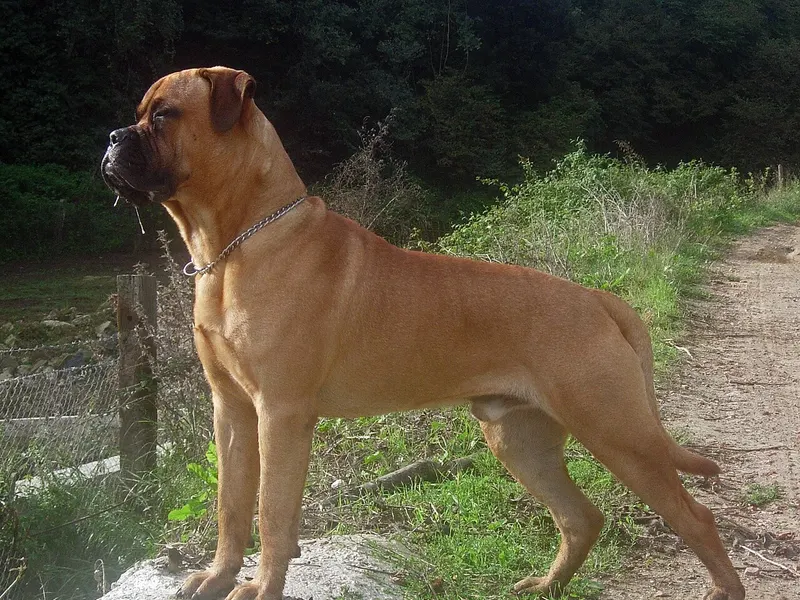
English gamekeepers developed the Bullmastiff in the mid-1800s by crossing the Mastiff with the Bulldog, aiming for a dog powerful enough to physically stop and hold a poacher without killing him — poaching on large estates was a serious enough problem, and the penalties for shooting a poacher severe enough, that gamekeepers wanted a nonlethal but overwhelming deterrent, earning the breed its early nickname 'the Gamekeeper's Night Dog.' The breed's roughly 60% Mastiff, 40% Bulldog ancestry produced a dog with the Mastiff's size and the Bulldog's tenacity and lower center of gravity. The AKC recognized the breed in 1934, and its coat comes in fawn, red, and brindle, always with the same dark facial mask seen in its Mastiff ancestor, a trait the breed standard specifically requires.
Common health predispositions
- Hip dysplasia
- Bloat
- Cancer
Temperament
Bullmastiffs carry a watchful, protective temperament tempered by genuine loyalty and affection toward their own family — the breed's history demanded a dog that could assess and physically restrain an intruder without excessive aggression, and that same discernment shows up today as a dog that's naturally reserved with strangers but calm and trustworthy at home. The breed is generally good with children it's raised with, though its size and strength mean supervision and consistent training matter more than with a smaller companion breed. Unlike some guarding breeds, Bullmastiffs are generally not prone to excessive barking — the breed's original job called for silently closing in on and pinning a poacher rather than alerting from a distance, and that quiet, deliberate demeanor is still visible today. Bullmastiffs also tend to be strong-willed and can become possessive of food or resting spots without early training, a trait worth addressing proactively given the breed's size and strength as an adult.
Living with a Bullmastiff
About 40 minutes of moderate exercise suits the breed, which tires more easily than its athletic build might suggest, especially in heat given its brachycephalic-leaning face inherited from its Bulldog ancestry. Grooming is minimal for the short, dense coat. Hip dysplasia, bloat from the deep chest, and cancer are the primary documented health concerns, and the breed's giant size and shortened muzzle combine to bring real heat sensitivity that owners need to plan around during summer months. Its size and historical guarding role also put the Bullmastiff on the restricted-breed list for a fair number of municipalities, landlords, and insurance carriers, so that's worth confirming locally before committing. Despite its guarding heritage, the modern breed standard explicitly calls for a temperament of 'reliability, fearlessness, and confidence' rather than aggression, and reputable breed clubs actively work to preserve that stable, controlled disposition through careful breeding.
FAQ
Why was the Bullmastiff originally bred?
English gamekeepers in the mid-1800s wanted a dog powerful enough to catch and hold a poacher without killing him, since shooting a poacher carried serious legal consequences — the resulting Mastiff-Bulldog cross, nicknamed 'the Gamekeeper's Night Dog,' was built for exactly that controlled, nonlethal restraint.
Are Bullmastiffs good guard dogs?
Yes, genuinely — the breed's history and temperament were purpose-built for exactly this role, combining natural wariness toward strangers with a calm, controlled demeanor rather than reflexive aggression, though as with any large protective breed, consistent training and socialization from puppyhood matter for a stable adult temperament.
Do Bullmastiffs have breathing problems like Bulldogs?
To a lesser degree — the breed's Bulldog ancestry gives it a somewhat shortened muzzle and real heat sensitivity, though it's less extreme than a purebred Bulldog's; owners should still avoid strenuous exercise or exertion in hot, humid weather as a precaution.
Is a Bullmastiff restricted anywhere?
In parts of the country, yes — its size and guarding heritage put it on the restricted list for some municipalities, apartment buildings, and insurance carriers, so it's genuinely worth a local check rather than assuming it won't be an issue.
Do Bullmastiffs bark a lot?
Generally no — unlike some guarding breeds, the Bullmastiff's original job was to close in on and physically pin a poacher quietly rather than alert loudly from a distance, and that quieter, more deliberate temperament is still typical of the breed today.
Are Bullmastiffs food possessive?
Some individuals can be without early training — the breed's size and strength make resource-guarding tendencies, which occur in dogs generally, a more serious practical concern in a Bullmastiff than in a small breed, so proactive training around food and resting spots from puppyhood is genuinely worthwhile.
What job was the Bullmastiff originally bred for in England?
English gamekeepers in the 19th century developed the breed specifically to silently track and pin down poachers on large estates without mauling them, crossing the powerful Mastiff with the more agile, aggressive Bulldog of that era to combine size and speed, a very specific working purpose that shaped both the breed's bulk and its historically guarded temperament.
Related on FetchBreed
Whichever breed fits your life, consider adoption or breed-specific rescue first — many purebred and mixed-breed dogs and cats are already waiting for homes.
General breed information, not veterinary advice — consult a vet for your pet's specific health, diet, and behavior needs.