Herding Group
Bouvier des Flandres
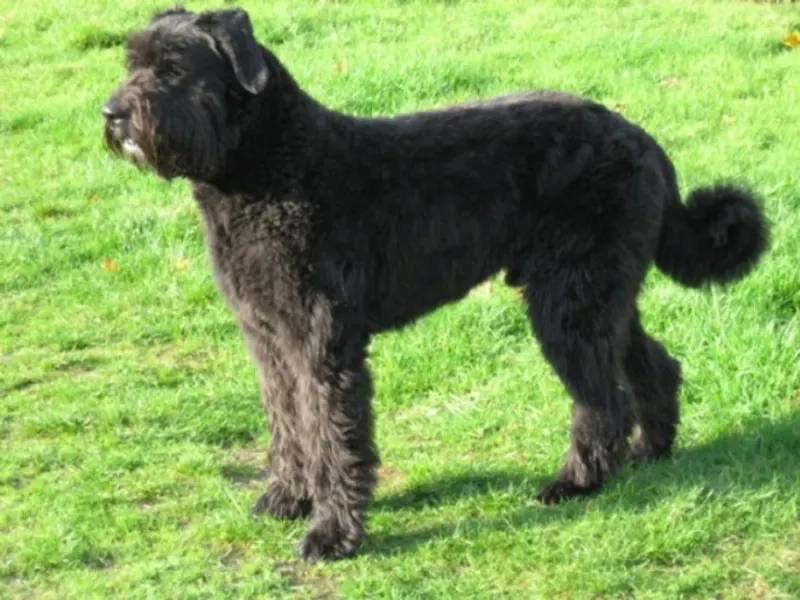
Farmers in the Flanders region spanning modern Belgium and northern France developed the Bouvier des Flandres as a genuine all-purpose farm dog, used for herding cattle, pulling carts, and guarding property, with a name that translates roughly to cowherd of Flanders. World War I devastated the breed's population as the region became a major battlefield, and much of the modern gene pool traces back to a small number of surviving dogs, including one famous sire named Nic de Sottegem who survived war conditions and became foundational to the breed's postwar recovery. The AKC recognized the Bouvier in 1931, and the breed later gained a notable fan in French President Charles de Gaulle, who reportedly kept several. The breed's near-total devastation during World War I is well documented — the Flanders battlefields where the Bouvier had worked for centuries became some of the war's most brutal fighting grounds, and postwar reconstruction of the breed relied so heavily on the survival of Nic de Sottegem that the modern Bouvier population traces disproportionately to that single dog's lineage. Belgian and French breed clubs worked jointly through the interwar period to rebuild and formally standardize the breed before a second, though less severe, population dip during World War II.
Common health predispositions
- Hip dysplasia
- Glaucoma
- Bloat
Temperament
Steady, calm, and quietly confident describes most Bouviers well — this is a breed built for versatile farm work rather than flashy performance, and that shows up as a dog that's genuinely reliable rather than high-strung. Protective instincts run real without typically tipping into unnecessary aggression when the dog is well-socialized, and Bouviers tend to be notably good with children, a trait consistent with their farm-dog history working alongside families. Independent thinking is part of the package too, a holdover from a role that required the dog to make its own herding and guarding decisions.
Living with a Bouvier des Flandres
Marathon-level exercise demands aren't really this breed's profile — roughly an hour a day of activity suits a large, sturdy Bouvier well. Grooming is where the genuine ongoing labor lives: the rough double coat demands a firm, near-daily brushing habit plus periodic trimming to head off matting, and the reward is a coat that doesn't shed nearly as much as its rough texture might suggest — workable for some allergy-sensitive households, though best confirmed in person with the specific dog. Hip dysplasia, glaucoma, and bloat make up the breed's more notable health record, and a breeder who actively screens for them is worth seeking out. A family wanting a steady, protective large dog and genuinely willing to commit to the grooming routine will do well here — anyone hoping for a low-maintenance coat or a dog that's instantly warm toward strangers should look elsewhere. Bouvier des Flandres rescue operates through dedicated national and regional breed clubs, and given the breed's moderate US population, adopters have reasonable but not guaranteed availability.
FAQ
Do Bouviers des Flandres need a lot of grooming?
Yes, genuinely — the rough double coat needs brushing several times a week plus periodic trimming to prevent matting, though the payoff is a coat that sheds relatively little compared to many double-coated breeds.
Are Bouviers good guard dogs?
Yes — the breed has real protective instincts from its farm-guardian history, though well-socialized individuals are typically discerning rather than reflexively aggressive toward every stranger.
Is a Bouvier des Flandres good with kids?
Generally yes — the breed's history as an all-purpose farm dog working alongside families shows up as a notably patient, protective temperament around children, though supervision still matters given the dog's size and strength.
How devastating was World War I for the Bouvier des Flandres breed?
Severely so — the Flanders battlefields where the breed had worked for centuries became some of the war's most brutal fighting grounds, and the modern Bouvier population traces disproportionately back to a single surviving dog, Nic de Sottegem, who became foundational to the postwar recovery.
Did a US president own a Bouvier des Flandres?
French President Charles de Gaulle, not a US president, was the breed's most notable political owner, reportedly keeping several Bouviers, which helped raise the breed's profile in Europe during the mid-20th century.
What was the Bouvier des Flandres originally bred to do?
Farmers in the Flanders region spanning Belgium and northern France developed the breed as an all-purpose farm dog, driving cattle to market, pulling carts, and guarding property, and the breed's numbers were nearly wiped out during World War I when much of Flanders became a battlefield, a near-extinction event that shaped how carefully postwar breeders worked to rebuild the line.
Related on FetchBreed
Whichever breed fits your life, consider adoption or breed-specific rescue first — many purebred and mixed-breed dogs and cats are already waiting for homes.
General breed information, not veterinary advice — consult a vet for your pet's specific health, diet, and behavior needs.