Sporting Group
Barbet
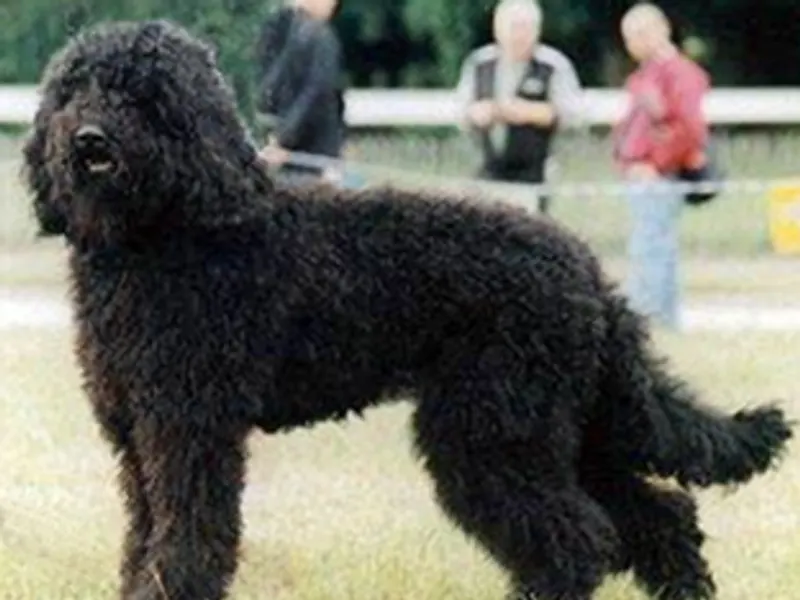
French hunters and fishermen have used dogs matching the Barbet's description for centuries, with written references to a curly-coated French water dog appearing in French hunting literature as far back as the 16th century, making the Barbet one of the older documented water-dog types in continental Europe even though its modern breed standard is comparatively recent. Its name comes from the French word "barbe," meaning beard — a nod to the breed's distinctive facial hair — and the Barbet is widely believed by breed historians to sit somewhere near the root of several other European water-dog breeds, including likely contributing ancestry to the Poodle, though the exact lines of descent among these old water-dog types remain genuinely difficult to trace with certainty given limited historical records. The breed nearly disappeared entirely in France during the upheavals of the 20th century, and a small number of dedicated French breeders worked deliberately through the postwar decades to rebuild a stable population from a genuinely narrow founding stock. AKC recognition came in 2020, making the Barbet one of the more recently admitted breeds in the entire Sporting Group, decades after French national breed clubs had already worked to stabilize and standardize the modern type.
Common health predispositions
- Hip dysplasia
- Epilepsy
- Hereditary cataracts
Temperament
Cheerful and genuinely people-oriented, the Barbet carries a real enthusiasm for water and retrieving work alongside a notably calm, biddable household temperament — day-to-day life with this breed tends to feel considerably less demanding than with some higher-strung sporting breeds. Family bonds run deep, and a genuine patience around kids and other pets shows up in most individuals, something breed fanciers often attribute to the Barbet's long history as an all-purpose farm and hunting companion rather than a single-task specialist. That same versatility shows up as genuine adaptability across different households and activity levels, a trait that has helped the breed's small but growing following outside France.
Living with a Barbet
An hour of daily activity, ideally including some time in water given the breed's real retrieving heritage, keeps the Barbet content and well-balanced. The dense, curly, woolly, waterproof coat needs frequent brushing and periodic trimming to prevent matting, a genuine time commitment though one offset by how little the coat sheds around the house. Hip dysplasia is worth standard screening, and epilepsy along with hereditary cataracts are the two other health items a breeder should have real answers about given their documented presence in the breed. Households drawn to a calm, water-loving, low-shedding sporting dog, and prepared to commit real time to the coat-care routine, tend to thrive with a Barbet — the breed's still-small population outside France means patience is often part of the search for a puppy. Dedicated US rescue barely exists yet given how recently the Barbet gained American recognition, so nearly all prospective owners work directly with the limited number of breeders currently established in North America. Costs run toward the higher end for a mid-sized dog, driven mainly by the grooming commitment and the relative scarcity of the breed itself, which affects acquisition cost more than most established breeds.
FAQ
What does the name Barbet mean?
It comes from the French word 'barbe,' meaning beard, referring directly to the breed's distinctive facial hair, one of its most recognizable features alongside the dense, curly, waterproof coat.
Is the Barbet related to the Poodle?
Many breed historians believe the Barbet sits near the root of several European water-dog breeds and likely contributed ancestry to the Poodle, though the exact historical lines among these old water-dog types remain genuinely difficult to trace with certainty.
When was the Barbet recognized by the AKC?
Recently, in 2020, making it one of the more recently admitted breeds in the entire Sporting Group, decades after French breed clubs had already worked to stabilize the modern type after the breed nearly disappeared in the 20th century.
Does the Barbet shed a lot?
Very little — the dense, curly, woolly coat is a low-shedding type similar to a Poodle's, though it demands frequent brushing and periodic trimming to prevent matting given how thick and curly it grows.
Is a Barbet easy to find in the US?
Not yet, genuinely — the breed's population outside France remains small, and dedicated US rescue barely exists given how recently it gained American recognition, so most prospective owners work directly with one of the limited number of established North American breeders.
Is the Barbet related to the Poodle?
Many breed historians believe the Barbet is an ancestor of, or close relative to, several water-dog breeds including the Poodle and the Portuguese Water Dog, sharing the same dense, curly, water-resistant coat type, and the Barbet's own history in France as a wildfowl retriever dates back centuries longer than the modern show Poodle's established lineage.
Related on FetchBreed
Whichever breed fits your life, consider adoption or breed-specific rescue first — many purebred and mixed-breed dogs and cats are already waiting for homes.
General breed information, not veterinary advice — consult a vet for your pet's specific health, diet, and behavior needs.