Foreign Body Type
Singapura
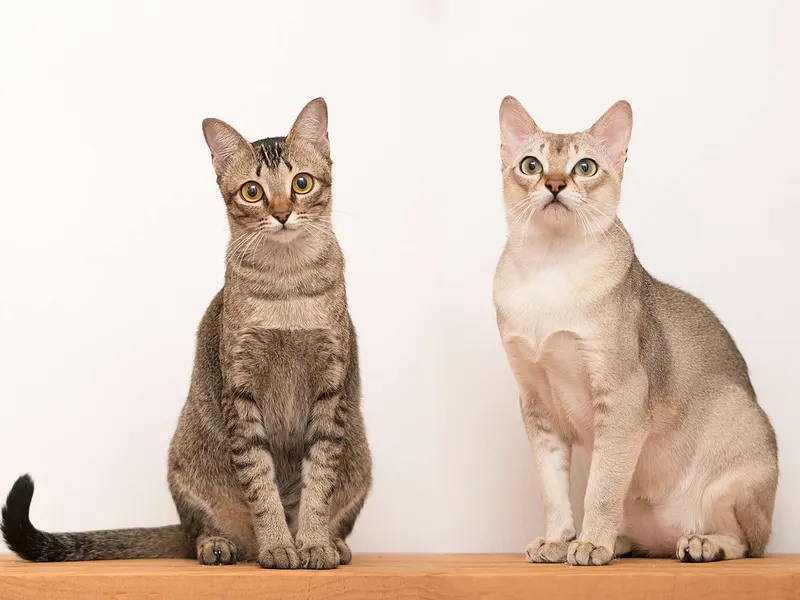
The Singapura is the smallest recognized domestic cat breed by weight, and its origin story is genuinely contested: the widely repeated version credits American breeders Tommy and Hal Meadow with discovering the breed among Singapore's street cats (known locally as "drain cats" for their habit of sheltering in the city's monsoon drains) and bringing several to the US in the 1970s, but later investigation found evidence the Meadows may have actually started with cats of Burmese and Abyssinian ancestry from the US, then exported and re-imported some to bolster the "native Singapore cat" origin story — a controversy the breed's official history still hasn't fully resolved. Regardless of the disputed founding narrative, Singapore itself later embraced the breed as a national symbol, and it remains one of the more culturally significant breeds tied to its namesake city. Singapore's official promotion of the breed eventually included a bronze Singapura statue installed along the Singapore River, cementing the cat's status as a recognized civic symbol regardless of how the founding-history controversy is ultimately resolved.
Common health predispositions
- Uterine inertia (birthing difficulty documented in females)
- Generally healthy otherwise
Temperament
Singapuras are typically described as curious, alert, and highly people-oriented despite their small size, often described by owners as having an outsized personality relative to their tiny frame. They tend to be playful and inquisitive well into adulthood, genuinely enjoying interactive toys and climbing, though their diminutive size means owners should supervise interactions with larger pets or boisterous children more carefully than with a standard-sized breed. Despite the breed's small size, Singapuras are notably active climbers and jumpers relative to their body weight, often seeking out the highest available perch in a room much like some larger, more athletic breeds do.
Living with a Singapura
The short, fine, ticked sepia-agouti coat needs only minimal grooming and sheds relatively little. Because the breed is so small — adult females can weigh as little as 4 lbs — physical fragility is a genuine consideration, particularly around larger dogs or very young children who might not moderate their handling appropriately. Female Singapuras are documented to have a notably high rate of uterine inertia, a birthing complication that can require veterinary intervention during labor, and prospective breeders and owners of intact females should be aware of this specific risk. Otherwise, the breed is generally considered healthy and long-lived relative to its very small body size. Because of the breed's very small adult size, some vets recommend closer monitoring of kitten growth and nutrition than for a standard-sized breed, simply to ensure a Singapura kitten is developing on a healthy trajectory given how little margin its small frame allows for nutritional shortfalls.
FAQ
Is the Singapura really from Singapore?
The breed's origin is genuinely disputed — the popular narrative credits discovery among Singapore's street cats in the 1970s, but later investigation raised questions about whether the founding cats actually had US-based Burmese and Abyssinian ancestry, an unresolved controversy the breed's official history still hasn't fully settled.
How small do Singapura cats get?
Very small for a domestic cat — adult females can weigh as little as 4 lbs, with males typically somewhat larger, making the Singapura widely considered the smallest recognized cat breed by weight.
What is uterine inertia in Singapura cats?
A birthing complication where the uterus doesn't contract adequately during labor, documented at a notably higher rate in female Singapuras than in cats generally, sometimes requiring veterinary intervention such as a cesarean section — it's a real consideration for anyone breeding or caring for an intact female of this breed.
Is Singapore's government connected to the breed?
Yes, informally — Singapore has embraced the Singapura as a point of national pride and cultural association over the years, including using a stylized version of the cat in tourism branding, despite the breed's exact founding history remaining disputed among cat-fancy historians.
Is there an official Singapura landmark in Singapore?
Yes — a bronze statue of a Singapura cat was installed along the Singapore River as part of the country's promotion of the breed as a civic and tourism symbol, regardless of the ongoing debate over the breed's exact founding history.
Do Singapura kittens need special nutritional monitoring?
Some vets recommend closer-than-usual attention to kitten growth and nutrition given the breed's very small adult size, since a Singapura kitten's small frame allows less margin for nutritional shortfalls than a standard-sized breed's would.
What does the Singapura's coat pattern look like up close?
It's a sepia agouti ticked pattern, meaning each individual hair carries alternating bands of dark brown and warm ivory along its length, giving the coat an overall shimmering, sand-colored appearance rather than any visible stripes or spots. That same ticked-agouti structure is genetically related to the ticking seen in Abyssinians, though the Singapura's specific warm ivory-and-brown combination is unique to the breed's standard.
Related on FetchBreed
Whichever breed fits your life, consider adoption or breed-specific rescue first — many purebred and mixed-breed dogs and cats are already waiting for homes.
General breed information, not veterinary advice — consult a vet for your pet's specific health, diet, and behavior needs.