Oriental Body Type
Oriental Shorthair
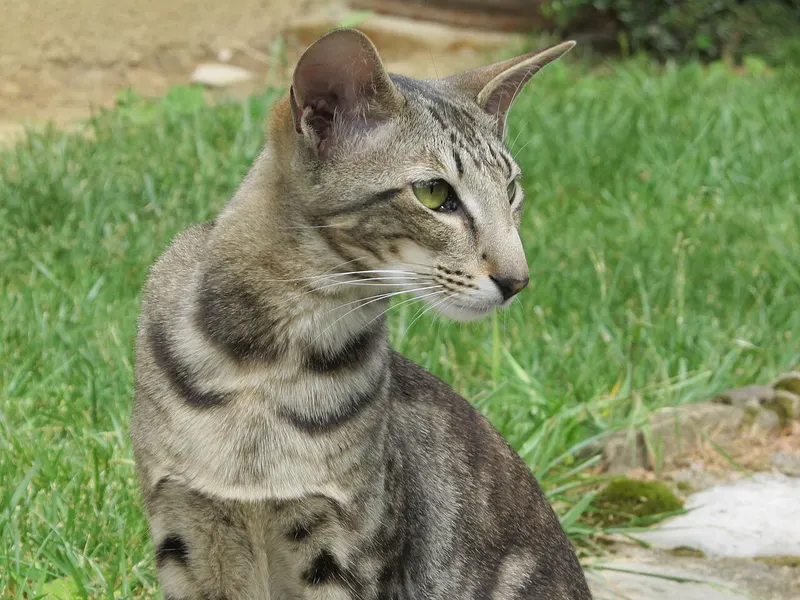
The Oriental Shorthair developed in 1950s-70s England as breeders worked to combine the Siamese's sleek, wedge-headed body type with the wider range of solid colors and patterns found in ordinary domestic cats, deliberately breeding away from the pointed pattern that defines the Siamese while keeping everything else about the body type essentially identical. The result is, structurally, a Siamese in virtually any coat color or pattern other than the traditional points — GCCF and later CFA (which recognized the breed in 1977) both classify the Oriental Shorthair as an extremely close relative of the Siamese, judged under a near-identical body standard. Because the breed standard is so tightly focused on body type rather than color, Oriental Shorthair breed clubs often organize shows and competitions around specific color divisions to keep judging manageable given how many recognized varieties exist within the single breed.
Common health predispositions
- Progressive retinal atrophy
- Amyloidosis
- Respiratory issues linked to wedge-shaped head
Temperament
Oriental Shorthairs share the Siamese's intensely vocal, people-oriented personality almost without exception — this is a breed that talks frequently, follows its people from room to room, and generally does poorly left alone for long stretches. They're highly intelligent and trainable, often learning tricks or leash-walking readily, and they tend to bond very closely with their households, sometimes favoring one person intensely. Oriental Shorthairs are also notably food-motivated and quick learners, and clicker training tends to go smoothly with this breed — new routines hold its attention rather than boring it.
Living with a Oriental Shorthair
Grooming is nearly a non-issue — the fine, short coat sheds lightly and needs only an occasional brush. Given the near-identical genetic background, the breed shares the Siamese's documented predisposition toward progressive retinal atrophy and amyloidosis, and its elongated wedge-shaped head carries the same respiratory-sensitivity considerations in some lines. The breed's recognized palette is reportedly the broadest of any cat breed, with more than 300 color and pattern combinations by some breed-club counts, so Oriental Shorthair breeders have enormous latitude in what they can produce, though the underlying body-type standard remains strictly Siamese-like regardless of coat color. Because the breed's body type is judged so strictly, with a long, tubular torso and a sharply wedge-shaped head, reputable breeders pay close attention to structural soundness in addition to coat color when evaluating kittens, since an otherwise striking coat pattern doesn't compensate for the standard's body-type requirements in competition. Because the breed shares nearly its entire genetic and physical foundation with the Siamese, some breeders and judges informally consider the two essentially the same breed shown under two different color rulebooks, though registries maintain them as formally separate breed classifications.
FAQ
Is the Oriental Shorthair basically a Siamese without points?
Essentially yes, structurally — the breed shares the Siamese's sleek, wedge-headed body type and much of its temperament, with the main difference being coat color: Oriental Shorthairs come in solid colors and patterns rather than the traditional Siamese pointed pattern.
How many colors does the Oriental Shorthair come in?
An unusually wide range — some breed-club counts put it above 300 recognized color and pattern combinations, reportedly the widest color range of any cat breed, since breeders deliberately moved away from the narrow Siamese color standard while keeping the body type.
Are Oriental Shorthairs as vocal as Siamese?
Yes, very much so — the breed shares the Siamese's tendency toward frequent, loud vocalization and intense people-orientation, and prospective owners who want a quiet, low-maintenance cat should generally look at a different breed.
Do Oriental Shorthairs need a companion?
Often, yes — like the Siamese, solitude doesn't sit well with this breed for long, so a second cat or a household where someone's around more consistently tends to be a better fit than a quiet, empty-house routine.
Why does the Oriental Shorthair have so many color divisions at shows?
Because the breed standard focuses primarily on body type rather than color, and the recognized color range is unusually wide, breed clubs typically organize competitions around specific color divisions simply to keep judging manageable given how many varieties exist within one breed.
Are Oriental Shorthairs easy to train?
Yes, relatively — the breed is intelligent and food-motivated, and many owners report success with clicker training or teaching basic tricks, reflecting the same eagerness to engage that makes the breed so vocal and interactive generally.
How many color and pattern combinations does the Oriental Shorthair come in?
CFA recognizes well over 300 combinations once color, pattern (solid, shaded, smoke, tabby, and parti-color), and eye color are all factored together, making it one of the most color-diverse pedigreed breeds shown anywhere. That sheer variety traces back to the breed's founding goal of preserving every color that showed up in early Siamese-outcross litters instead of narrowing the standard down the way the Siamese itself eventually did.
Related on FetchBreed
Whichever breed fits your life, consider adoption or breed-specific rescue first — many purebred and mixed-breed dogs and cats are already waiting for homes.
General breed information, not veterinary advice — consult a vet for your pet's specific health, diet, and behavior needs.