Foreign Body Type
Korat
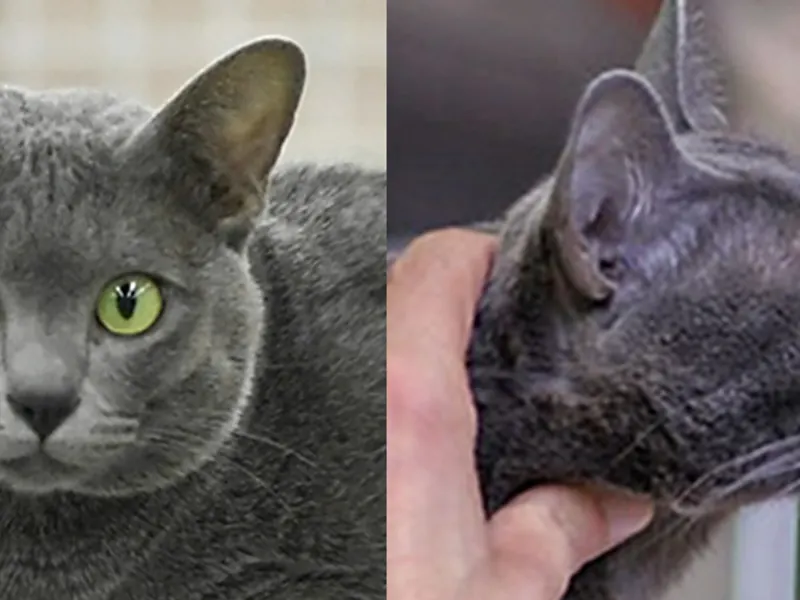
The Korat's history stretches back centuries — it appears, described and pictured, in Thailand's Tamra Maew manuscript of cat poems alongside the Siamese, under the name "Si-Sawat," believed to reference the silver-tipped blue-gray coat's resemblance to a type of seed pod and to the color of rain clouds. In its native Thailand, the Korat has long been considered a good-luck cat traditionally given in pairs as a wedding gift to bring prosperity, and the breed's silver-blue coloring is treated as inseparable from its identity — unlike most breeds, no other color is recognized or bred, and a cat of any other color simply isn't considered a Korat regardless of its other features. The breed reached the US in 1959 and CFA granted full recognition in 1966. The breed standard is unusually strict about body proportions as well as color, calling for a heart-shaped face and large, luminous green eyes that only reach their full green intensity around age two, well after the coat itself has settled into its adult sheen.
Common health predispositions
- GM1/GM2 gangliosidosis (rare hereditary lysosomal storage disease, DNA-testable)
Temperament
Korats are intelligent, alert, and often described as strong-willed — they bond closely with their households and can be genuinely reserved or cautious with unfamiliar people, taking real time to warm up rather than greeting strangers readily. They tend to be highly attuned to their environment, quick to notice changes in routine or new objects in the house, and while they're affectionate with their own people, this is not typically a breed that adapts instantly to a chaotic, high-visitor-traffic household. Korats often form an especially strong bond with one household member while remaining civil, if less demonstrative, with everyone else, and many owners describe the breed as strikingly perceptive about mood and routine changes within the home.
Living with a Korat
The short, fine, close-lying coat needs minimal grooming — an occasional brushing keeps the distinctive silver-tipped sheen in good condition — and shedding is low. The most significant documented health concern in the breed is GM1 and GM2 gangliosidosis, a group of rare, serious hereditary lysosomal storage diseases affecting the nervous system; a genetic test exists, and reputable Korat breeders test their stock specifically to avoid producing affected kittens, so asking directly about this testing is genuinely important when buying. Because color is such a central part of the breed's identity, kittens can take up to two years to develop their final adult silver-tipped sheen, with young kittens sometimes showing a more uniformly blue coat that hasn't yet developed the signature silver tipping. Because Thailand historically restricted the export of Korats out of cultural respect for the breed's traditional significance, the population reaching the West took longer to establish than many other breeds imported more freely, which partly explains why the Korat remains less numerous internationally than its ancient pedigree might suggest.
FAQ
Why is the Korat only bred in one color?
Unlike most cat breeds, color is considered inseparable from the Korat's identity — the silver-tipped blue-gray coat is written directly into the breed's cultural and historical significance in Thailand, and a cat of any other color, regardless of body type, simply isn't classified as a Korat.
What is GM1/GM2 gangliosidosis?
A group of rare, serious inherited diseases affecting the nervous system, documented specifically in the Korat breed; a DNA test can flag which cats carry the gene, letting breeders steer clear of pairing two carriers together, and asking about this testing is an important step before buying a kitten.
Are Korats given as gifts in Thailand?
Traditionally, yes — the breed has long been considered a symbol of good fortune in its native Thailand, historically given in pairs as a wedding gift believed to bring the couple prosperity, a cultural tradition that predates the breed's international recognition by centuries.
Do Korat kittens look the same as adult Korats?
Not exactly — the signature silver-tipped sheen on the coat can take up to two years to fully develop, so young kittens sometimes appear more uniformly blue-gray before the adult coloring settles in.
How old are Korat cats before their eyes reach full color?
Around two years — the breed's signature luminous green eye color develops gradually, similar to the coat's silver-tipped sheen, so a young Korat's eye color isn't necessarily representative of what it will look like at full maturity.
Why is the Korat less common internationally than other ancient breeds?
Thailand historically limited the export of Korats out of respect for the breed's traditional cultural significance, which slowed the population's international establishment compared with breeds that were exported more freely, and the Korat remains a comparatively less numerous pedigreed breed as a result.
Related on FetchBreed
Whichever breed fits your life, consider adoption or breed-specific rescue first — many purebred and mixed-breed dogs and cats are already waiting for homes.
General breed information, not veterinary advice — consult a vet for your pet's specific health, diet, and behavior needs.