Foreign Body Type
Khao Manee
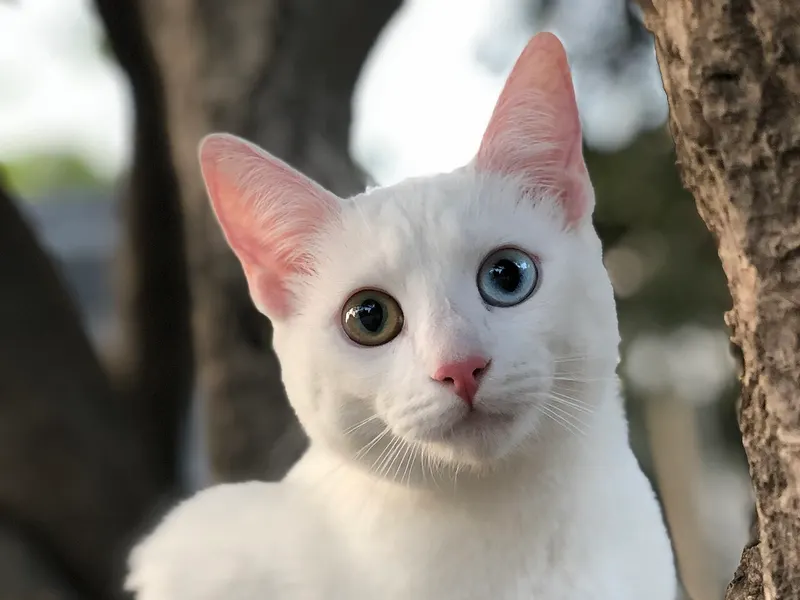
The Khao Manee, meaning "white gem" in Thai, is an ancient breed documented in Thailand's Tamra Maew manuscript alongside the Siamese and Korat, historically prized by Thai royalty and considered an auspicious, good-luck cat, particularly prized for individuals with heterochromia (one blue eye and one gold or green eye). The breed remained almost entirely unknown outside Thailand until relatively recently — American breeder Colleen Freymuth is credited with importing the first Khao Manees to the US around 1999, and TICA granted the breed advanced-new-breed status in the 2000s — a genuinely modern international debut for a cat with such a centuries-long presence in Thailand. Thai royal households historically kept detailed records of favored Khao Manee cats, including individual names and lineage notes, a level of documented care that later helped Western breeders and historians piece together the breed's authenticated presence in Thai royal history.
Common health predispositions
- Congenital deafness (linked to white coat/blue- or odd-eye genetics, more common in odd-eyed individuals)
Temperament
Khao Manees are typically described as intelligent, alert, and highly interactive with their households, sharing some of the vocal sociability associated with other ancient Thai breeds like the Siamese and Korat, though generally somewhat more moderate in vocalization. They tend to be curious and playful, forming close bonds with their people, and many owners note the breed's genuine attentiveness to household routines and activity. Many Khao Manee owners report the breed showing a strong preference for warm, sunlit spots and a genuine enjoyment of being carried or held, a gentler physical-affection style than some of the more independently-minded ancient Thai breeds.
Living with a Khao Manee
The short, pure white coat needs only minimal grooming — an occasional brushing keeps it in good condition — and shedding is moderate. Congenital deafness is a genuinely significant, well-documented concern in the breed, linked to the same white-coat, blue-eye genetics responsible for deafness across many white cat breeds generally, and the risk is notably higher in odd-eyed individuals (one blue eye) than in gold- or green-eyed cats; testing hearing is a reasonable and often recommended step for Khao Manee kittens. Because the breed remains genuinely rare outside Thailand, prospective buyers should expect a real wait list and, often, a higher price point than more established breeds. Because pure white cats generally show tear staining more visibly than darker-coated breeds, regular gentle face cleaning is a genuinely useful routine addition for Khao Manee owners, helping keep the coat's signature bright white color looking its best around the eyes.
FAQ
What does 'Khao Manee' mean?
It translates from Thai as 'white gem,' referencing the breed's pure white coat, which has been prized in Thailand for centuries alongside the breed's historical association with royalty and good fortune.
Why are odd-eyed Khao Manee cats more prone to deafness?
Congenital deafness is linked to the same white-coat, blue-eye genetics responsible for hearing loss across many white cat breeds generally, and the risk is documented as notably higher specifically in odd-eyed individuals (one blue eye, one gold or green eye) than in cats with two matching gold or green eyes.
How new is the Khao Manee to Western cat fancy?
Genuinely recent — despite centuries of documented history in Thailand, the breed remained almost unknown outside the country until American breeder Colleen Freymuth imported the first Khao Manees to the US around 1999, a debut abroad that came remarkably late given how old the breed actually is.
Is the Khao Manee expensive to buy?
Often yes, relative to many other breeds — because the Khao Manee remains genuinely rare outside Thailand with a comparatively small population of dedicated breeders, prospective buyers should expect both a real wait list and typically a higher price point than more established, widely-bred breeds.
What does 'Khao Manee' actually mean?
The name translates from Thai as 'white gem,' a direct reference to the breed's pure white coat, which Thai tradition has long associated with purity and good fortune rather than simply being an aesthetic preference. The breed appears in the historic Tamra Maew manuscript, a collection of Thai cat poems and illustrations dating back centuries, listed there among the auspicious breeds believed to bring good luck to their households — a cultural framing distinct from how most Western cat breeds were originally valued primarily for pest control or companionship alone.
Do Khao Manee cats show tear staining?
It can be more visible than on darker-coated breeds simply because the pure white coat shows any discoloration more clearly, so regular gentle face cleaning is a genuinely useful routine addition for keeping the coat looking its brightest around the eyes.
Does the Khao Manee breed standard allow any color besides white?
No — the modern breed standard calls for a pure, solid white coat with no markings at all, unlike the historic Thai 'Diamond Eye' cats of old manuscripts, some of which reportedly showed patches of other colors alongside the odd-eyed trait. Breeders today cull for solid white specifically, since any colored patch disqualifies a kitten from the show standard even if its eye coloring and structure are otherwise textbook.
Related on FetchBreed
Whichever breed fits your life, consider adoption or breed-specific rescue first — many purebred and mixed-breed dogs and cats are already waiting for homes.
General breed information, not veterinary advice — consult a vet for your pet's specific health, diet, and behavior needs.