Semi-cobby Body Type
Highlander
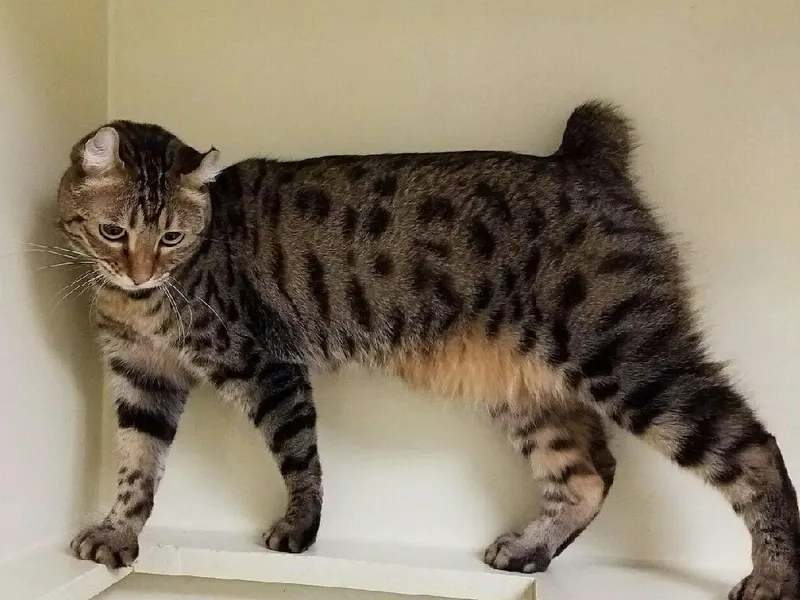
The Highlander was developed in the early-to-mid 2000s by combining two related experimental breeding lines — the Desert Lynx and Jungle Curl — which together contributed curled ears and a naturally bobbed tail to a large, muscular, wild-looking domestic cat. TICA granted the Highlander registration status in 2004 and advanced the breed further in 2008, but as with several other genuinely recently-developed breeds, comprehensive long-term health and temperament data is still accumulating, and breed clubs and prospective owners alike should treat the Highlander's full health profile as a work in progress rather than a settled, decades-documented picture. Breed clubs promoting the Highlander have been explicit that the program draws entirely on domestic cat genetics despite the name's evocation of wild highland cats, a clarification added specifically to avoid the kind of buyer confusion that surrounded earlier, similarly wild-sounding experimental breed names.
Common health predispositions
- Ear-canal care (via curled-ear trait)
- Long-term breed health data still limited given the breed's recent (2000s) establishment
Temperament
Confident, playful, and highly interactive is how most breeders and early owners characterize the Highlander, often noting real enthusiasm for water and problem-solving play, though as with the breed's health data, behavioral generalizations here draw on a relatively small, recent population's collective experience rather than the decades of broad observation available for more established breeds. Early breed-club reporting describes it settling well into households with kids or other resident animals, adapting readily to active households. Highlanders are reported to retain strong climbing and jumping instincts befitting their large, muscular build, and owners considering the breed should plan for genuine vertical space and sturdy furniture given the cat's substantial size and activity level.
Living with a Highlander
Two coat lengths exist within the breed, so an owner's grooming workload depends heavily on whether a given cat is the low-maintenance shorthaired type or the more demanding longhaired one. The curled ears, inherited from the Jungle Curl side of the breed's development, need the same kind of gentle, regular cleaning attention as other curled-ear breeds like the American Curl, since the folded shape leaves the canal more exposed to wax and debris buildup than a standard upright ear. Given how recently the Highlander was established, prospective owners are better served asking a specific cattery what health and temperament trends have shown up across its own litters, since broad, independently-verified long-term data for the breed as a whole simply doesn't exist yet the way it does for older breeds. Because the breed remains genuinely new, finding an established, experienced Highlander breeder with a multi-generation track record can be more difficult than for an older breed, and prospective buyers should expect to do more direct research into a specific breeder's practices than they might for a more established breed with decades of accumulated reputation.
FAQ
What breeding lines make up the Highlander?
The Desert Lynx and Jungle Curl, two related experimental breeding programs whose combination in the early-to-mid 2000s contributed the Highlander's curled ears, naturally bobbed tail, and large, muscular, wild-looking build.
How much long-term health data exists for the Highlander?
Genuinely limited compared with older breeds — the Highlander was only granted TICA registration in 2004 and advanced status in 2008, so comprehensive long-term health and temperament data is still accumulating, and prospective owners should press a specific breeder for whatever informal patterns their own cattery has tracked so far.
Is the Highlander related to the American Curl?
Not directly — the Highlander's curled ears come from the Jungle Curl breeding line rather than the American Curl, and genetic testing has shown the two curl traits arise from different mutations despite producing a visually similar folded-forward ear shape. That means breeding a Highlander to an American Curl wouldn't reliably combine or reinforce the curl trait the way pairing two cats with the same specific mutation would.
Are Highlander cats good with children?
Early breed-club reporting describes the breed as generally good with children and adaptable to active households, though as with much of the Highlander's behavioral profile, this draws on a relatively small, recent population rather than decades of broad-based observation.
How big does a Highlander cat get?
Highlanders run notably larger than most domestic breeds, with mature males often reaching the higher end of the domestic cat weight range and a distinctly muscular, athletic build rather than simply a heavier frame — a physical scale the breed's Desert Lynx and Jungle Curl foundation lines were specifically selected to produce, aiming for a large, wild-looking cat using entirely domestic genetics. Because of that substantial size, prospective owners should expect a correspondingly larger appetite and sturdier furniture needs than a typical medium-sized breed.
Do Highlander cats get along with dogs?
Generally yes, and often notably so — early breed-club reporting describes Highlanders as unusually confident and socially adaptable compared with more reserved breeds, frequently forming genuine friendships with resident dogs rather than simply tolerating them, a trait some breeders attribute to deliberate selection for bold, outgoing temperament during the breed's foundation years. As with any breed, individual temperament varies, and supervised introductions remain the safest approach regardless of the breed's generally good reputation with other animals.
Are the Highlander's curled ears the same trait as the Scottish Fold's folded ears?
No — they're entirely different, unrelated mutations. The Highlander's ears curl backward and are inherited from the American Curl side of its ancestry, while the Scottish Fold's ears fold forward and down due to a completely separate cartilage gene found in an unrelated breed lineage. The two traits happen to look superficially similar to a casual observer but come from different genetic mechanisms and different founding breeds entirely.
Related on FetchBreed
Whichever breed fits your life, consider adoption or breed-specific rescue first — many purebred and mixed-breed dogs and cats are already waiting for homes.
General breed information, not veterinary advice — consult a vet for your pet's specific health, diet, and behavior needs.