Oriental Body Type
Colorpoint Shorthair
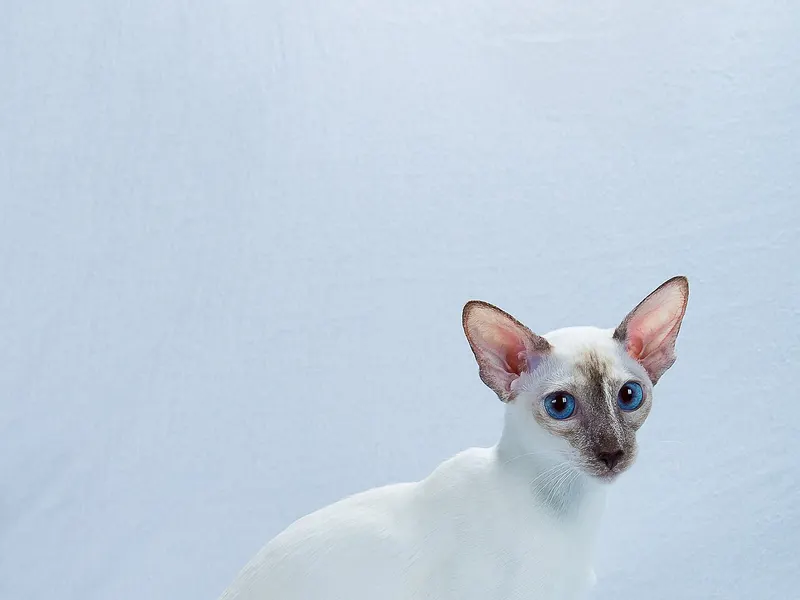
The Colorpoint Shorthair developed from a deliberate mid-20th-century breeding effort to expand the pointed-pattern color range beyond the four colors the Siamese breed standard traditionally recognized — breeders crossed Siamese with American Shorthairs and domestic cats carrying red and tortoiseshell genetics, then bred the resulting cats back toward a Siamese type over multiple generations. CFA recognized the Colorpoint Shorthair as its own breed in 1964 specifically to hold these additional colors (red point, cream point, tortie point, and lynx/tabby point among others) separately from the traditional Siamese standard, a registry decision that let Siamese breeders keep their standard narrowly defined while still giving the wider color range a legitimate competitive home. The lynx point pattern in particular, showing visible tabby striping within the point color, became one of the Colorpoint Shorthair's most popular variations and helped distinguish the breed visually from the more uniformly solid-pointed traditional Siamese.
Common health predispositions
- Progressive retinal atrophy
- Amyloidosis
- Respiratory issues linked to wedge-shaped head
Temperament
Colorpoint Shorthairs are, in nearly every meaningful behavioral sense, Siamese — vocal, sharp-witted, and so attached to their people that a room-to-room shadow is the norm, with genuine unhappiness setting in during long stretches alone. They're playful and trainable, often learning to fetch or walk on a leash, and they tend to bond intensely with their households, sometimes favoring one person in particular. Like the Siamese, Colorpoint Shorthairs often show a strong preference for one particular person in a multi-person household, though they remain generally sociable with the rest of the family and with visitors.
Living with a Colorpoint Shorthair
Coat care is minimal — an occasional brush over the short, fine coat is enough, and shedding stays light year-round. As with the Siamese, its veterinary records show a real incidence of progressive retinal atrophy and amyloidosis, and the wedge-shaped head can leave some individuals more prone to respiratory sensitivity. Because the breed shares the Siamese's intense need for engagement, owners considering a Colorpoint Shorthair should plan for genuine daily interaction, interactive toys, or a second cat for company — a bored, isolated Colorpoint Shorthair is prone to the same anxiety-driven vocalizing and destructive behavior documented in the Siamese. Reputable breeders can typically trace a Colorpoint Shorthair's specific point-color genetics, since colors like red and tortie point involve more complex inheritance patterns than the simpler seal or blue point genetics of a traditional Siamese. Show judges evaluate Colorpoint Shorthairs on the same body-type standard as the Siamese, meaning a slim, tubular body, wedge-shaped head, and large ears are all weighed just as heavily as the point color itself.
FAQ
Is the Colorpoint Shorthair basically a Siamese?
Behaviorally and physically, yes, very closely — the main distinction is registry-based: CFA created the Colorpoint Shorthair as a separate breed specifically to hold point colors like red, cream, and tortie that fall outside the traditional Siamese standard's four recognized colors.
Why can't these colors just be registered as Siamese?
It's a historical registry decision rather than a genetic necessity — CFA opted to keep the Siamese standard limited to its four traditional point colors and created the Colorpoint Shorthair as a related breed specifically to accommodate the wider color range introduced through outcrossing.
Are Colorpoint Shorthairs vocal like Siamese?
Quite a lot, yes — this breed inherited the Siamese's habit of frequent, loud vocalizing, so anyone hoping for a quiet housemate would do better looking elsewhere.
Do Colorpoint Shorthairs need a companion cat?
Not strictly required, but often beneficial — like the Siamese, this breed forms strong attachments to people and can develop anxiety-related behavior if regularly left alone for long stretches, so a second cat or a household with more consistent presence can genuinely help.
What is a lynx point Colorpoint Shorthair?
A point-color variation showing visible tabby striping within the darker point areas (face, ears, legs, tail) rather than a solid color, one of the breed's most popular and visually distinctive patterns and part of why the wider color range needed its own separate breed classification.
Why are red and tortie point colors genetically more complex?
These colors involve genes carried on the X chromosome, which affects how they're inherited and expressed compared with the simpler genetics behind traditional Siamese colors like seal or blue point — it's part of why breeding predictably for these colors took dedicated, separate breeding programs to stabilize.
How closely related is the Colorpoint Shorthair's body type to the Siamese standard?
Extremely closely — CFA judges the Colorpoint Shorthair to essentially the same svelte, tubular body, wedge head, and large-ear standard as the Siamese, with color being the only real dividing line between the two breeds on paper. That shared body standard is part of why some fanciers argue the split into two separate breeds is more a matter of registry history than genuine biological difference.
Related on FetchBreed
Whichever breed fits your life, consider adoption or breed-specific rescue first — many purebred and mixed-breed dogs and cats are already waiting for homes.
General breed information, not veterinary advice — consult a vet for your pet's specific health, diet, and behavior needs.